A pilgrim from Tangier
Abu Abdallah Muhammad ibn Battuta was born in Tangier, Morocco, in 1304, into a family of legal scholars. In 1325, aged about 21, he set out alone to perform the hajj to Mecca, crossing North Africa and passing through Cairo and Damascus. He completed the pilgrimage, but instead of returning home he kept going. Over the next three decades he travelled almost continuously, visiting most of the lands of the Islamic world and many beyond it. His journeys are often estimated at around 117,000 kilometres, though the figure is a modern reconstruction and should be treated as approximate rather than precise.
How such travel was possible
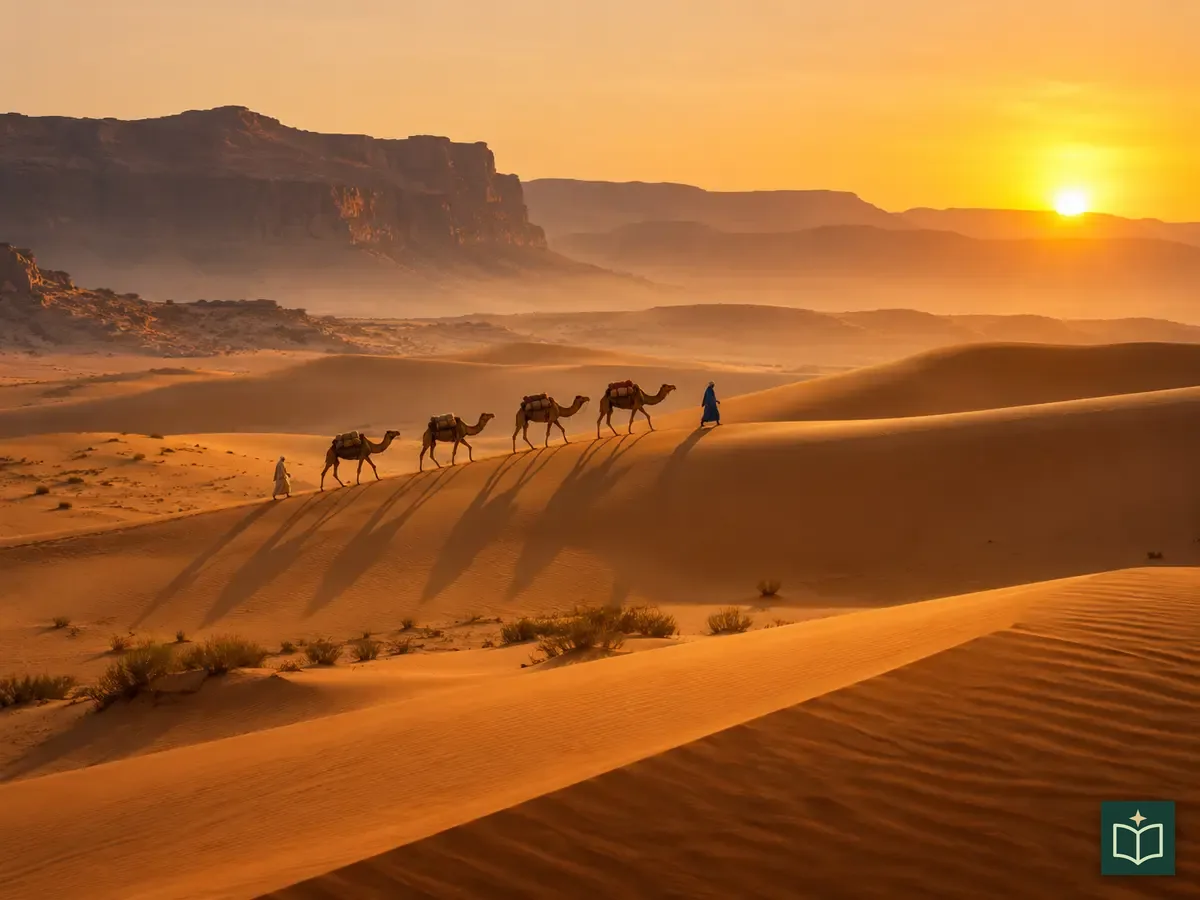
Ibn Battuta could cover such distances because the fourteenth-century Islamic world, though divided into many states, shared a religion, a legal tradition and Arabic as a language of scholarship. As a trained jurist, he was welcomed by rulers and communities, who offered gifts, hospitality and employment. He travelled with caravans and on merchant ships, relying on established routes for pilgrims and traders. Sufi lodges offered shelter. This network of institutions meant that a scholar from Morocco could find work as a judge in India or the Maldives, provided he could survive the hazards of the road, which included bandits, storms, shipwreck and illness.
Arabia, the Gulf and Africa
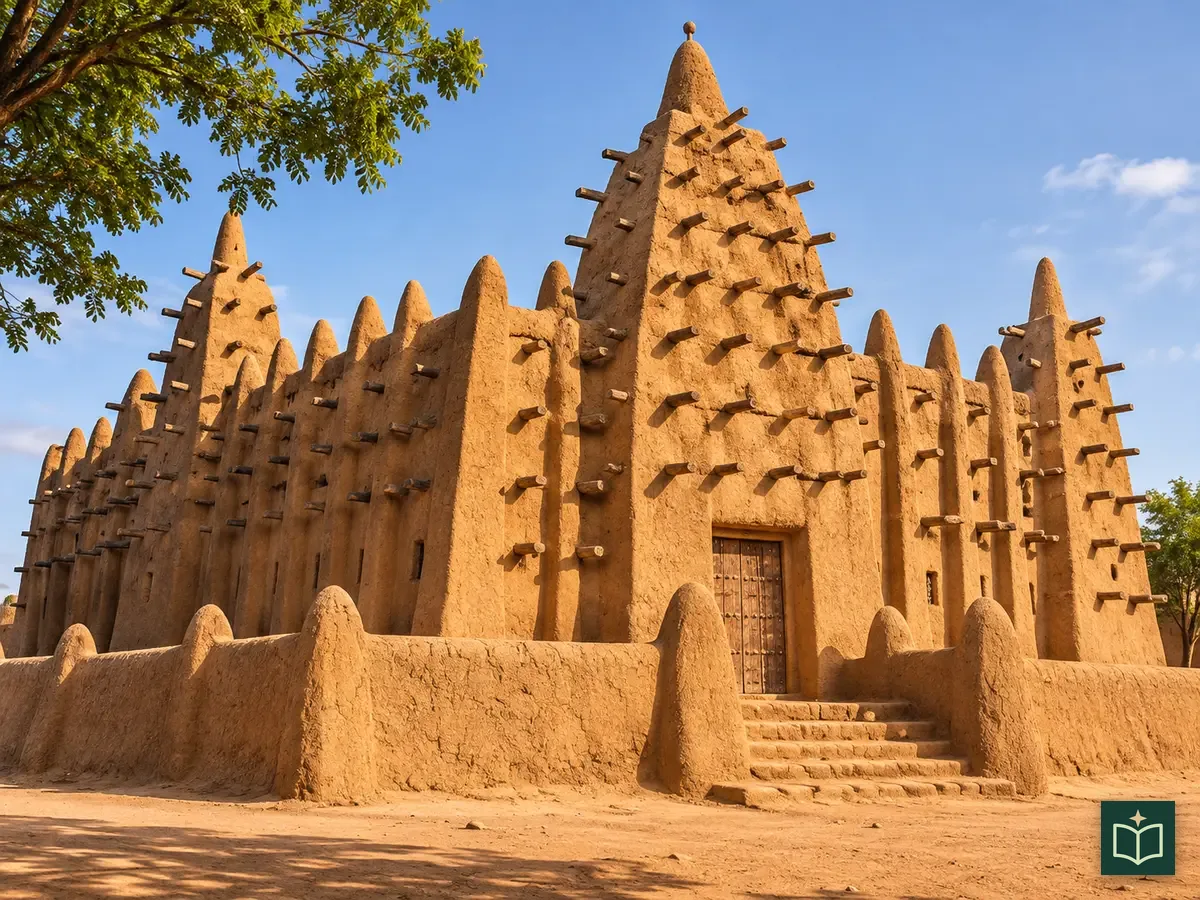
His travels took him through the Arabian Peninsula and the Gulf. He visited Oman and the island of Hormuz, and he described the pearl fisheries of the Gulf, including divers who held their breath and descended with ropes. He also sailed down the East African coast, visiting Mogadishu, Mombasa and Kilwa, prosperous Swahili trading towns linked to the Indian Ocean economy. Much later, in 1352 and 1353, he crossed the Sahara to the empire of Mali, describing its court, its justice and its customs. His accounts of these places are among the earliest detailed written descriptions that survive. They remain essential reading.
India, the islands and China
In Delhi, he served for several years as a judge under Sultan Muhammad bin Tughluq, a ruler he described as both generous and dangerously unpredictable. Sent on a diplomatic mission to China, he survived shipwreck and robbery, spent time as a judge in the Maldives and visited Sri Lanka and Southeast Asia. He eventually reached southern China, though some historians question how much of his China account reflects personal experience rather than information gathered from others. He returned to Morocco in 1349, learning on the way that his mother had died of plague, the pandemic that had spread across the region.
The Rihla and its limits
In Fez, the Sultan of Morocco commissioned the scholar Ibn Juzayy to record Ibn Battuta’s memories. The resulting book, completed around 1355, is usually called the Rihla, meaning journey. Like many travel books of its time, it mixes first-hand observation with borrowed passages, including from an earlier traveller, and some dates and routes do not fit together neatly. Historians therefore read it critically, checking it against other sources. Even so, its descriptions of courts, markets, food, customs and the position of women in different societies are uniquely valuable, offering a ground-level view of the fourteenth-century world. It is a treasure, used carefully.
Why he is remembered
Ibn Battuta is often compared with Marco Polo, though he travelled farther and over a longer period. His name is now attached to airports, ships, a major shopping centre in Dubai and educational programmes, and his life is a popular subject for documentaries. Beyond adventure, his Rihla reveals a world in which Africa, Arabia, India and China were linked by sea routes, caravans and shared institutions long before European ocean voyages of the fifteenth century. For historians, it is a reminder that globalisation has deep roots, and that a single literate traveller could stitch together a picture of an entire interconnected hemisphere.
Sources & further reading
Figures are rounded and widely published; check the linked organisations for the latest editions. These organisations do not endorse this website.