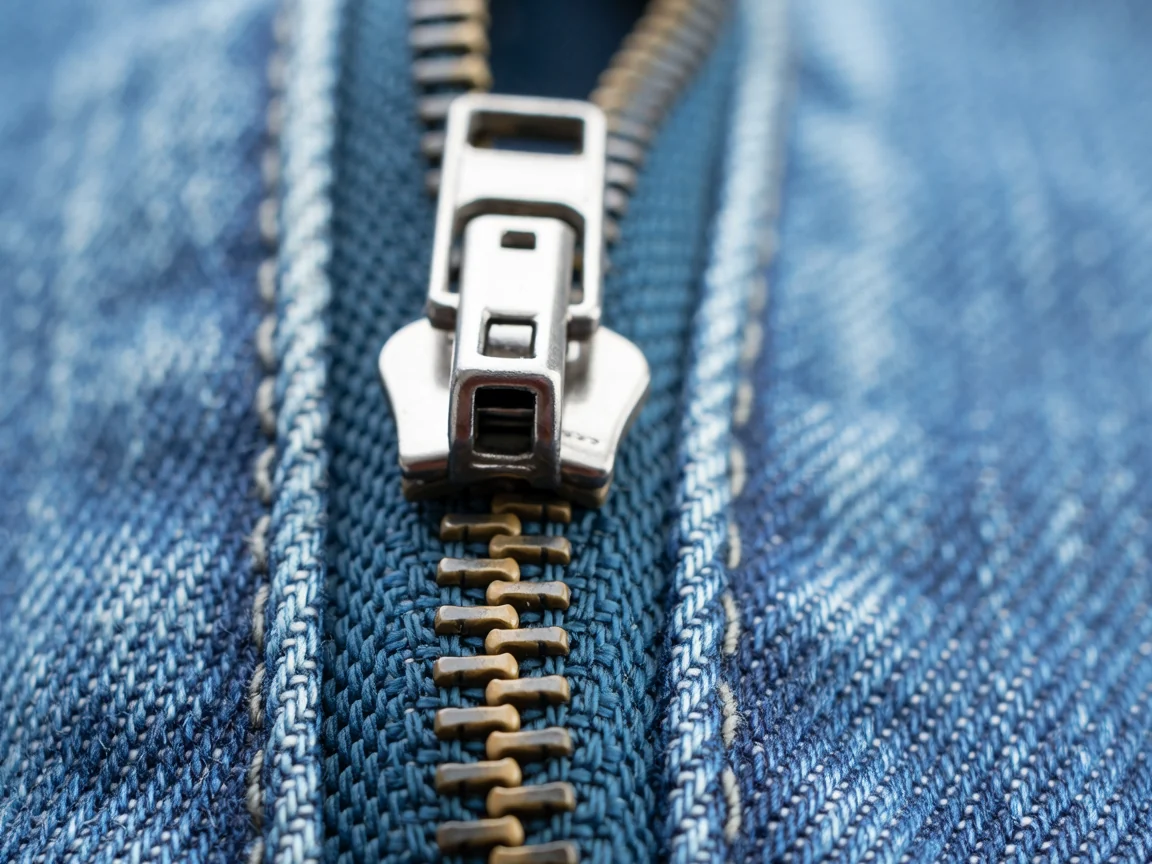
Teeth with hooks
Each tooth has a small bump on top and a hollow underneath. Teeth on opposite tapes are offset by half a tooth, so a bump on one side can drop into the hollow of the tooth on the other side.
The slider
The slider has a Y-shaped channel: two entry arms on top and a single exit below. When pulled up, it brings the two rows together at just the right angle for each tooth to slip over the next. Pulled down, a small wedge in the centre forces them apart again.
From hookless fastener to zip
Whitcomb Judson patented a clasp locker in the 1890s, and Gideon Sundback developed the modern interlocking design in 1913. The name zipper came from a brand of rubber boots in the 1920s, and fly zips in trousers spread in the 1930s.
Why zips fail
Most zip failures come from a worn slider that no longer squeezes the teeth tightly, rather than broken teeth. Gently pinching a loose slider with pliers can sometimes restore the grip.
Sources & further reading
Dates are approximate milestones. Photograph: original AI-generated illustration (Adobe Firefly). Reference organisations do not endorse this website.