Balancing by steering
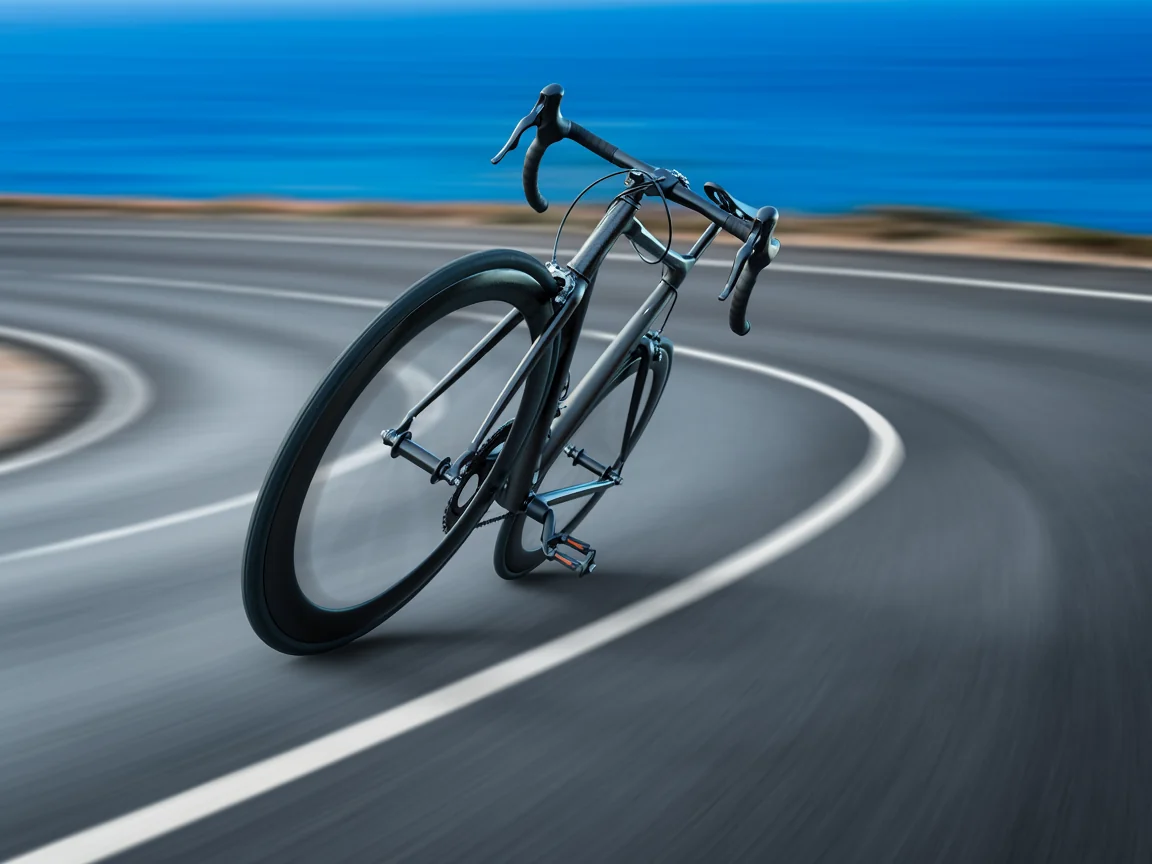
Standing still, a bicycle simply falls over. When it is rolling, a rider who starts to lean left can steer left, and the wheels track under the falling body, catching it. Riders make these corrections constantly and unconsciously.
Built-in steering
The front fork is angled so that the tyre's contact point trails behind where the steering axis meets the ground. This trail means that when the bike leans, the front wheel naturally swings toward the lean. Many riderless bikes pushed at speed will roll along and right themselves.
Not just gyroscopes
Spinning wheels act like gyroscopes and resist sudden tilting, but experiments have shown they are not essential. In 2011, researchers built a bicycle with cancelled gyroscopic effects and no trail that could still balance itself, showing that mass distribution matters too.
Countersteering
To start a turn, riders briefly push the handlebars the opposite way. This tips the bike into the turn, after which they steer into it. Motorcyclists use the same technique, often without realising it.
Sources & further reading
- Science · A bicycle can be self-stable without gyroscopic or caster effects (2011) ↗
- Wikipedia · Bicycle and motorcycle dynamics ↗
Contribution weights are illustrative, not measured values. Photograph: original AI-generated illustration (Adobe Firefly). Reference organisations do not endorse this website.