Dedicated tracks
High-speed lines are built with very wide curves and gentle gradients, often using tunnels and viaducts to keep them straight and level. Rails are continuously welded to remove joints, and slab or carefully maintained ballast track keeps the ride smooth.
Electric power
Trains draw power from overhead lines, usually at 25,000 volts, through a roof-mounted pantograph. Many modern high-speed trains spread motors along the train rather than relying on one locomotive, improving acceleration and grip.
Cutting air resistance
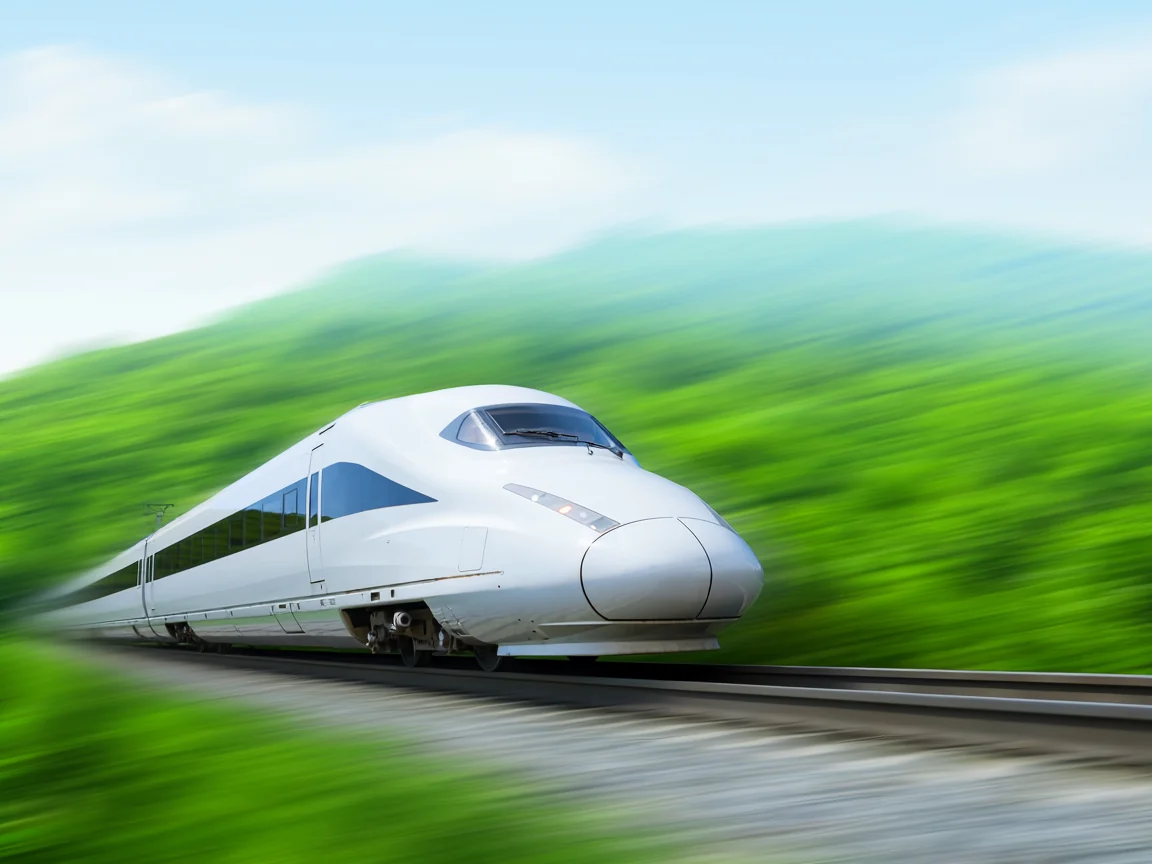
At high speed, most of the energy goes into pushing air aside. Long, tapered noses, smooth bodies and covered gaps between carriages reduce drag and the pressure wave when trains enter tunnels.
Signals in the cab
Drivers cannot read trackside signals reliably at 300 km/h. Systems such as the European Train Control System send speed limits directly to the cab and automatically brake if the driver does not respond.
Sources & further reading
Speeds vary by line and over time. Photograph: original AI-generated illustration (Adobe Firefly). Reference organisations do not endorse this website.