The four strokes
On the intake stroke, the piston moves down and an inlet valve lets in air and fuel. On compression, both valves close and the piston rises, squeezing the mixture. A spark plug then fires, and the burning gas forces the piston down on the power stroke. On the exhaust stroke, the piston rises again and pushes waste gases out.
From pistons to wheels
Pistons are connected by rods to a crankshaft, which converts their linear motion into rotation, much as a cyclist's legs turn pedals. Several cylinders firing in sequence smooth out the power. The gearbox and driveshafts then carry that rotation to the wheels.
Keeping it running
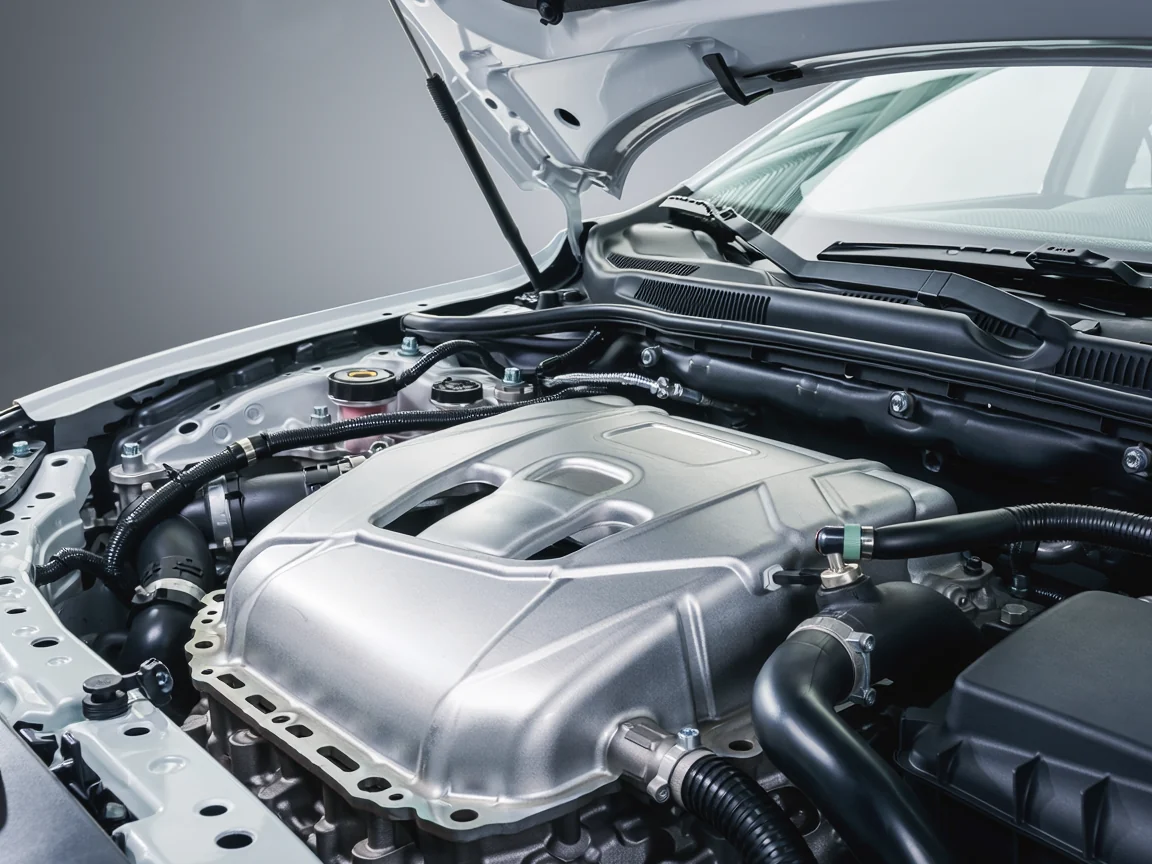
A camshaft opens and closes valves in time with the pistons. Fuel injectors spray precise amounts of fuel, controlled by a computer using sensors. A cooling system with a radiator removes waste heat, and oil lubricates the moving parts.
Diesel differences
Diesel engines have no spark plugs. They compress air so much that it becomes hot enough to ignite fuel injected into it. Higher compression makes them more efficient, which is why they power most lorries and ships.
Sources & further reading
Energy split is approximate. Photograph: original AI-generated illustration (Adobe Firefly). Reference organisations do not endorse this website.