Two different ideas
Zero has two jobs, and they emerged separately. The first is a placeholder: in the number 205, the zero tells you there are no tens, so the 2 means two hundred rather than twenty. The second is zero as a number in its own right, something you can add, subtract and multiply with. A place-value system needs the first idea to work smoothly. Arithmetic and algebra need the second. Understanding this distinction helps explain why several ancient cultures used something like zero without developing the full concept that modern mathematics relies on every day. Zero’s history is really two stories that eventually merged.
Placeholders in ancient systems
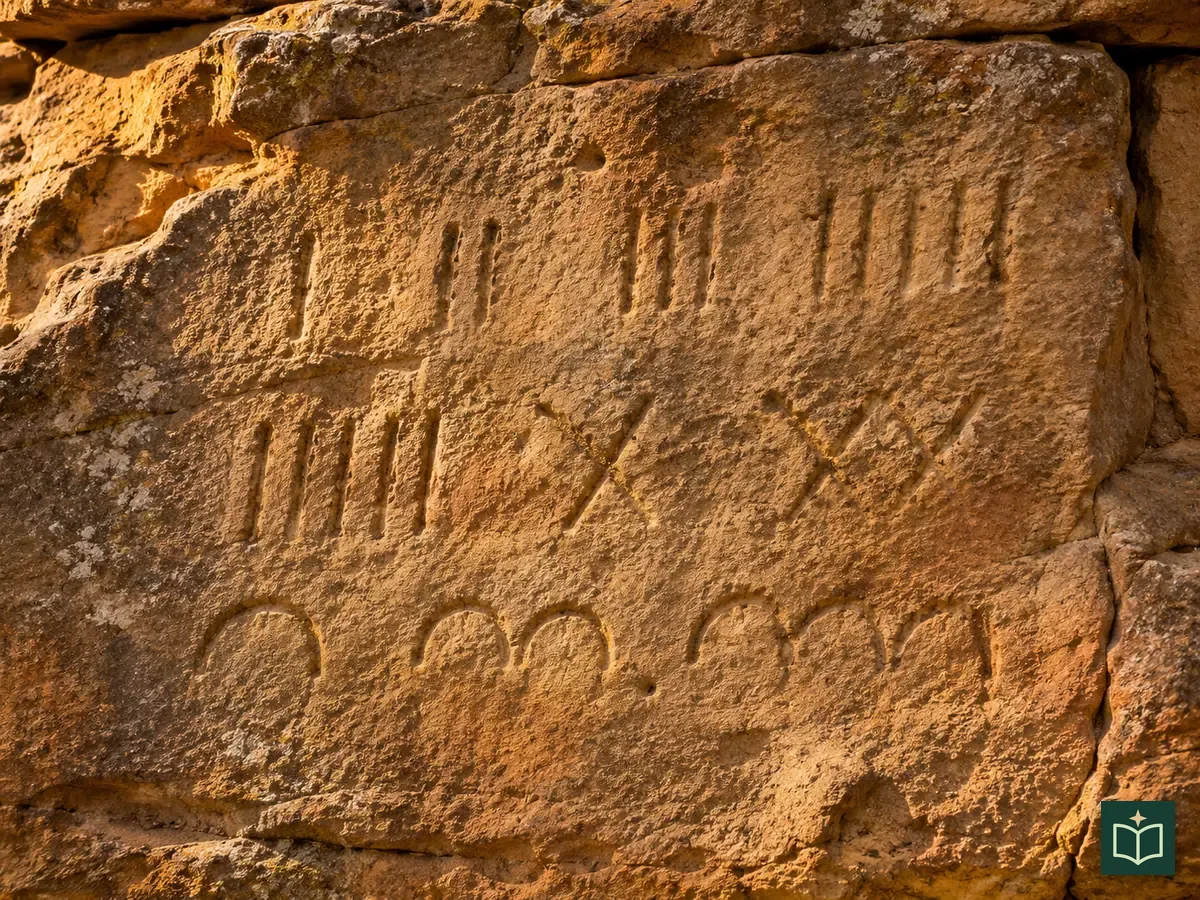
The Babylonians, working with a base-60 system, at first left a gap to show an empty position, and later used a special sign as a placeholder, though not at the end of a number and not as a quantity to calculate with. In the Americas, the Maya independently developed a symbol for zero in their calendar and counting systems, a remarkable achievement that did not spread to the Old World. Greek astronomers sometimes used a circular symbol in tables, but Greek mathematics, built on geometry, generally did not treat nothing as a number. The full concept still lay ahead. Each was a partial step.
India’s breakthrough
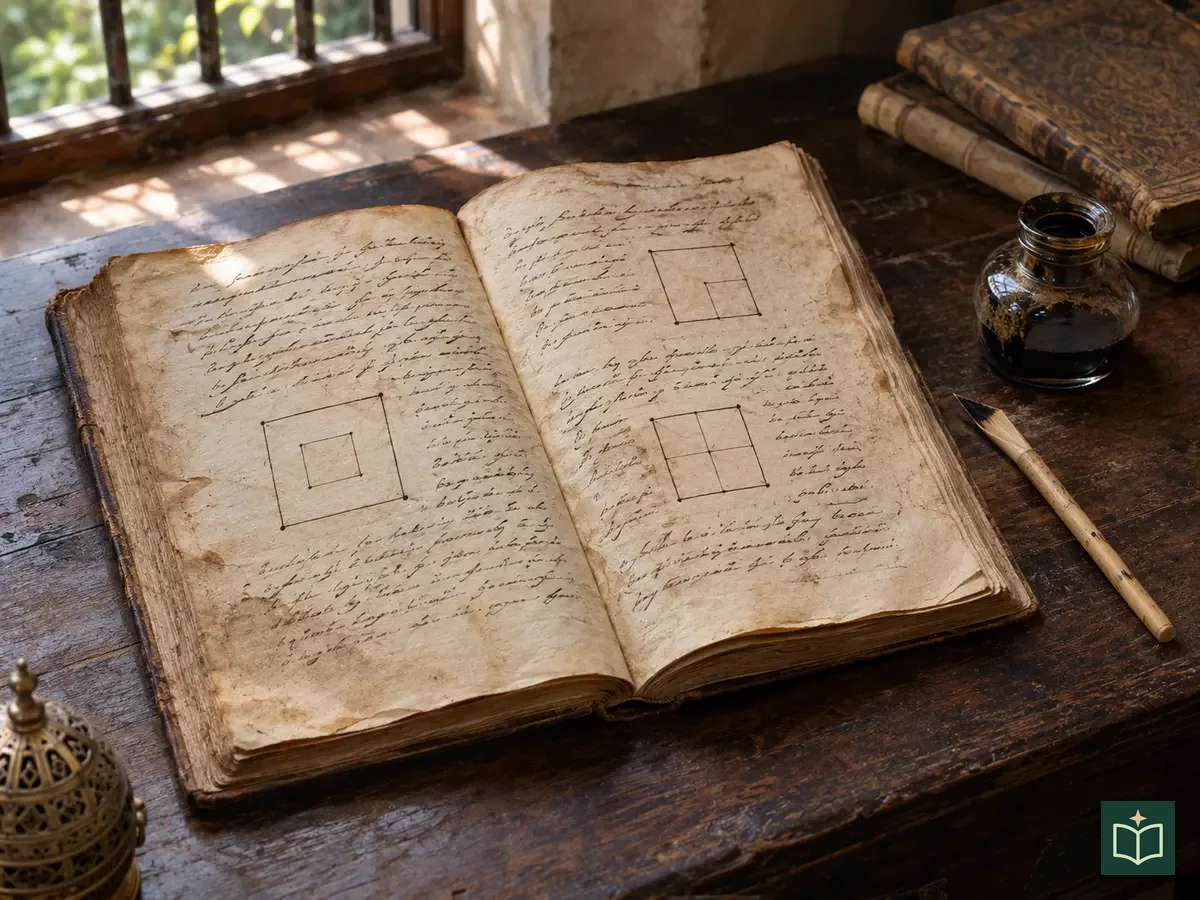
In India, a decimal place-value system using nine digits and a symbol for zero developed during the first millennium CE. The key conceptual step came in 628 CE, when the mathematician and astronomer Brahmagupta wrote down rules for working with zero, such as a number minus itself equals zero and any number multiplied by zero equals zero. He struggled with division by zero, a problem mathematicians later defined as undefined. An inscription at Gwalior from 876 CE contains a clearly written zero. The Bakhshali manuscript also contains a dot used as zero, though the dating of its parts is debated.
Through Baghdad
Scholars in the Abbasid world learned the Indian numerals in the eighth and ninth centuries. Around 825 CE, the mathematician al-Khwarizmi, working in Baghdad, wrote a treatise explaining calculation with these Indian numerals. His work was later translated into Latin, and versions of his name gave Europe the word algorithm. Arab mathematicians refined the methods, including decimal fractions. The numerals took different shapes in the eastern and western Islamic worlds; the western forms, used in North Africa and al-Andalus, are the ancestors of the digits used in Europe and much of the world today. The route ran from India, through Baghdad, westwards.
Europe hesitates
In 1202, Leonardo of Pisa, known as Fibonacci, published Liber Abaci, which promoted the Hindu-Arabic numerals to European merchants. He had learned them in North Africa. Adoption was slow. Roman numerals and the counting board remained common, and some city regulations, such as one in Florence in 1299, restricted the use of the new digits in official accounts, partly because they could be altered more easily. Over the following centuries, the efficiency of written calculation won out, helped by commerce, banking and printed arithmetic textbooks. By the sixteenth century the new system was widely used. Merchants, not scholars, led the change.
Why it matters
Every digital device runs on a number system that depends on zero, since binary code is built from zeros and ones. Place-value notation made long multiplication, accounting and scientific calculation practical for ordinary people, not only experts with counting boards. A common misconception is that zero was invented once by one person. In reality, it emerged over centuries, with independent developments in Mesopotamia and Mesoamerica and the decisive step in India. Its journey across Asia, the Middle East and Europe shows how knowledge travels through trade, translation and teaching, often changing shape on the way. Nothing, it turns out, changed everything.
Sources & further reading
Figures are rounded and widely published; check the linked organisations for the latest editions. These organisations do not endorse this website.