A living ingredient
Baker's yeast is a single-celled fungus. Dried yeast is dormant; water and warmth wake it up. It breaks down starch-derived sugars in flour, producing carbon dioxide gas and a little alcohol, which mostly evaporates during baking.
Gluten as a balloon
When wheat flour is mixed with water and kneaded, two proteins combine into gluten, an elastic web. This web stretches around the gas bubbles like countless tiny balloons, letting the dough rise rather than letting the gas escape.
Proving
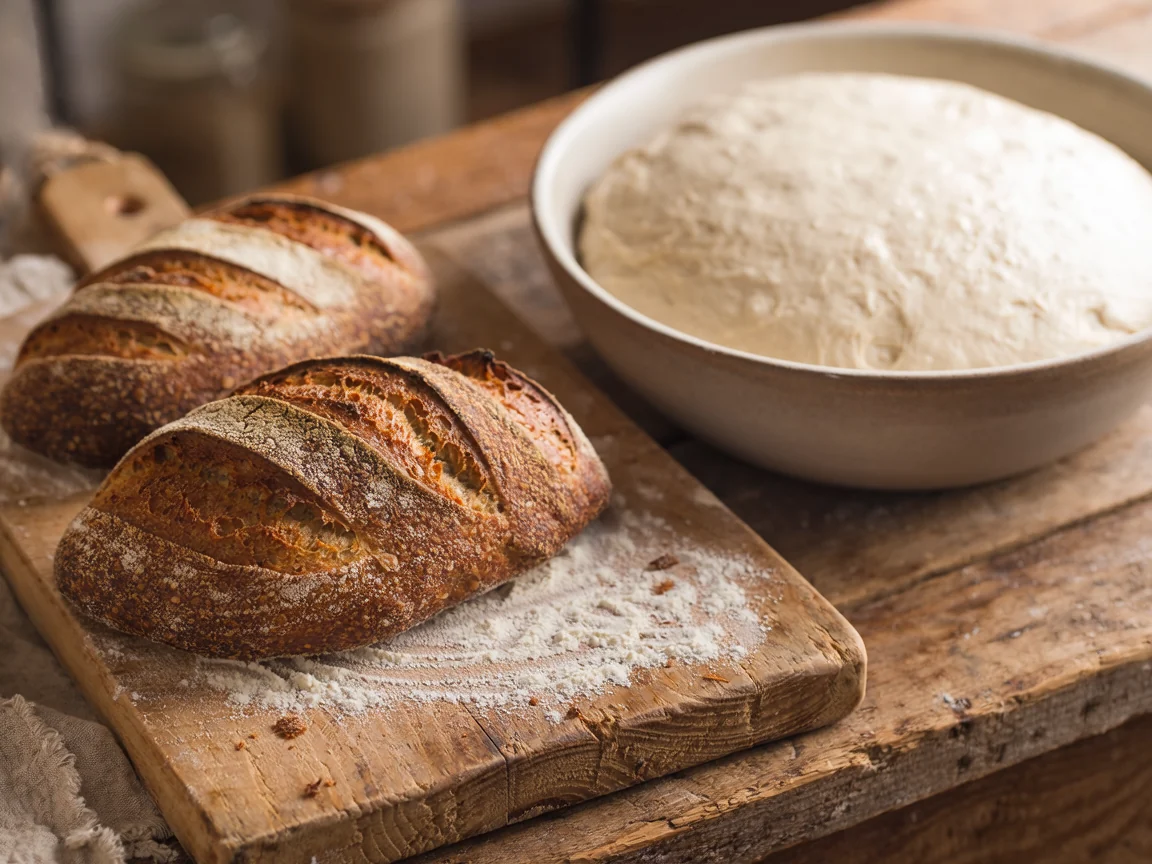
Bakers leave dough to rise in a warm place, often until it roughly doubles. Slow, cool rises take longer but develop more flavour, because the yeast and bacteria produce more aromatic compounds.
Oven spring
In the oven, gas expands and the last burst of yeast activity creates a final rise. As the inside passes about 60 °C the yeast dies, starches set and proteins firm up, while browning reactions in the crust create colour and flavour.
Sources & further reading
Temperatures are approximate. Photograph: original AI-generated illustration (Adobe Firefly). Reference organisations do not endorse this website.