On the farm
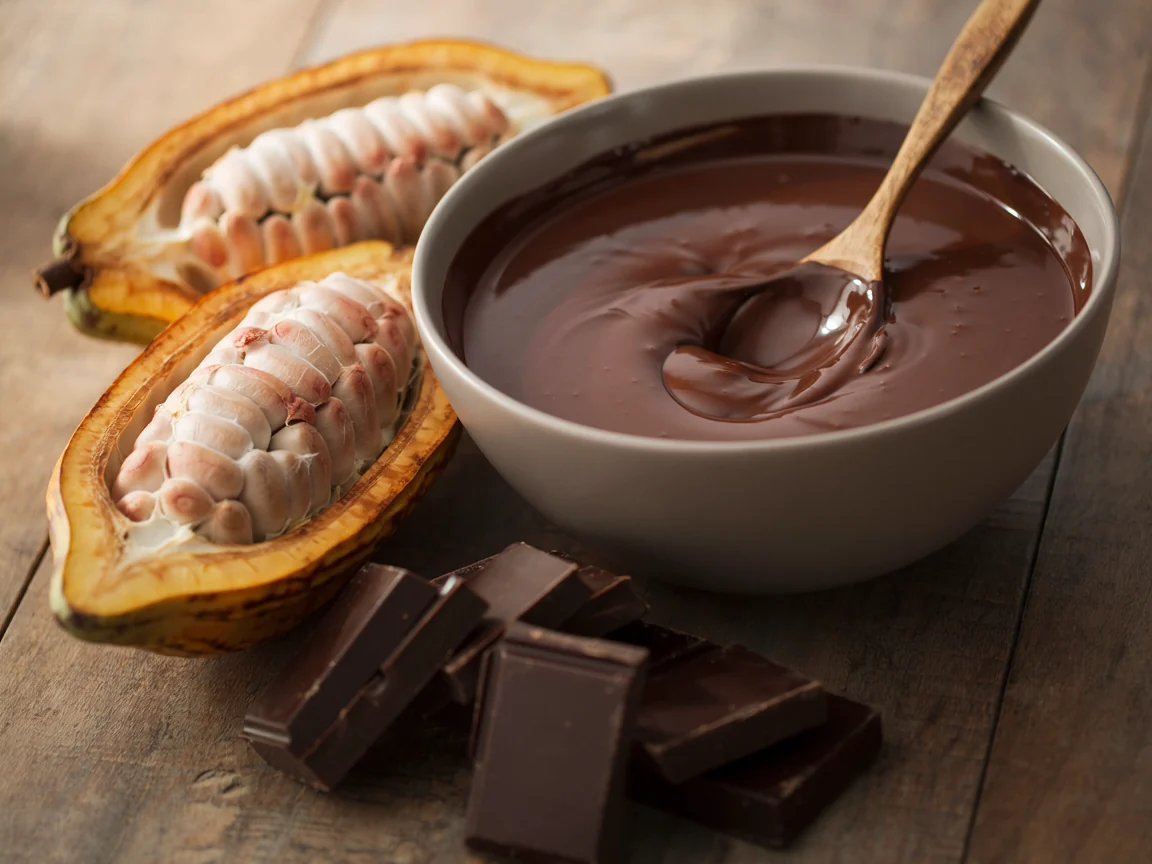
Cacao trees grow in a band within about 20 degrees of the equator. Farmers cut open the pods and scoop out the beans and their sweet white pulp. Left in heaps or boxes for several days, the pulp ferments, killing the seed and starting the chemical changes that create chocolate flavour.
Drying and shipping
The fermented beans are spread out to dry in the sun, reducing moisture so they can be stored and shipped. Most cocoa is exported as dried beans to processors in Europe, North America and Asia.
In the factory
Beans are roasted to develop flavour, then cracked and winnowed to separate the nibs from the shells. Ground nibs become a thick paste called cocoa liquor, which can be pressed into cocoa butter and cocoa powder or used directly for chocolate.
Conching and tempering
Cocoa liquor is mixed with sugar, extra cocoa butter and, for milk chocolate, milk powder. It is refined to tiny particles and conched, kneaded for hours to smooth texture and mellow flavour. Finally it is tempered by careful heating and cooling so the cocoa butter forms stable crystals.
Sources & further reading
Production shares are approximate and vary by season. Photograph: original AI-generated illustration (Adobe Firefly). Reference organisations do not endorse this website.