Graphite, not lead
Graphite is a soft form of carbon. A large, pure deposit found in Borrowdale, England, in the 1500s was used for early pencils. Because people thought it was a type of lead, the name stuck, even though no lead is involved.
Making the core
In the 1790s Nicolas-Jacques Conté found that mixing powdered graphite with clay and firing it in a kiln made strong cores of controllable hardness. Modern factories still extrude the mix into thin rods and bake them at high temperature, then often soak them in wax for smooth writing.
Wood and glue
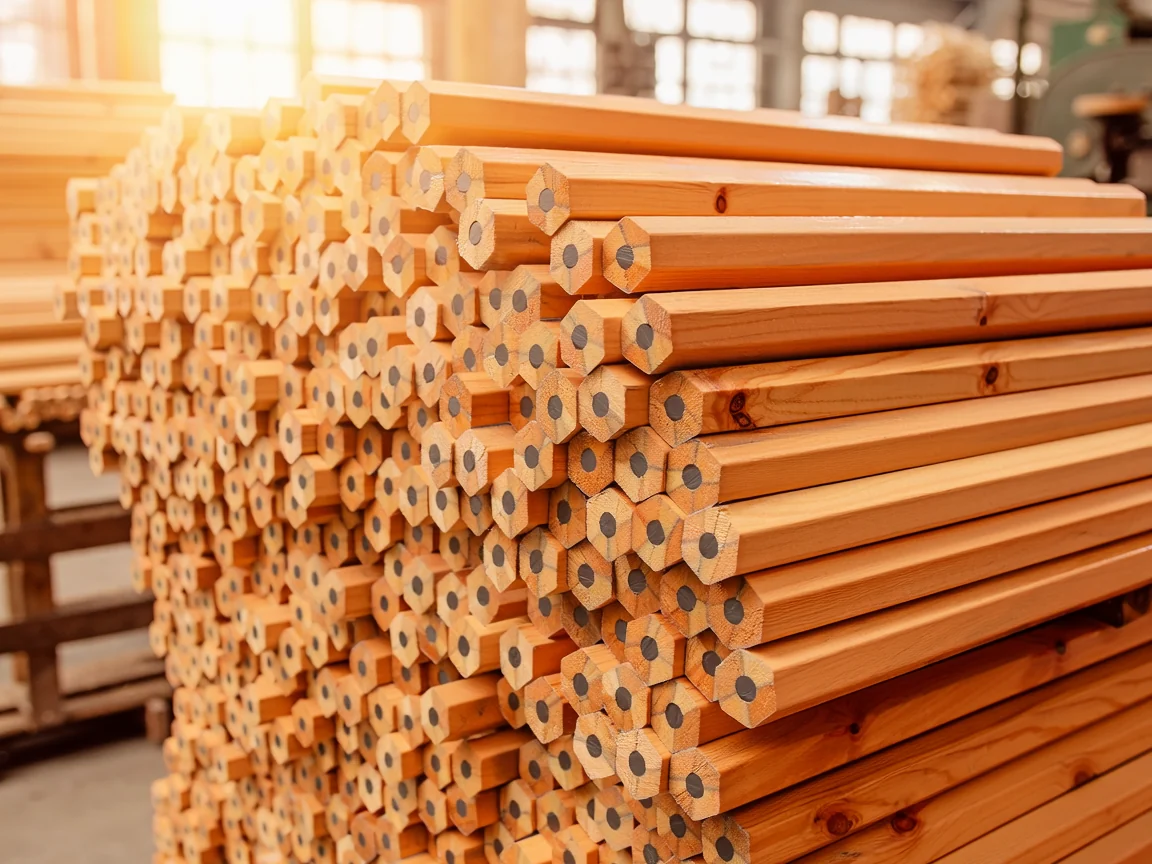
Cedar is a favourite wood because it is soft, straight-grained and sharpens cleanly. Slats are grooved, cores are laid in, and a second grooved slat is glued on top. After pressing and drying, cutters shape the sandwich into hexagonal or round pencils.
Finishing
Pencils receive several coats of lacquer, are stamped, and may be fitted with a metal ferrule holding an eraser. Many leave the factory sharpened. Graphite pencils even worked in early space flights, although loose graphite dust raised concerns.
Sources & further reading
Grade ranges vary between manufacturers. Photograph: original AI-generated illustration (Adobe Firefly). Reference organisations do not endorse this website.