Souring the milk
Cheesemakers warm milk and add starter cultures, bacteria that convert lactose into lactic acid. The rising acidity helps the milk set, protects against spoilage organisms and begins to shape the cheese's flavour.
Setting the curd
Rennet, an enzyme traditionally taken from calves' stomachs and now often produced by microbes, makes the milk protein casein clump together. Within an hour or so the milk becomes a gel that can be cut into small pieces called curds.
Separating curds and whey
Cutting releases the liquid whey. Smaller curds and longer stirring and heating drive out more moisture, producing harder cheeses. The curds are drained, salted and pressed into moulds; cheddar curds are also stacked and turned in a step called cheddaring.
Ripening
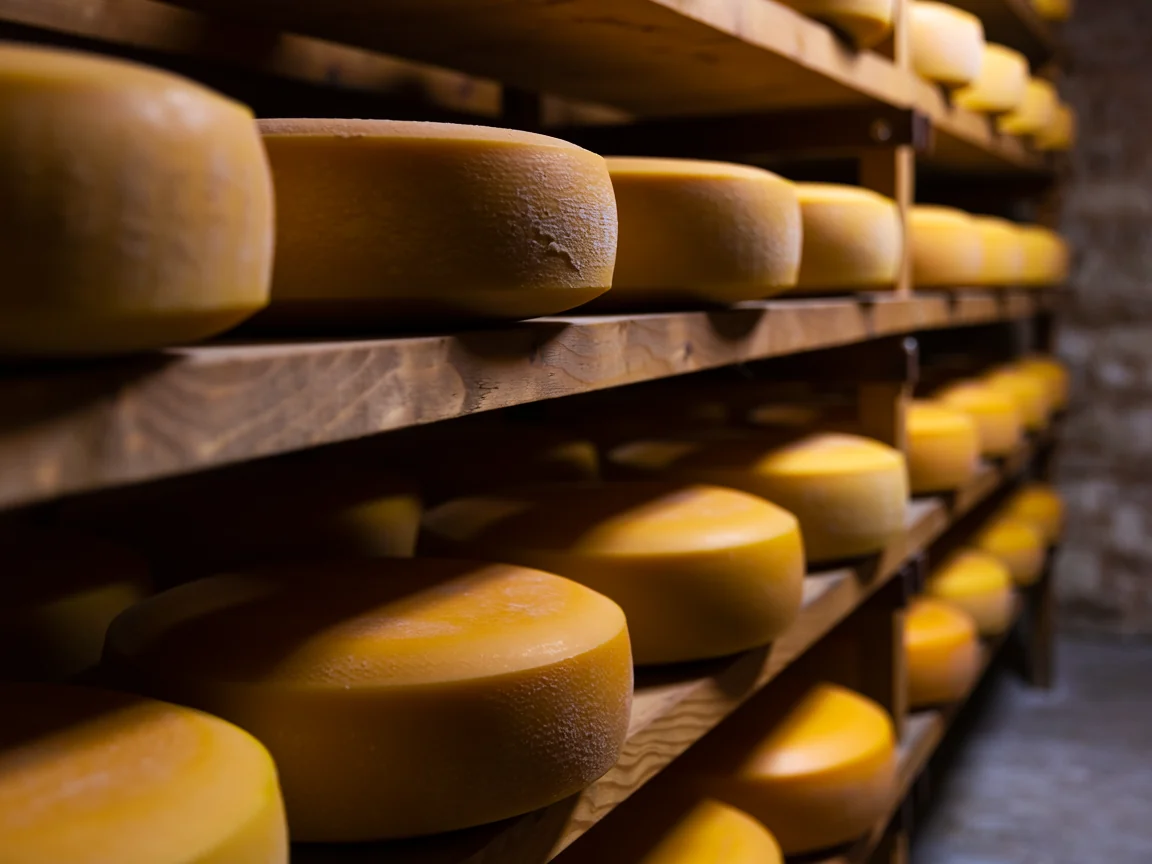
In cool, humid rooms, enzymes, bacteria and sometimes moulds slowly break down proteins and fats. Blue cheeses are pierced so mould can grow inside; soft cheeses like Brie grow a white mould rind; hard cheeses lose moisture and develop crystals and deeper flavours.
Sources & further reading
Ratios and times are approximate. Photograph: original AI-generated illustration (Adobe Firefly). Reference organisations do not endorse this website.