Lift, not push
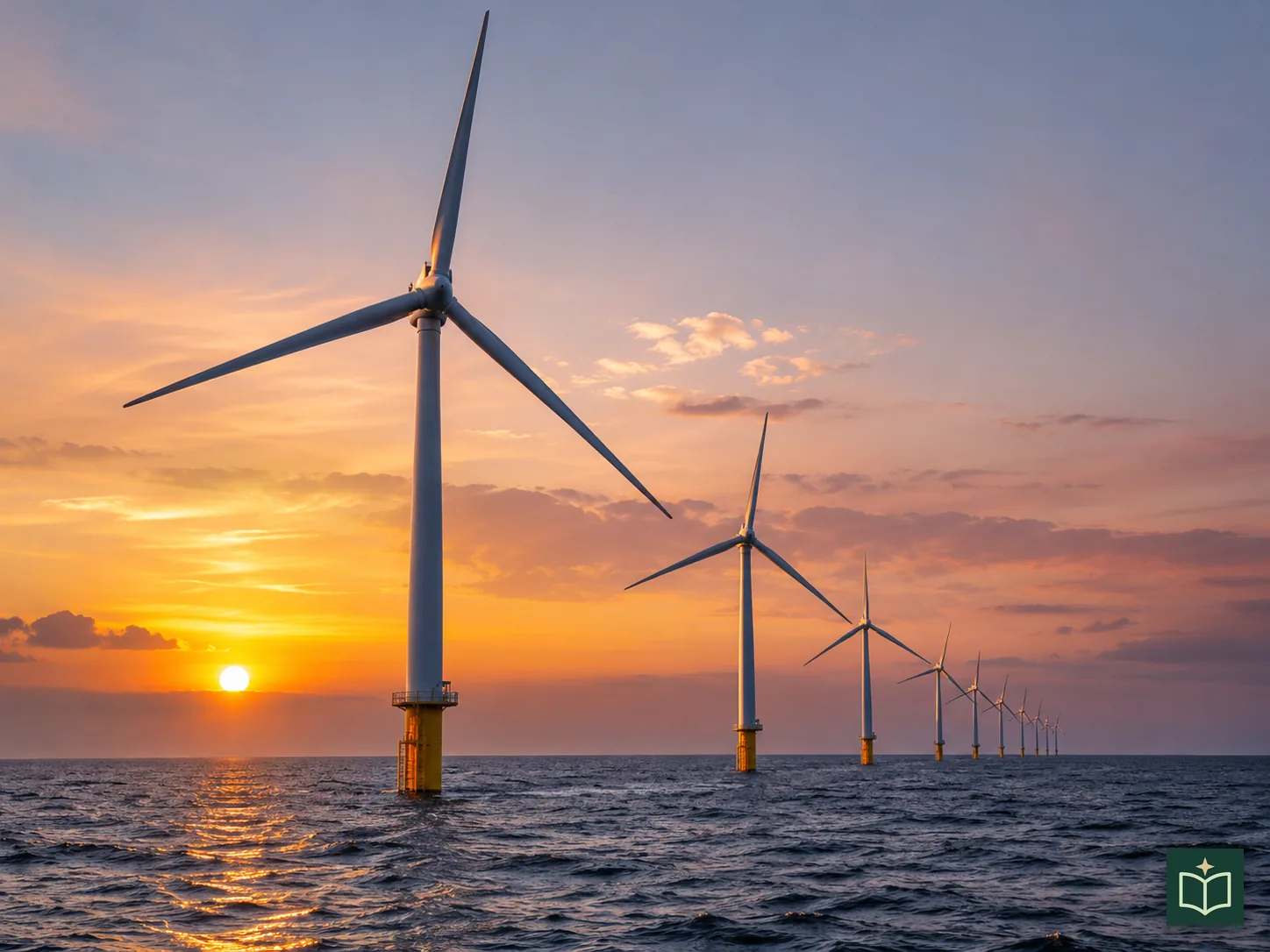
Modern turbine blades work like aircraft wings. Wind flowing over the curved blade creates lift that turns the rotor. The blades are twisted along their length because the tips move much faster than the roots. Sensors constantly adjust blade pitch and point the rotor into the wind to capture energy efficiently and protect the machine in storms.
The cube rule
The power available in wind rises with the cube of wind speed. A site with average winds of 8 metres per second offers about twice the energy of one at 6.3 metres per second. That is why developers study wind patterns for years, and why offshore sites, with stronger and steadier winds, are attractive despite higher building costs.
Bigger and bigger
Rotor diameters have grown dramatically. Large offshore turbines now have rotors over 200 metres across, with single machines rated at 14 megawatts or more. Physicist Albert Betz showed in 1919 that no turbine can capture more than 59.3% of the wind’s kinetic energy; good modern turbines achieve a large fraction of this limit.
Living with the wind
Wind output varies with weather, so grids combine it with other generation, interconnections and storage. Wind farms raise questions about birds, bats, noise and landscapes, managed through careful siting and design. Recycling old blades, made from composite materials, is an active area of research and regulation.
Sources & further reading
Figures are rounded and widely published; check the linked organisations for the latest editions. These organisations do not endorse this website.