An old power source
Water wheels powered mills for centuries. The first hydroelectric plants appeared in the 1880s. Today hydropower provides a substantial share of the world’s electricity and remains the largest renewable source globally, though solar and wind are growing much faster. Countries such as Norway, Brazil and Canada rely heavily on it.
How a dam plant works
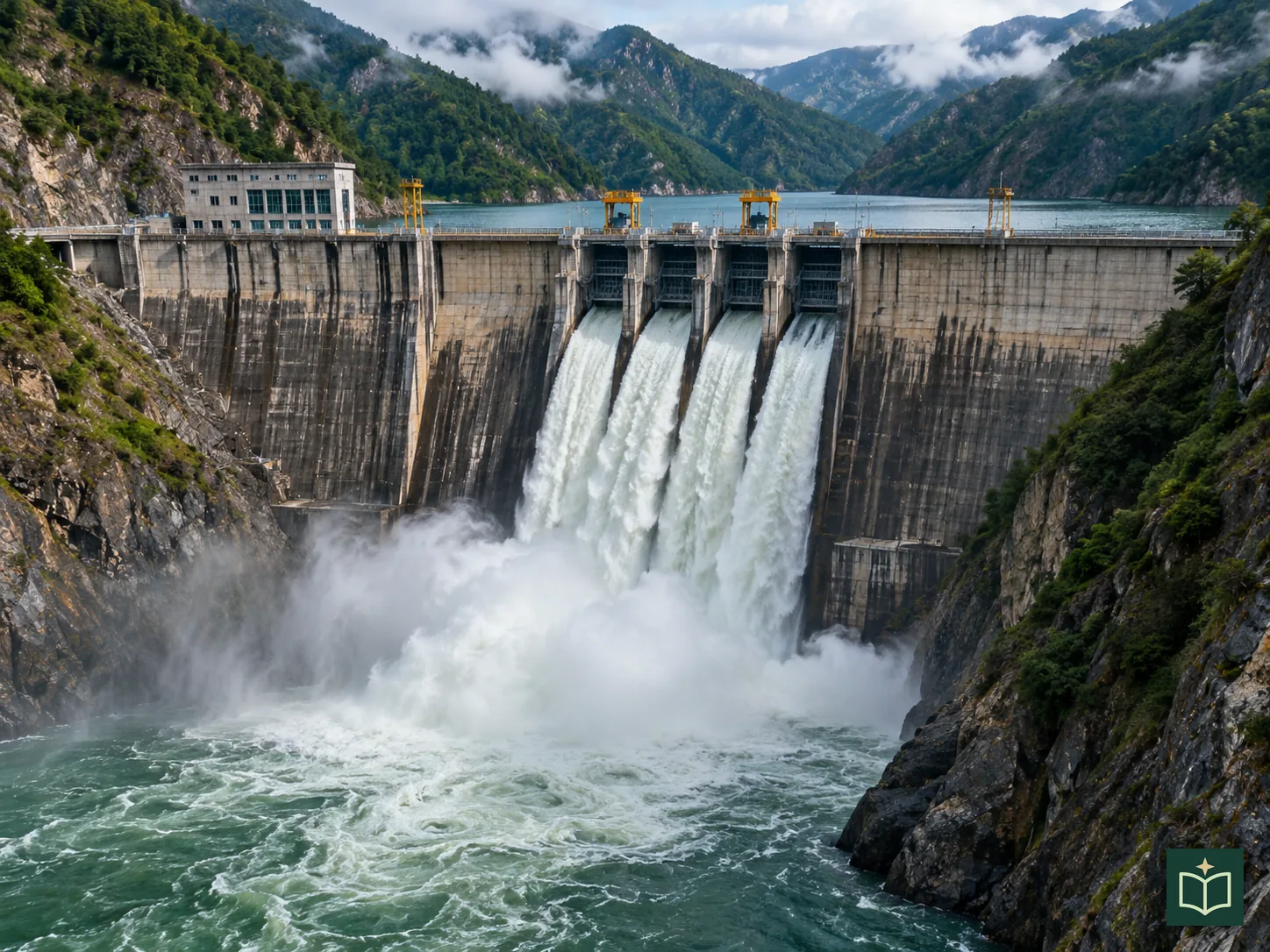
A dam creates a reservoir that raises the water level. Water flows through large pipes called penstocks to turbines at the base, spinning them and driving generators. The greater the drop and the flow, the more power. Run-of-river plants use the natural flow with little storage, while reservoir plants can store water for months.
Flexible and storable
Hydropower can ramp up or down within minutes, making it valuable for balancing variable solar and wind. Pumped storage hydropower pumps water uphill when electricity is cheap and releases it when demand is high, acting like a giant battery. The UAE’s Hatta pumped-storage plant was built to support Dubai’s growing solar supply.
Trade-offs
Large dams can displace communities, flood ecosystems, block fish migration and trap sediment that once nourished downstream farmland and deltas. Reservoirs in warm regions can release methane from decaying vegetation. Droughts, which climate change can intensify, reduce output. Careful planning weighs these impacts against clean, reliable power.
Sources & further reading
Figures are rounded and widely published; check the linked organisations for the latest editions. These organisations do not endorse this website.