Two triangles
Firefighters describe fire with two triangles. The first, the fire triangle, lists what any fire needs to burn: heat, fuel and oxygen. Remove any one and the fire goes out, which is the logic behind water, firebreaks and smothering. The second, the fire behaviour triangle, explains how a wildfire moves across a landscape: fuel, weather and topography. Fuel decides what is available to burn, weather controls how dry it is and how hard the wind blows, and topography shapes the path. Oxygen is almost never in short supply outdoors, so it is these three that turn a small blaze into one that outruns people and vehicles.
Fuel: what burns, and how dry
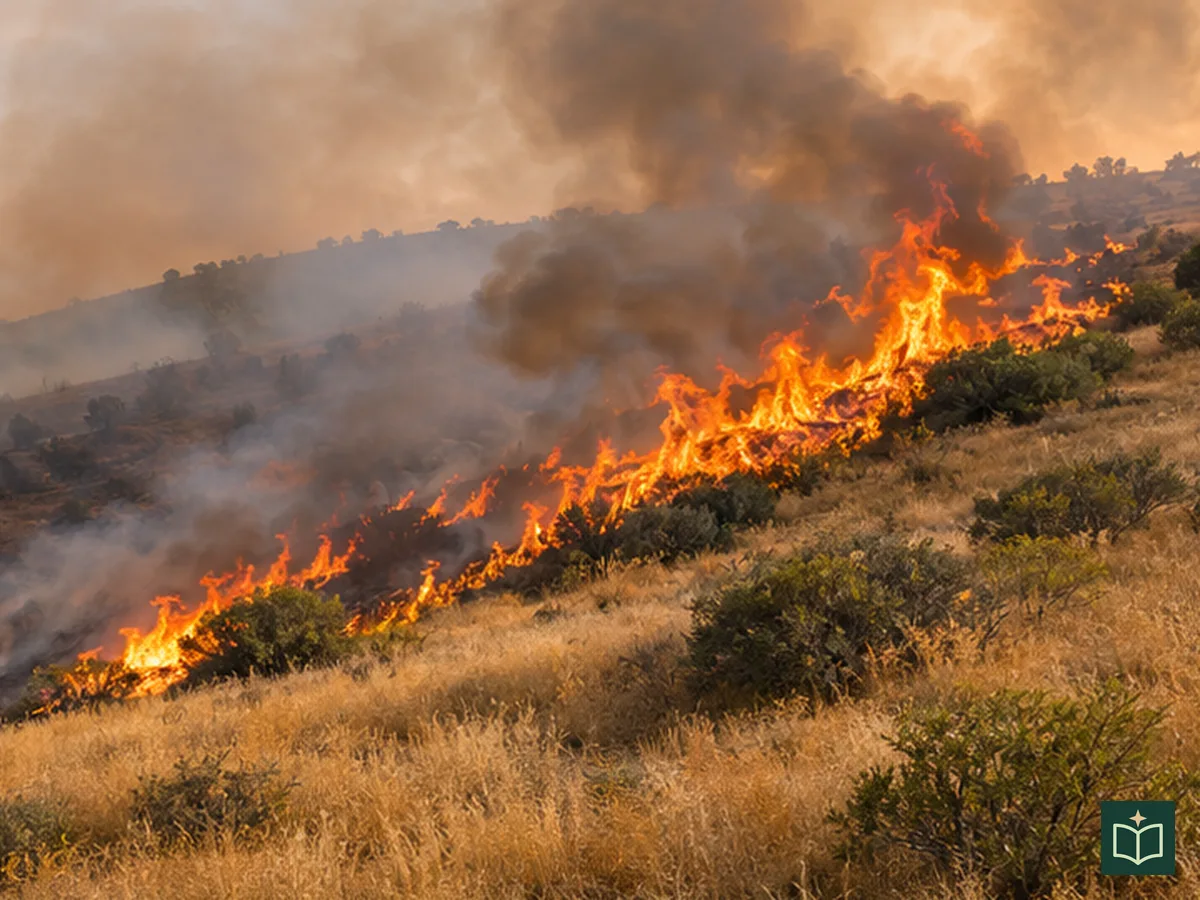
Fine fuels such as dry grass, pine needles and small twigs ignite quickly and burn fast, because they have a large surface area and dry out within hours. Logs and thick branches take much longer to dry and to catch. Grassland fires therefore often spread faster than forest fires, though forests release more total heat. Moisture is crucial. After weeks of drought and heat, even living vegetation can burn readily. Fuel arrangement matters too. Shrubs and low branches act as ladder fuels, carrying flames from the ground into tree crowns, where crown fires spread rapidly from treetop to treetop and become very difficult to stop.
Weather: wind is the accelerator
Wind is the most important weather factor. It supplies oxygen, but more importantly it bends flames forward over unburned fuel, drying and heating it before the flames arrive. It also carries embers. Low humidity and high temperature dry fuels further, while a sudden change in wind direction can turn a long flank of fire into a broad new front, a dangerous moment for firefighters. Hot, dry winds descending from mountains, such as the Santa Ana winds in southern California, are linked to some of the most destructive fires. Large fires can even create their own weather, building towering smoke clouds that generate gusty, erratic winds.
Slope: why fire races uphill
On a slope, flames lean towards the hillside above, just as they lean with the wind. Fuel uphill is preheated by rising hot air and radiant heat, so it ignites sooner. A widely used rule of thumb holds that, on moderate slopes, the spread rate roughly doubles for every 10 degrees of steepness. As a worked example, a fire moving at one kilometre an hour on flat ground would move at about two on a 10-degree slope, four on 20 degrees and eight on 30. Narrow canyons and gullies are especially dangerous, because they funnel wind and heat like a chimney. Fires usually slow down as they crest a ridge.
Embers and spot fires
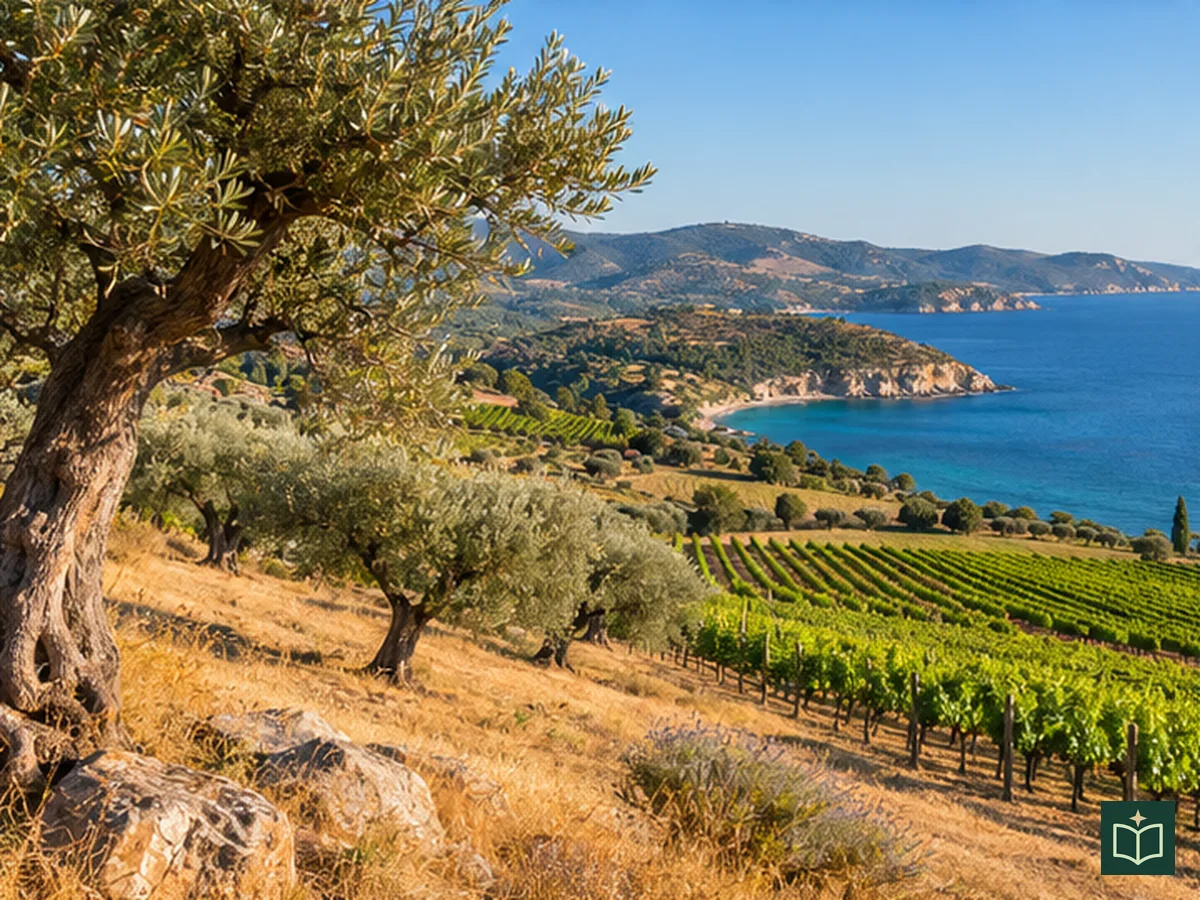
Many homes lost in wildfires are ignited not by the main wall of flame but by embers, glowing fragments of bark and leaves lofted by the wind. Embers can travel hundreds of metres, and in extreme fires several kilometres, starting spot fires ahead of the front. This lets fires jump rivers, roads and firebreaks. Embers lodge in gutters, under decks and in vents, which is why advice for fire-prone areas focuses on clearing debris near buildings and sealing gaps. Fire-prone regions such as the Mediterranean, California and Australia have the conditions for this: hot, dry summers that cure vegetation, and occasional fierce winds.
Living with fire
Fire is a natural part of many ecosystems, renewing grasslands and helping some trees release seeds. Problems arise where homes spread into fire-prone land and where decades of suppressing all fires have let fuel build up. Managers now use prescribed burning, fuel breaks and grazing to reduce fuel. Warmer, drier conditions linked to climate change are lengthening fire seasons in many regions. Forecasters combine fuel moisture, temperature, humidity and wind into fire-danger ratings that guide warnings and restrictions. In the UAE, large wildland fires are rare because vegetation is sparse, but the same principles govern any fire in dry scrub or farm land.
Sources & further reading
Figures are rounded and widely published; check the linked organisations for the latest editions. These organisations do not endorse this website.