Radio at home
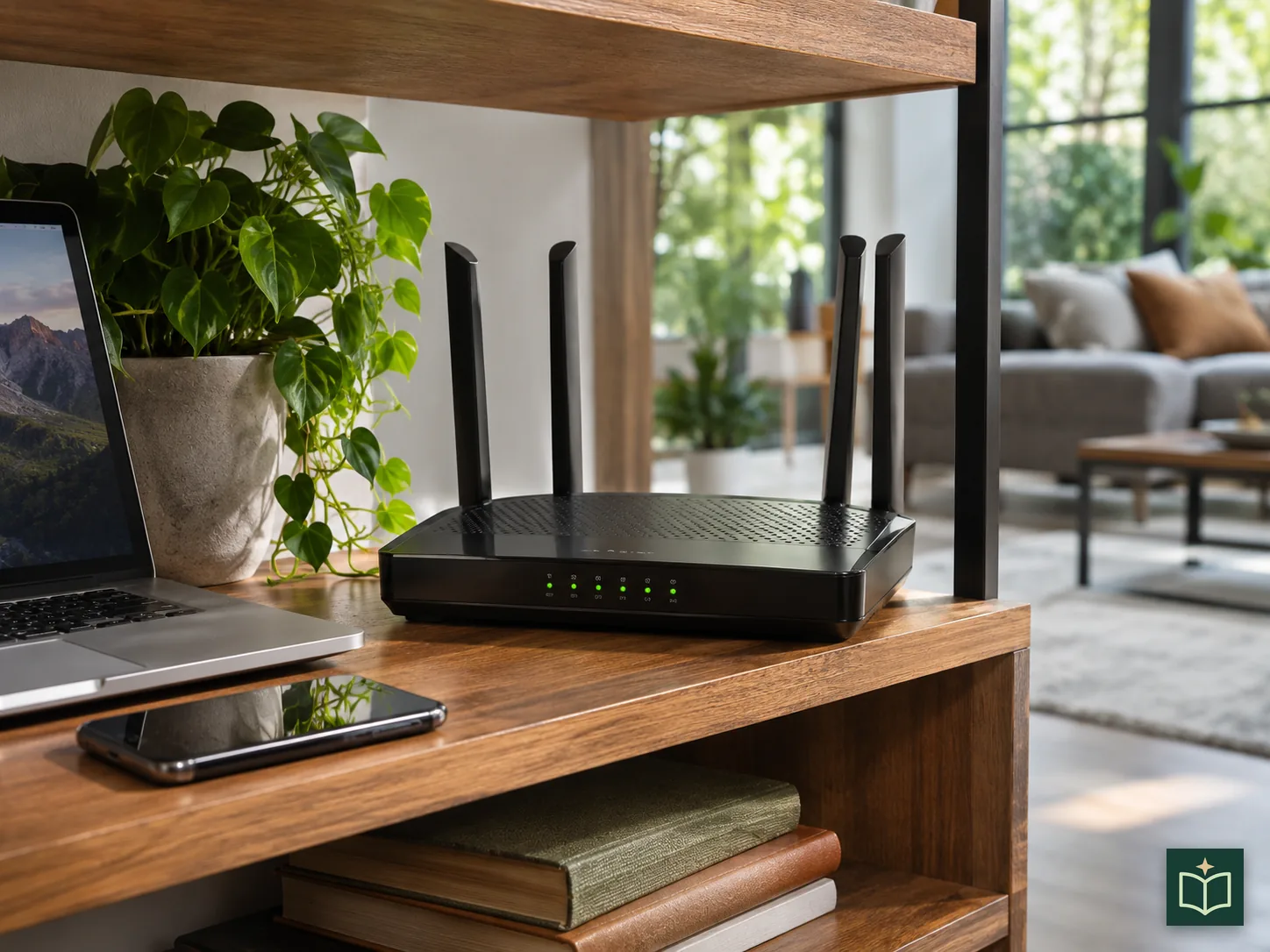
Wi-Fi is a family of standards, known technically as IEEE 802.11, that use unlicensed radio bands. It traces part of its roots to Australian research at CSIRO in the 1990s. The router connects to your internet line and broadcasts a local radio network. Phones, laptops and smart devices join it using a password and encryption such as WPA3.
Squeezing in more data
Modern Wi-Fi uses techniques like OFDM, which splits a channel into many narrow sub-channels, and QAM, which encodes several bits in each signal by varying amplitude and phase. Multiple antennas allow several data streams at once (MIMO). Each new generation—Wi-Fi 5, 6, 6E and 7—adds efficiency and capacity.
Why the signal fades
Higher frequencies such as 5 GHz and 6 GHz carry more data but are absorbed more by walls, floors and furniture. Concrete and metal block signals strongly, and microwaves, Bluetooth and neighbours’ networks can cause interference on 2.4 GHz. Mesh systems place several access points around a home to keep coverage strong.
Not the same as the internet
Fast Wi-Fi does not help if the internet connection behind the router is slow, and a fast connection can be wasted by weak Wi-Fi. Placing the router centrally and in the open, updating its software, and using a wired connection for fixed devices such as TVs can improve real-world performance.
Sources & further reading
Figures are rounded and widely published; check the linked organisations for the latest editions. These organisations do not endorse this website.