A break in the river’s slope
Rivers tend to smooth out their own profiles, cutting down where they are steep and filling in where they are gentle. A waterfall is a sharp break in that smooth curve, and it usually exists for a reason in the rock. The commonest cause is a band of hard, resistant rock lying on top of softer layers. The river wears the soft rock downstream faster than the hard rock upstream, so a step develops at the boundary. Other waterfalls form where a glacier deepened a main valley and left side valleys hanging high above it, where a fault has lifted one block of land, or where lava flows have dammed and diverted a river.
How a waterfall eats itself
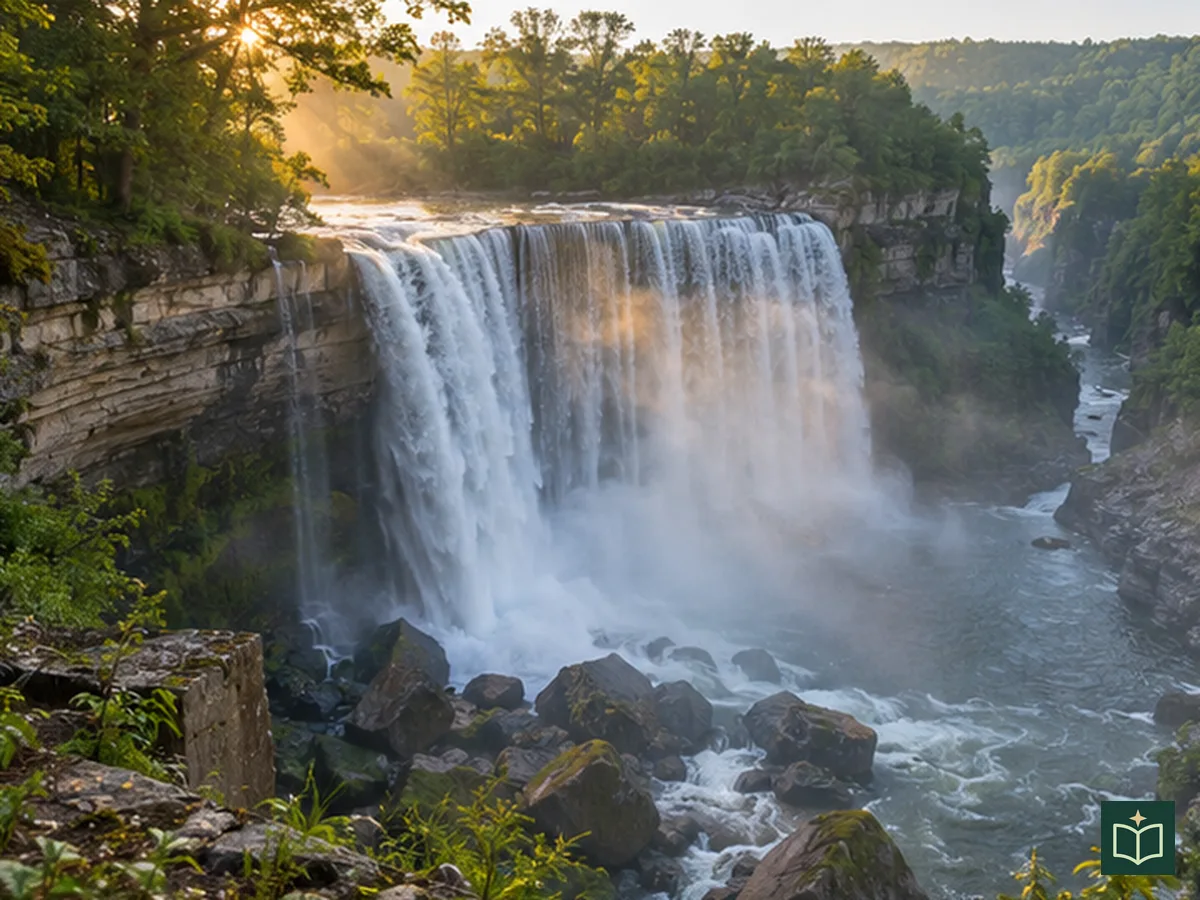
Once a step exists, the falling water attacks its base. The impact, swirling currents and rocks spun around by the flow carve a deep basin called a plunge pool. Spray and turbulence also wear away the soft layer behind the curtain of water, hollowing out a recess. The hard cap rock above is gradually left hanging as an overhang. Eventually it becomes too heavy to support itself and breaks away in blocks, which tumble into the pool and become new grinding tools. The lip of the falls has now moved upstream. Repeated over thousands of years, this cycle leaves a steep-sided gorge downstream that records the waterfall’s journey.
Niagara’s measured march
Niagara Falls is the textbook example. The river flows over a cap of hard dolomite resting on weaker shale. When the ice sheets retreated, the falls began at the Niagara Escarpment near today’s Queenston and Lewiston. Since then they have cut back about 11 kilometres to their current position. Spread over roughly 12,500 years, that is an average of nearly 0.9 metres a year, although the true rate has varied with flow and rock. During the nineteenth and early twentieth centuries the Horseshoe Falls retreated by around a metre a year. Today erosion is far slower, partly because much of the river is diverted through hydropower tunnels before reaching the brink.
Managing a natural wonder
Engineers on both sides of the border now shape Niagara’s flow. Under a 1950 treaty between Canada and the United States, a minimum volume must pass over the falls during daytime in the tourist season, with less required at night and in winter, when more water is sent to power stations. Weirs upstream spread the flow evenly. In 1969 the American Falls were temporarily dried out with a cofferdam so that geologists could study the loose rock at their foot. They decided against removing the fallen boulders, accepting that a waterfall is a changing landform, not a fixed monument to be preserved.
Zigzags and staircases
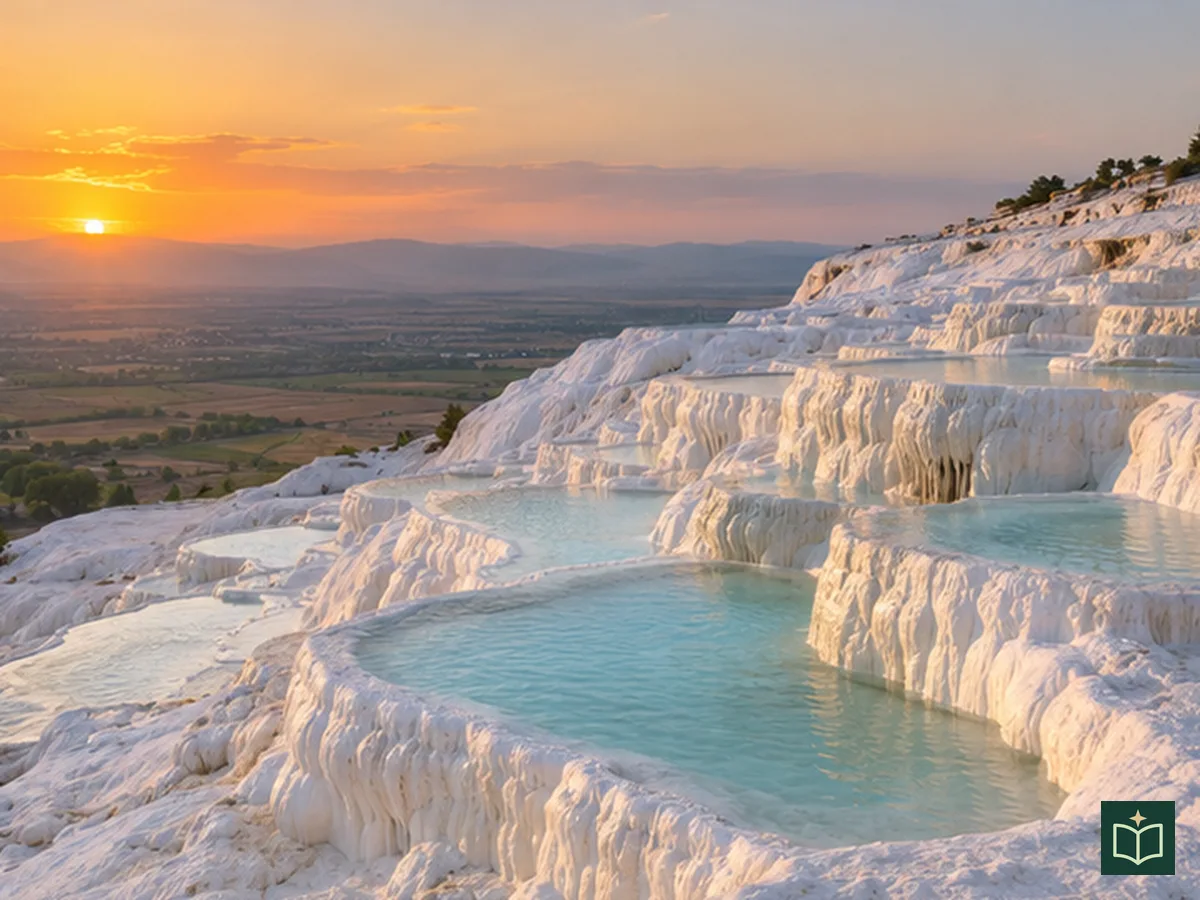
Not every waterfall retreats in a straight line. Victoria Falls on the Zambezi drops into a deep chasm cut along a weakness in the basalt. Downstream lies a series of zigzagging gorges, each marking an earlier position of the falls where the river found and exploited a new line of cracks. Elsewhere, alternating hard and soft layers create staircases of small falls rather than one dramatic drop. Some waterfalls build up instead of wearing down: where water is rich in dissolved calcium carbonate, minerals can be deposited at the lip. In each case the shape of the falls is a clue to the rock beneath and the time the river has spent working on it.
Temporary features with long lives
A waterfall’s retreat may seem slow, but in geological terms it is rapid. If Niagara’s historical pace continued unchecked, it would eventually cut back to Lake Erie, though human control of the flow has changed that outlook. For people, waterfalls are valuable for hydropower, tourism and, historically, as the natural head of navigation where boats had to stop and goods were carried around. Several cities grew at such points. Waterfalls also matter to wildlife, acting as barriers that keep fish populations apart above and below. Understanding how they migrate helps engineers place bridges, dams and walkways safely near edges that will not stay where they are.
Sources & further reading
Figures are rounded and widely published; check the linked organisations for the latest editions. These organisations do not endorse this website.