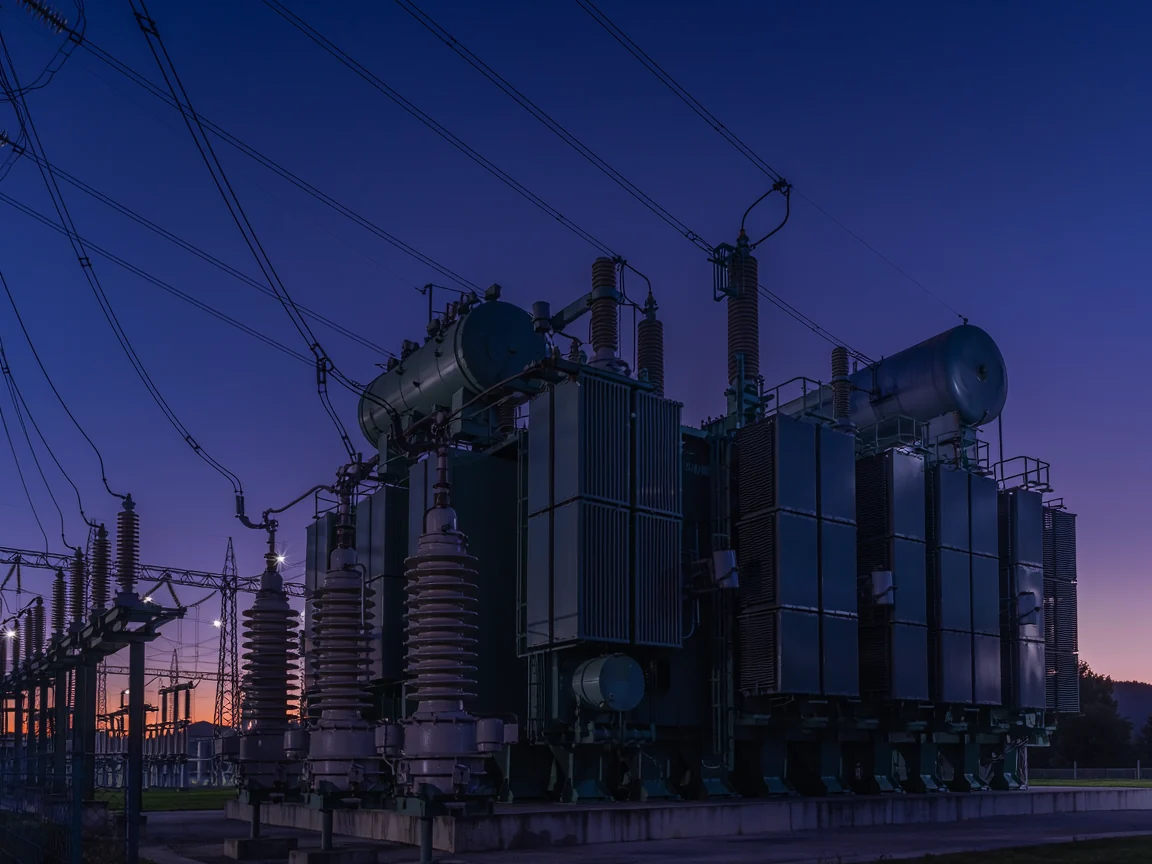
Electromagnetic induction
Alternating current flowing through a coil produces a magnetic field that constantly changes direction. Michael Faraday showed in 1831 that a changing magnetic field induces voltage in a nearby coil. A transformer wraps both coils around a shared iron core that channels the field between them.
The turns ratio
If the secondary coil has ten times as many turns as the primary, the output voltage is ten times higher, while current drops by about the same factor so power is conserved. Reverse the ratio and voltage falls instead.
Why the grid needs them
Power lost in a cable rises with the square of the current. Step-up transformers at power stations raise voltage to hundreds of thousands of volts so current, and losses, stay low. Substations and pole or pad transformers step it back down for homes and businesses.
Small and large
Transformers range from tiny ones in phone chargers to giants weighing hundreds of tonnes in substations. They hum because the magnetic field makes the core vibrate slightly, twice per AC cycle.
Sources & further reading
Voltages vary by country and grid operator. Photograph: original AI-generated illustration (Adobe Firefly). Reference organisations do not endorse this website.