Rotating wings
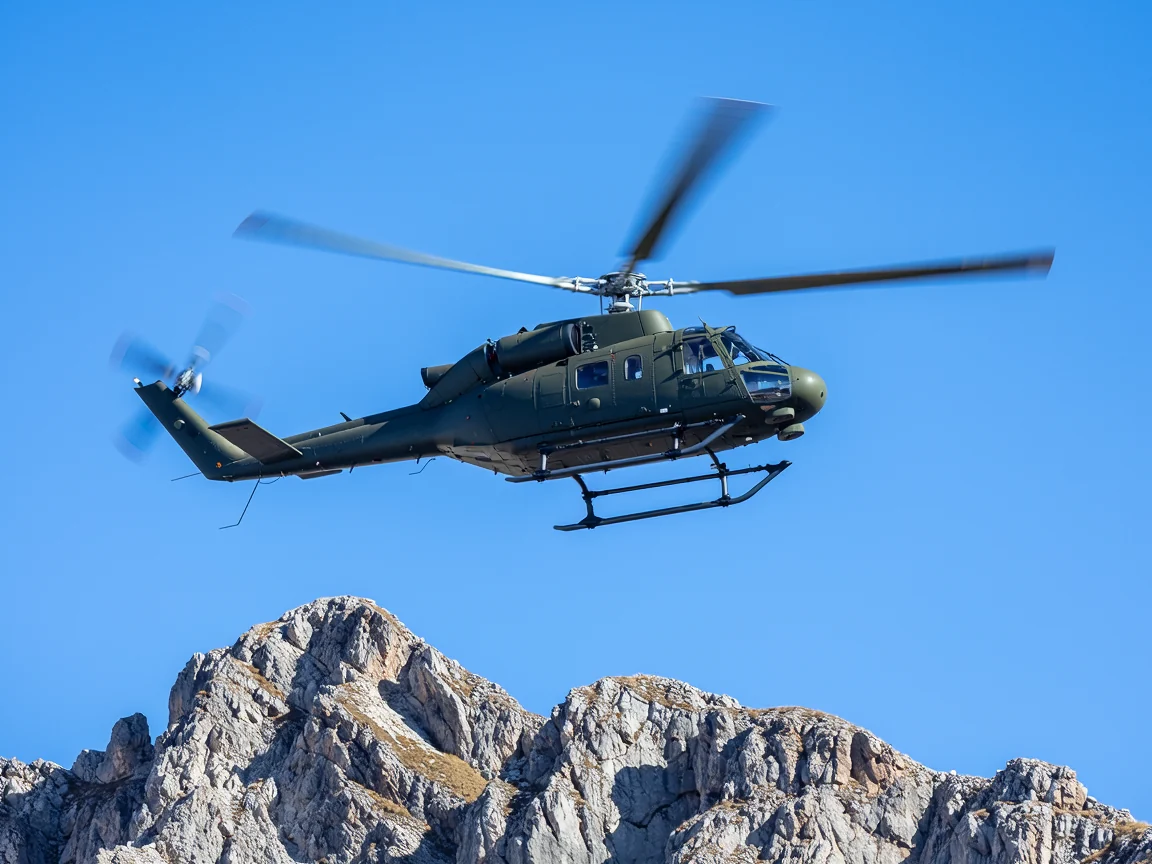
Each rotor blade has an aerofoil shape like a plane's wing. As the rotor spins, air flows over the blades and creates lift. The rotor turns at roughly constant speed; the pilot changes lift by changing the blades' angle of attack, called pitch.
Collective and cyclic
The collective lever changes the pitch of all blades at once, making the helicopter climb or descend. The cyclic stick changes pitch as each blade travels around, so blades produce more lift on one side, tilting the rotor disc and pulling the helicopter in that direction.
Stopping the spin
Turning the main rotor creates an equal twisting force on the fuselage. A small tail rotor pushes sideways to counter it, and foot pedals vary its thrust to turn the nose. Some designs use two main rotors turning in opposite directions instead.
Autorotation
If the engine fails, pilots lower the collective so air flowing up through the rotor keeps it spinning, like a sycamore seed. Just before landing, they raise the blade pitch to use the stored rotor energy for a cushioned touchdown.
Sources & further reading
Speeds and rotor rates are approximate. Photograph: original AI-generated illustration (Adobe Firefly). Reference organisations do not endorse this website.