Energy in, energy out
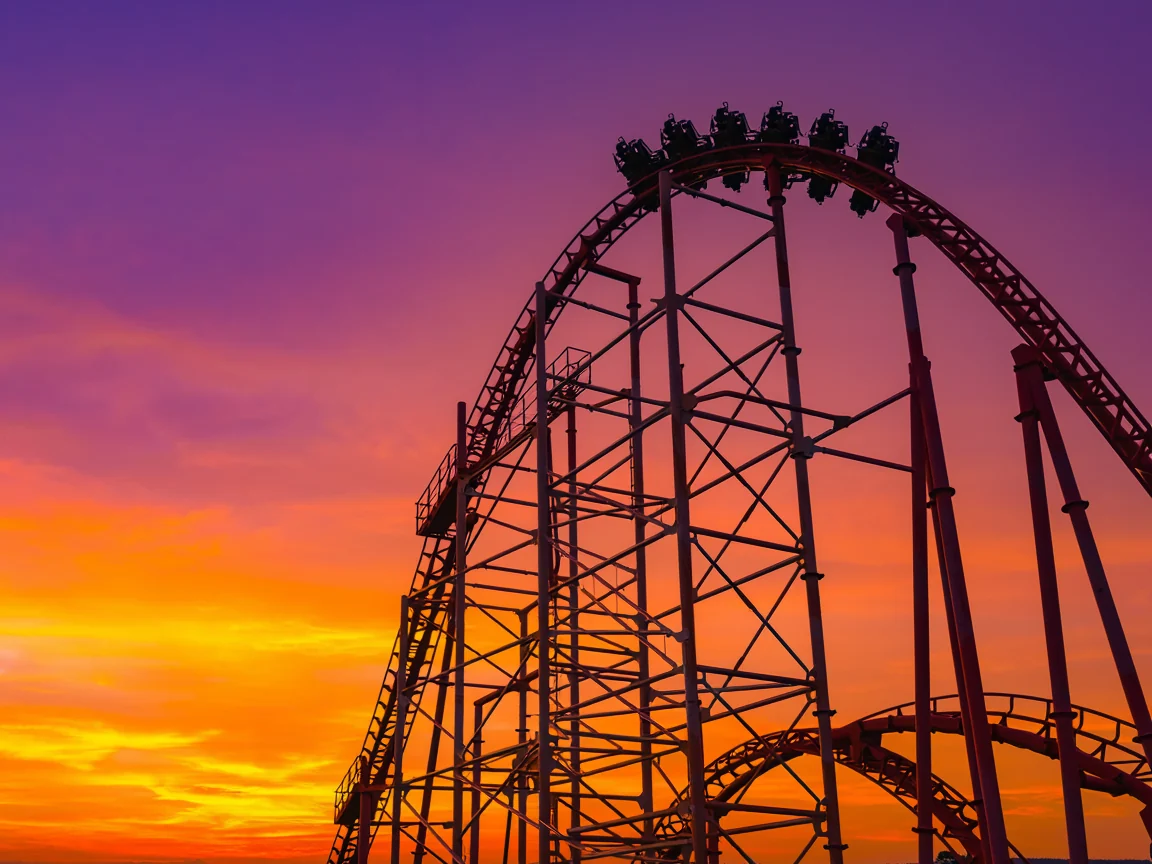
A chain lift drags the train to the highest point of the ride, storing potential energy. From then on, the train coasts. On the way down, potential energy becomes kinetic energy; on the way up the next hill, kinetic energy becomes height again.
Launch coasters
Some coasters skip the lift hill and launch the train using linear motors, hydraulic catapults or compressed air. These can reach over 200 km/h in a few seconds; one of the fastest is Formula Rossa at Ferrari World Abu Dhabi.
Forces on the body
Riders feel heavier at the bottom of dips and nearly weightless at the top of hills, sometimes called airtime. Engineers design track shapes, such as clothoid loops that tighten toward the top, to keep these forces within safe limits.
Wheels and brakes
Coaster trains have three sets of wheels: running wheels on top, side wheels and upstop wheels underneath that lock the train to the track. At the end, magnetic brakes using eddy currents slow the train smoothly without touching it.
Sources & further reading
Speeds are theoretical and approximate. Photograph: original AI-generated illustration (Adobe Firefly). Reference organisations do not endorse this website.