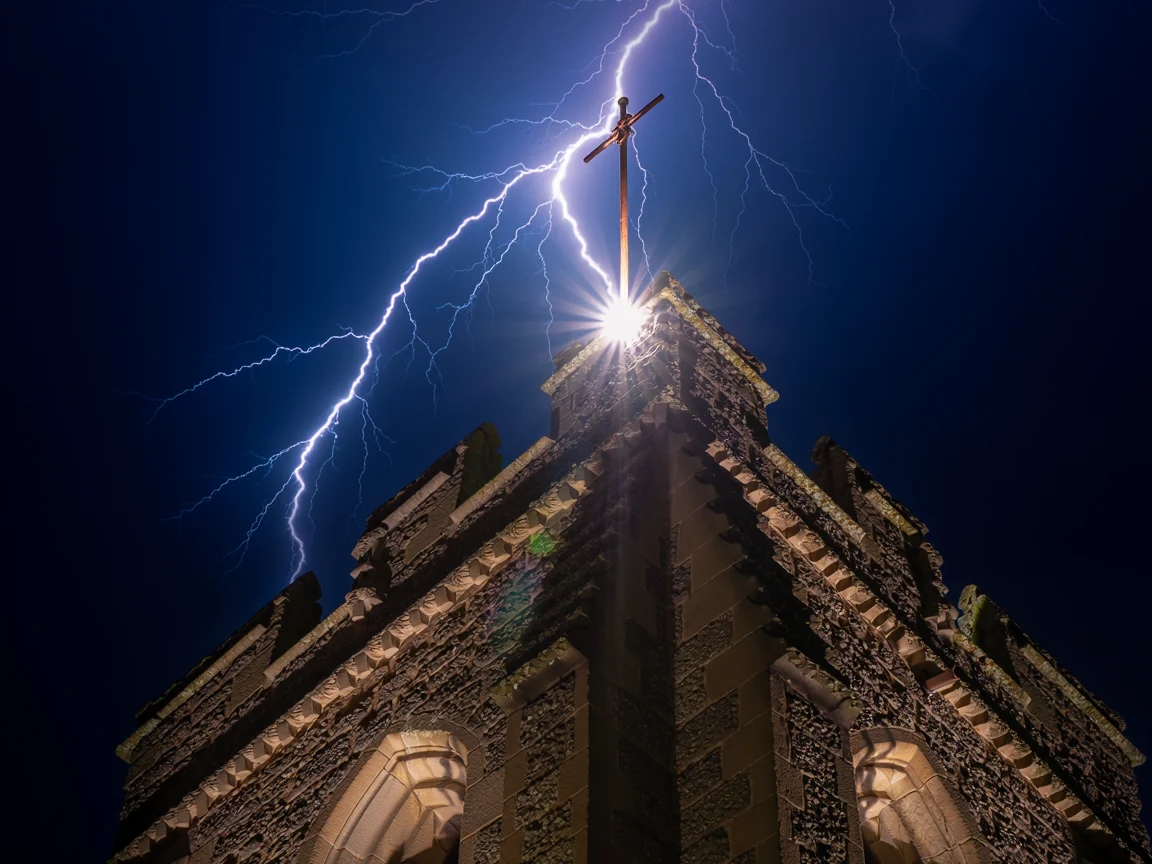
Why buildings need protection
When lightning hits an unprotected building, current may flow through walls, wiring or pipes, causing fires, explosions of masonry and damage to electronics. Tall, isolated or pointed structures such as towers, spires and chimneys are especially exposed.
Air terminals
Metal rods or conductors along roof ridges and edges are placed so that an approaching lightning leader meets them first. Their position is designed using geometric methods, such as the rolling sphere model, to cover all vulnerable parts of the structure.
Conductors and earthing
Thick copper or aluminium conductors run down the outside of the building by the most direct route to ground rods or buried mesh. A good earth connection spreads the current into the soil, and all metal systems are bonded together to prevent dangerous sparks between them.
Surge protection
Even with rods, lightning can send surges along power and data cables. Modern systems include surge protective devices that divert these spikes to earth, protecting electronics inside.
Sources & further reading
Lightning statistics are approximate. Photograph: original AI-generated illustration (Adobe Firefly). Reference organisations do not endorse this website.