Too hard for one country
A smartphone processor contains billions of transistors, each a few tens of nanometres across, built in hundreds of processing steps. Mastering every stage, from designing the circuits to making the machines that print them and the chemicals they use, requires enormous investment and decades of accumulated know-how. Over time, companies specialised in the stages where they were strongest, and countries followed. The result is one of the most globalised supply chains in the world. A chip might be designed in California, made with Dutch and Japanese machines on a wafer from Japan in a factory in Taiwan, and packaged in Malaysia, before ending up inside a laptop assembled in China and sold in Dubai.
Design and the tools behind it
The first stage happens on computers. Firms that design chips but do not make them, such as Nvidia, Qualcomm and Apple, are known as fabless companies. They rely on electronic design automation software, dominated by a few American suppliers, to lay out circuits and simulate them before anything is built. Many designs also license ready-made building blocks, notably processor core designs from Arm, based in Britain. Design is highly skilled but needs relatively little physical capital, so it is spread more widely, with large teams in the United States, India, Israel, Europe and East Asia. Yet the cost of designing a leading-edge chip can run to hundreds of millions of dollars.
Machines, materials and fabs
Manufacturing is where concentration is sharpest. Fabs need machines from a handful of suppliers: the Netherlands' ASML is the sole maker of the extreme ultraviolet lithography systems used for the most advanced chips, while American and Japanese firms dominate etching, deposition and inspection tools. Japan is also a leading source of silicon wafers and specialised chemicals such as photoresists. A leading-edge fab can cost US$20 billion or more. Taiwan, chiefly through TSMC, makes most of the world's most advanced logic chips; South Korea leads in memory; China has expanded rapidly in less advanced chips. The United States, Japan and Europe also operate fabs, often specialising in particular types.
Packaging and testing
After fabrication, wafers carrying hundreds of chips travel to assembly, test and packaging plants. There each wafer is tested, cut into individual dies, and each die is mounted in a protective package with connections to the outside world, then tested again. This stage was long seen as the lower-value end of the business, and much of it moved to China, Taiwan and Southeast Asia, with Malaysia, Vietnam and the Philippines significant hubs. It is becoming more sophisticated. Advanced packaging now stacks memory on processors or joins several smaller chips into one, and it has become a competitive frontier in its own right. Finished chips then ship to electronics assemblers worldwide.
Efficiency and fragility
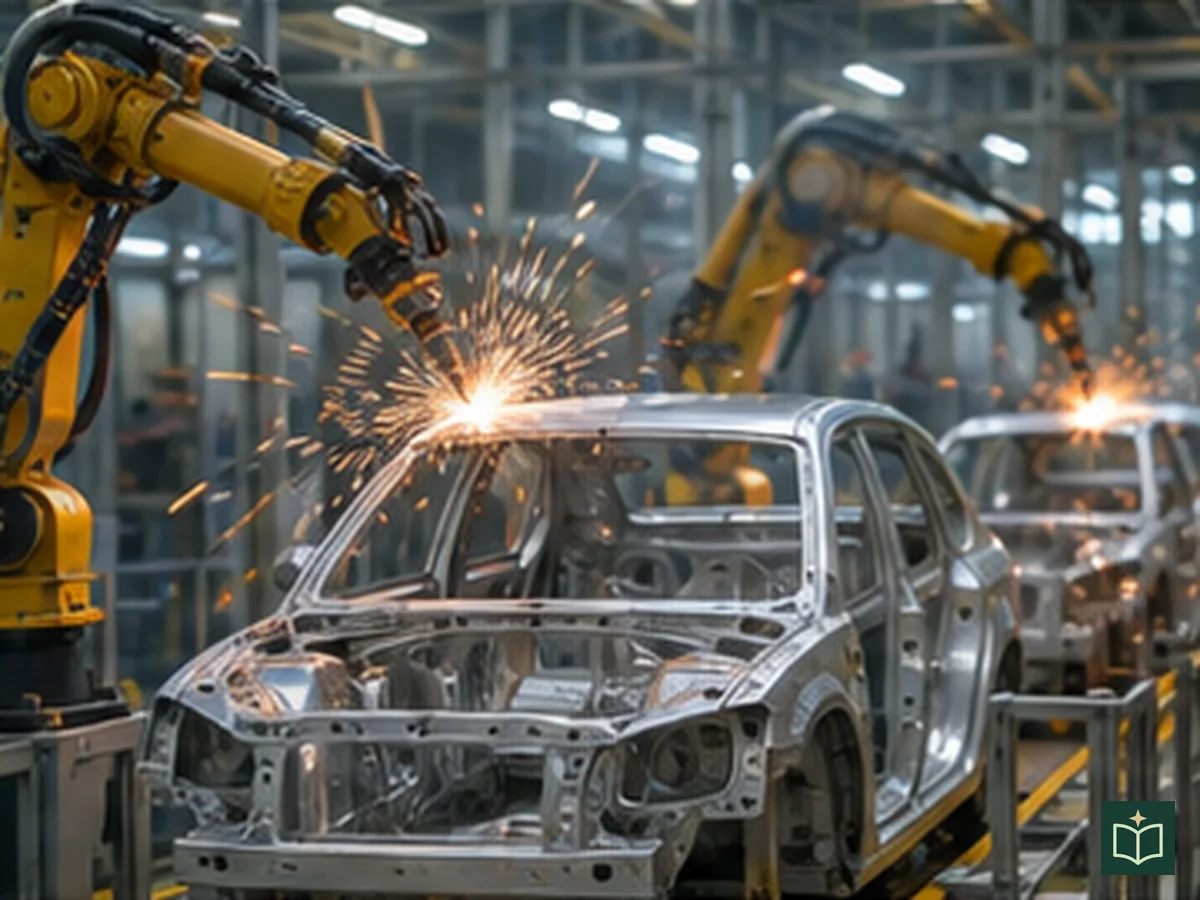
Specialisation made chips cheaper and better: each company concentrates on what it does best, and the whole industry benefits from economies of scale. A 2021 study by the Semiconductor Industry Association and Boston Consulting Group estimated that a chip may cross international borders 70 or more times before reaching its final customer. The weakness is concentration. Earthquakes, droughts that limit factory water, fires, pandemics and trade disputes can all disrupt a single stage. During the shortages of 2020 to 2022, carmakers halted production lines for want of inexpensive chips. The industry's most advanced production capacity being clustered in East Asia is a particular focus for governments elsewhere.
Governments step in
Since the early 2020s, many governments have treated chips as strategic. The United States passed the CHIPS and Science Act in 2022, offering around US$52 billion in support for domestic manufacturing and research, and has restricted exports of advanced chips and equipment to some countries. The European Union adopted its own Chips Act in 2023, and Japan, South Korea, India and China fund ambitious programmes. Gulf states are investing in data centres and exploring roles in the chain. Building a full domestic supply chain remains extremely costly and slow, so most policies aim to diversify and secure particular stages rather than to make every part at home. Interdependence is likely to remain.
Sources & further reading
Figures are rounded and widely published; check the linked organisations for the latest editions. These organisations do not endorse this website.