Two camels, two stories
There are two domesticated camel species. The two-humped Bactrian camel was domesticated in Central Asia. The one-humped dromedary, the camel of Arabia and North Africa, was domesticated in the Arabian Peninsula. Wild dromedaries no longer exist; the animal survives only in domestic and feral form, including a large feral population in Australia descended from camels imported in the nineteenth century. Working out when domestication happened is not easy, because early domestic camels looked almost identical to wild ones. Archaeologists have to combine evidence from bones, rock art, texts and genetics to tell herding from hunting and to trace the animal's spread.
Hunted on the Gulf coast
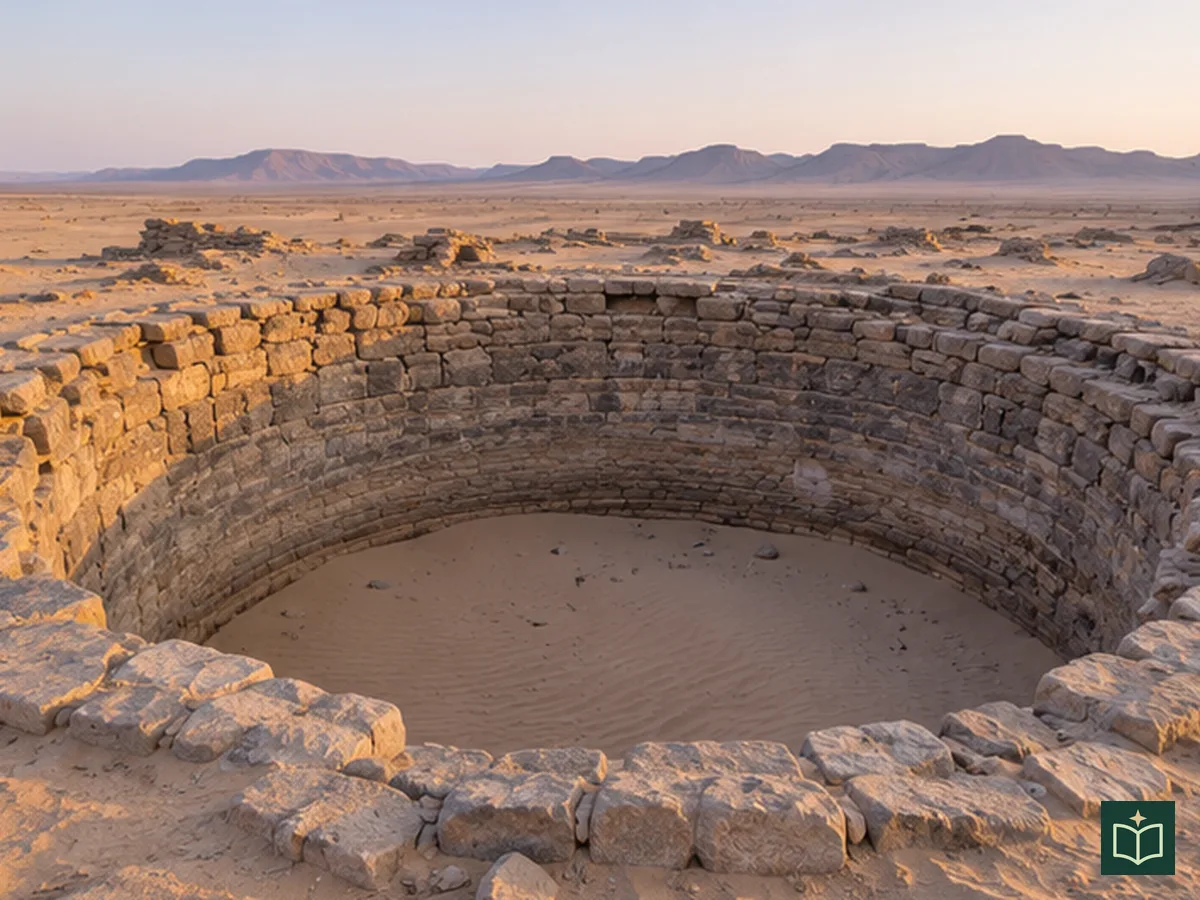
Before domestication, people in Arabia hunted wild dromedaries. Large numbers of camel bones have been found at Bronze Age sites in the UAE, including on Umm an-Nar island off Abu Dhabi and at Tell Abraq, dating to the third millennium BC. Butchery marks show they were eaten, but the age and size of the animals suggest wild herds rather than managed ones. Rock art across the peninsula shows camels hunted with bows and spears. At that time the wild dromedary seems to have been declining, perhaps through hunting and drying climate, which may have encouraged people to capture and keep the animals instead.
Herding begins
Evidence for domesticated dromedaries becomes clearer towards the end of the second millennium BC and the start of the first. At sites in south-eastern Arabia and the Levant, camel bones become more common and appear in contexts linked to transport and trade. Analyses of bones from copper-mining sites in the Arava valley, between Israel and Jordan, suggest domestic camels were present there by around the tenth century BC. A large genetic study published in 2016 supported domestication on the south-eastern Arabian Peninsula, and found that early domestic herds continued to interbreed with wild camels for some time afterwards, adding genetic diversity.
Saddles change everything
Owning a camel and using it efficiently are different things. Early riders sat behind the hump on a simple pad, which made it hard to control the animal or fight. Over the first millennium BC, Arabians developed better saddles. The most important, often called the North Arabian saddle, used a wooden frame resting over the hump, spreading loads more evenly and allowing a rider to sit higher and wield weapons. A loaded camel can typically carry roughly 150 to 200 kilograms and travel for days with little water. This made it possible to move incense, spices, textiles and other goods across hundreds of kilometres of desert.
The caravan economy
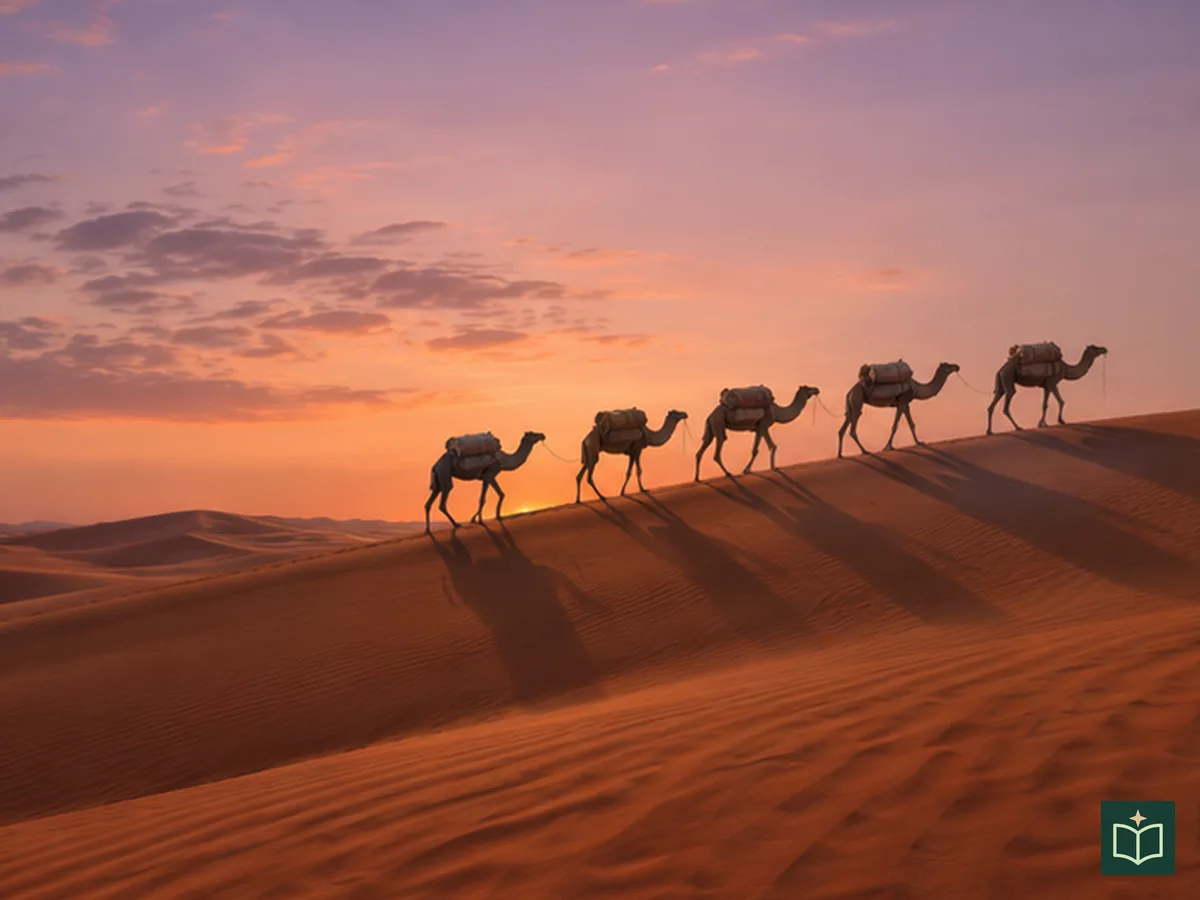
Camel caravans became the backbone of overland trade in Arabia. They carried frankincense and myrrh from the south to markets in the Mediterranean and Mesopotamia, enriching kingdoms such as Saba and caravan cities such as Petra and Hegra. Herding communities who bred, guided and protected caravans gained wealth and political influence. Later, in the early centuries AD, camels became widespread in North Africa and made regular trans-Saharan trade possible, linking the Mediterranean with West Africa's gold and salt. In many regions, camels proved so cheap to run that they replaced wheeled carts, which needed roads and water for draught animals.
A living legacy
Domestication did not end with caravans. In the Gulf, camels remained central to daily life until the oil era, providing transport, milk, meat, wool and leather. Today their role has shifted but not disappeared. Camel milk is sold in supermarkets across the UAE, camel racing remains a major sport, and beauty contests celebrate prized breeds. UNESCO has recognised Arab traditions linked to camels, including camel racing and the oral tradition of calling camel herds, as intangible cultural heritage. The story of the dromedary is a reminder that some of the most important technologies in history were living animals shaped by generations of patient herders.
Sources & further reading
- PNAS · Ancient and modern DNA reveal dynamics of domestication of the dromedary (2016) ↗
- Britannica · Camel ↗
Figures are rounded and widely published; check the linked organisations for the latest editions. These organisations do not endorse this website.