An old route, rebuilt
Long before Islam, tracks crossed northern Arabia linking Mesopotamia with the Hijaz. After the Abbasid caliphs moved the centre of the Islamic world to Iraq in the eighth century, pilgrims travelling from Kufa and Baghdad to Makkah for the Hajj needed a safer way across this hard terrain. The caliphs invested heavily in improving the route, clearing paths, building stations and, above all, securing water. The road ran for roughly 1,400 km, from Kufa south-west across the Nafud and Najd regions to Makkah, with a branch towards Madinah. It became the principal pilgrimage road from Iraq for well over a century.
Why it bears Zubaydah's name
The road is named after Zubaydah bint Ja'far, the wife of the caliph Harun al-Rashid, who died in 831. She was one of the great patrons of her age and spent heavily on works for pilgrims. Historical accounts credit her with digging wells, building cisterns and improving stations along the route, as well as funding the water channel in Makkah known as Ayn Zubaydah, which brought water to the city and the pilgrimage sites. Many other caliphs and officials also contributed, but her generosity was remembered above theirs, and the road came to carry her name. She remains a celebrated example of philanthropy in Islamic history.
Engineering for water
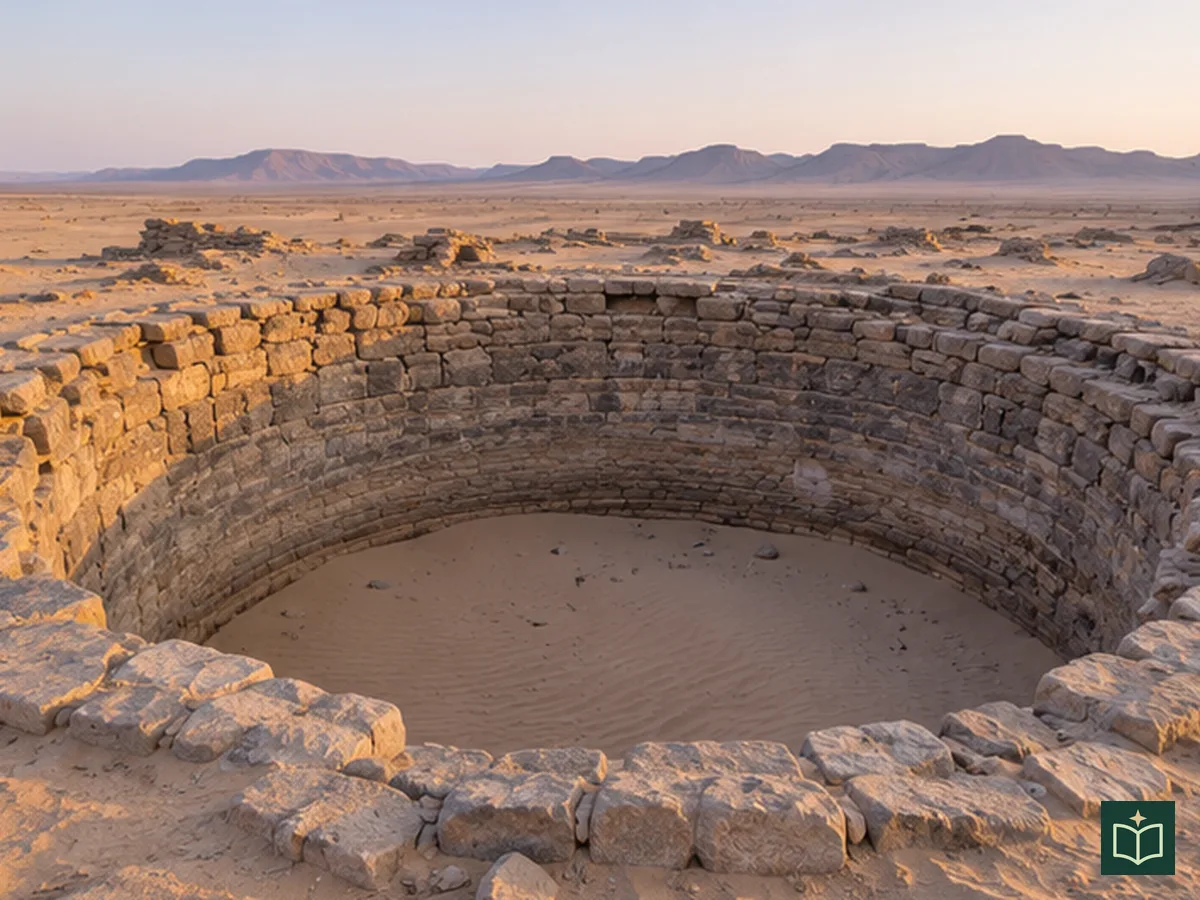
Water was the critical problem. Rain falls rarely in central Arabia, but storms can produce sudden runoff. Engineers built cisterns, some circular and some square or rectangular, often lined with stone and plaster, positioned to catch water flowing off surrounding land. Settling tanks allowed silt to drop out before water entered the main basin, and steps led down for drawing water. Some cisterns were very large and could store water for months. Wells were dug where groundwater was reachable, and dams diverted floods. Remains of these structures can still be seen along the route today, half-filled with sand but recognisable in outline.
Stations along the way
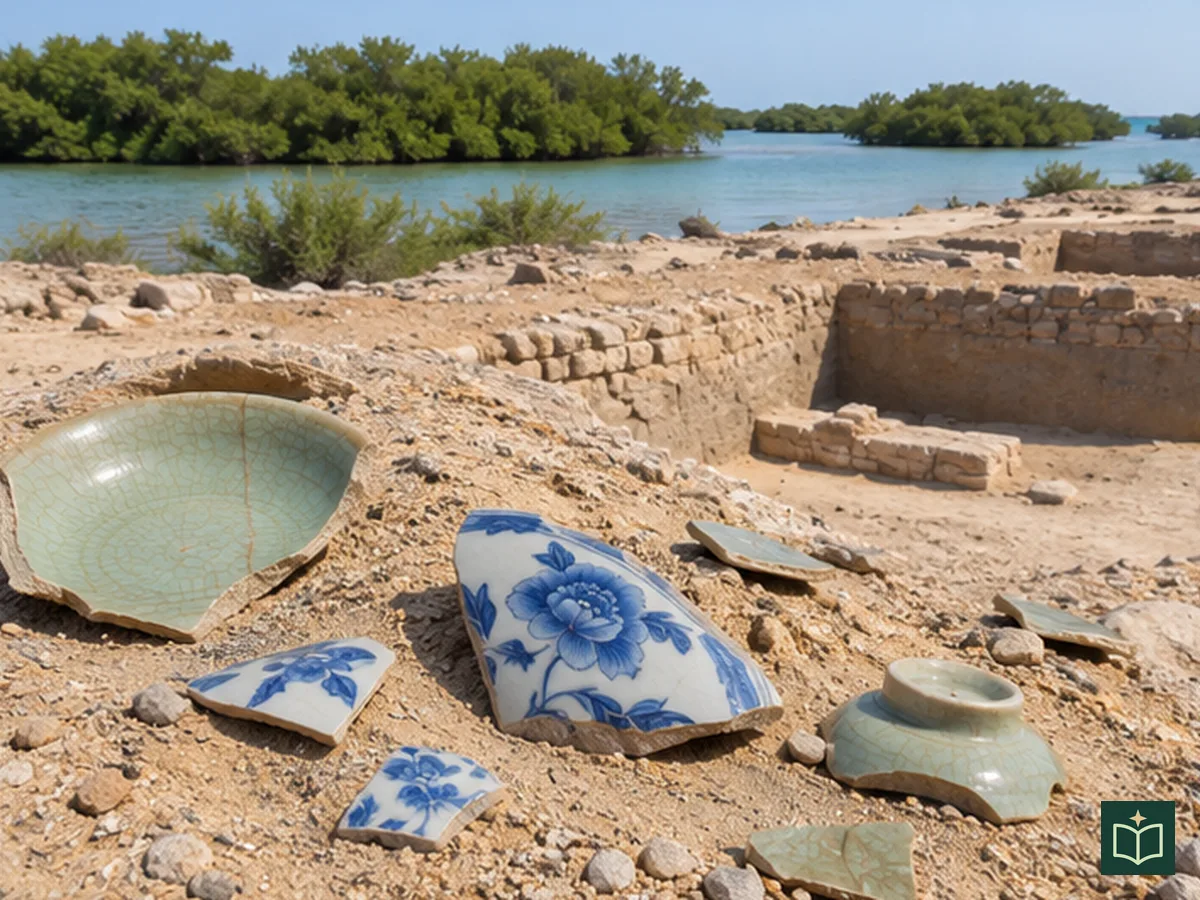
Historical geographers describe some 27 main stations, with smaller halts between them. If the route was about 1,400 km, main stations averaged roughly 50 km apart, and the intermediate halts split those stages roughly in half. Stations typically included a fortified enclosure, a mosque, houses, storerooms and water facilities, offering shelter from heat and raids. Some grew into small towns. Milestones and markers indicated distance and direction, and in places fire beacons or tall cairns may have guided travellers at night. Al-Rabadha, one of the most important stations, has been excavated by Saudi archaeologists, revealing houses, mosques, cisterns and finds such as pottery and glass.
Decline of the road
The road's fortunes followed those of the Abbasid state. As central authority weakened in the ninth and tenth centuries, maintenance lapsed and security declined. Pilgrim caravans were attacked, most notoriously by the Qarmatians, a movement based in eastern Arabia, who raided caravans in the early tenth century. Some stations were abandoned and cisterns silted up. Later rulers occasionally repaired parts of the route, and it continued to be used in some periods, but other routes, such as those from Syria and Egypt, became more important. By early modern times, much of Darb Zubaydah had returned to desert, its structures visible only as scattered ruins.
A heritage corridor
Today Darb Zubaydah is one of the most significant archaeological landscapes in Saudi Arabia. The kingdom has placed it on its tentative list for UNESCO World Heritage nomination, and researchers continue to survey stations, cisterns and inscriptions along its length. The road offers a clear example of how a state could organise long-distance infrastructure around a religious duty, combining water engineering, security and planning. It also tells a social story: of pilgrims from many lands, of patrons who saw public works as an act of piety, and of desert communities who served the caravans. Few ancient roads so clearly reveal the logistics behind a journey of faith.
Sources & further reading
Figures are rounded and widely published; check the linked organisations for the latest editions. These organisations do not endorse this website.