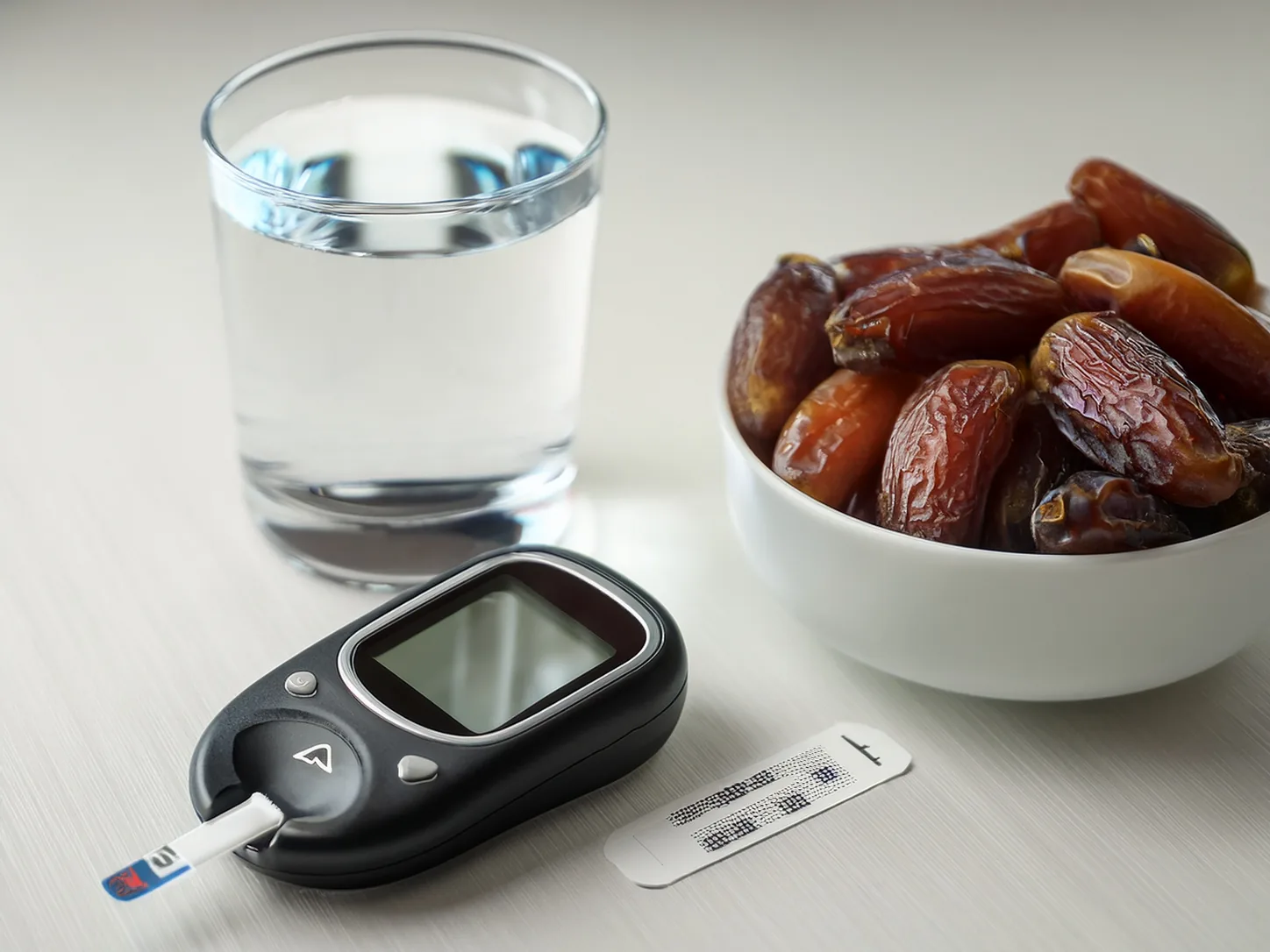
A teaspoon in the blood
Glucose, a simple sugar, is the body's most readily available fuel, and the brain alone uses roughly 120 grams of it a day. Yet the blood holds surprisingly little at any moment. An adult's roughly 5 litres of blood, at a typical fasting level of about 5 millimoles per litre, contains around 4.5 grams of glucose, about a teaspoon. A single sweet drink can contain several times that amount. Keeping levels within a narrow band, normally about 4 to 6 millimoles per litre before meals and a little higher after, is therefore a constant balancing act. Too little starves the brain; too much, over years, damages blood vessels and nerves.
Insulin: the storage signal
The key regulator is the pancreas, a gland behind the stomach. Scattered through it are about a million clusters of cells called islets of Langerhans. When blood glucose rises after a meal, beta cells in the islets release insulin into the blood. Insulin acts like a key: it signals muscle and fat cells to move glucose transporters to their surfaces, letting sugar in. It tells the liver and muscles to store glucose as glycogen, a compact chain of sugar units, and encourages the body to turn surplus energy into fat. As glucose is absorbed into tissues, blood levels fall back, and insulin release slows. The whole loop runs automatically.
Glucagon: the release signal
Between meals and overnight, the opposite problem arises: glucose keeps being used, especially by the brain, but none is arriving from food. Now alpha cells in the islets release a second hormone, glucagon. It prompts the liver to break down its glycogen and release glucose into the blood. The liver stores enough glycogen to supply the body for roughly a day. Over longer periods without food, the liver also makes new glucose from other materials, such as amino acids and glycerol, a process called gluconeogenesis. Stress hormones such as adrenaline and cortisol can raise blood sugar too, preparing the body for action, which is why illness and stress often push glucose up.
The discovery of insulin
Before insulin was discovered, a diagnosis of what is now called type 1 diabetes was usually a death sentence, particularly for children. In 1921, at the University of Toronto, Frederick Banting and Charles Best, working with John Macleod and later the chemist James Collip, extracted insulin from animal pancreases. In January 1922 a 14-year-old boy named Leonard Thompson became the first person to receive an insulin injection to treat diabetes, and his condition improved dramatically. Banting and Macleod received the Nobel Prize in 1923. Insulin was later among the first medicines made by genetically engineered bacteria, and today many forms are available, from rapid-acting to long-lasting.
Type 1 and type 2
In type 1 diabetes, which accounts for a small minority of cases, the immune system destroys the beta cells, so the body makes little or no insulin and people need insulin treatment for life. It often begins in childhood or young adulthood. Type 2 diabetes, which accounts for around 90% of cases, develops more gradually. Muscle, fat and liver cells respond less strongly to insulin, a state called insulin resistance, and over time the beta cells cannot keep up. Excess weight, especially around the abdomen, physical inactivity, ageing and family history raise the risk. Diabetes is commonly diagnosed with a fasting glucose of 7.0 millimoles per litre or above, or an equivalent long-term blood test.
A major Gulf health issue
Worldwide, the International Diabetes Federation estimated in 2021 that about one in ten adults, more than 530 million people, were living with diabetes. Its estimates place several Gulf states among the countries with the highest adult prevalence, reflecting rapid changes in diet and activity, as well as genetic factors. Because high blood sugar causes few symptoms at first, many people are unaware they have it, so screening is widely encouraged. Long-term complications can affect the eyes, kidneys, nerves, heart and feet. Regular activity, a balanced diet and a healthy weight lower the risk of type 2 diabetes, and anyone with concerns should speak to a doctor about testing.
Sources & further reading
- WHO · Diabetes fact sheet ↗
- International Diabetes Federation · Diabetes Atlas ↗
- Britannica · Insulin ↗
Figures are rounded and widely published; check the linked organisations for the latest editions. These organisations do not endorse this website.