A tree with two sexes
Most flowering plants carry male and female parts on the same individual, often in the same flower. The date palm, Phoenix dactylifera, does not. Each tree is either male or female for life, an arrangement botanists call dioecious. Male palms produce dense clusters of small, creamy flowers that release clouds of pollen. Female palms produce flowers that can become fruit, but only if pollen reaches them. A grove of female trees with no males nearby will flower every spring and yield almost nothing worth harvesting. The fruit we eat therefore depends on a meeting between two separate trees, and in a working date garden that meeting is rarely left to chance.
Why the wind is not enough
In the wild, date palms are pollinated mainly by wind, with some help from insects. Wind is wasteful. To fertilise enough flowers, a grove needs roughly as many male trees as female ones, and much of the pollen still drifts away over sand. For a farmer, a male palm is a tree that occupies water and land but bears no fruit. Hand pollination solves the problem. By carrying pollen directly to each flower cluster, growers can keep perhaps one male for every 50 or so females and still achieve a full crop. The practice turns a hit-and-miss natural process into a predictable harvest, and it frees almost the whole grove for fruiting trees.
The work in the crown
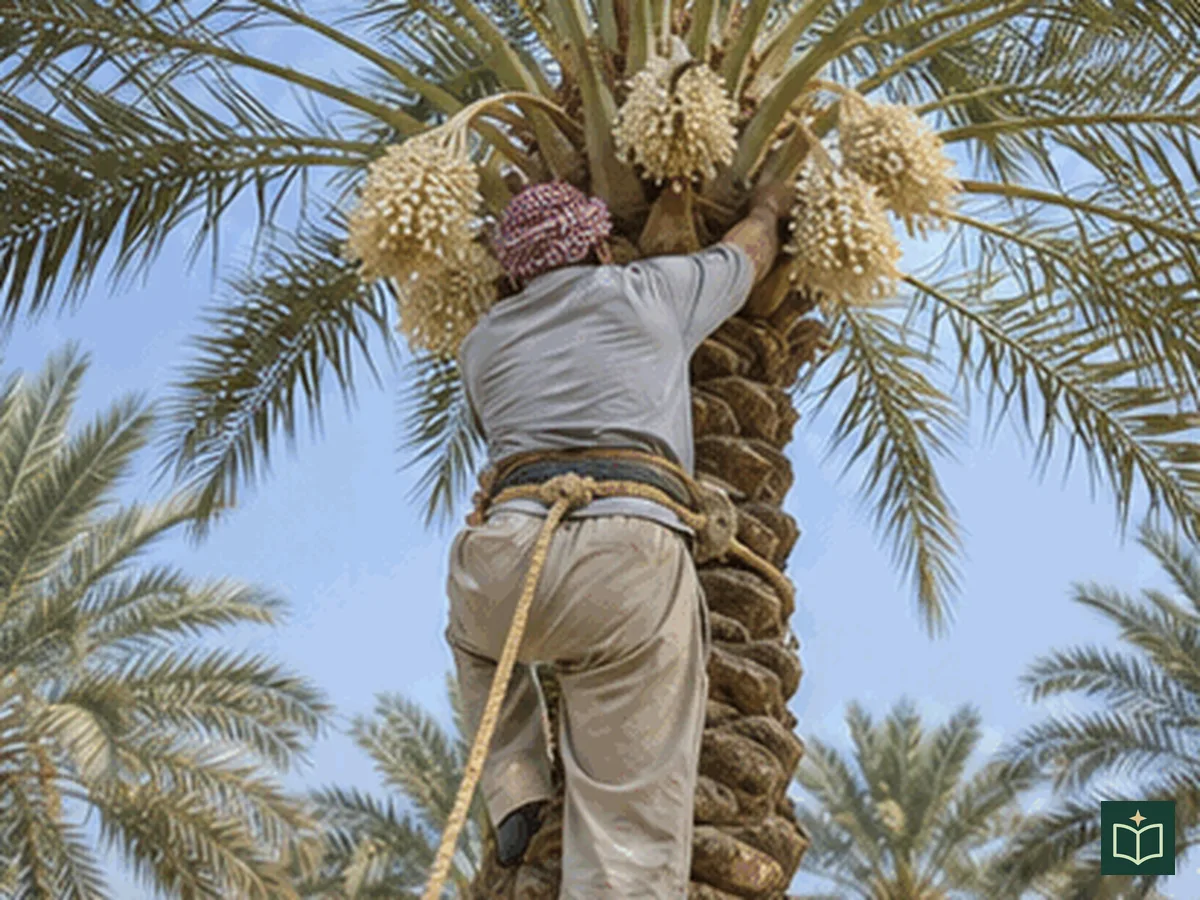
Pollination season in the Gulf falls in late winter and spring. As the woody sheath around a female flower cluster splits, a climber ascends the trunk, traditionally with a looped rope or belt around the palm and his waist. He pushes a few strands of male flowers among the female blossoms and often ties the cluster loosely so the strands stay in place. The timing matters: female flowers are most receptive for a few days after opening. Pollen can also be dried and stored, so a farmer is not stranded if the males flower early. Larger plantations increasingly blow powdered pollen into the crowns with machines, but the principle is unchanged.
Seeds cannot be trusted
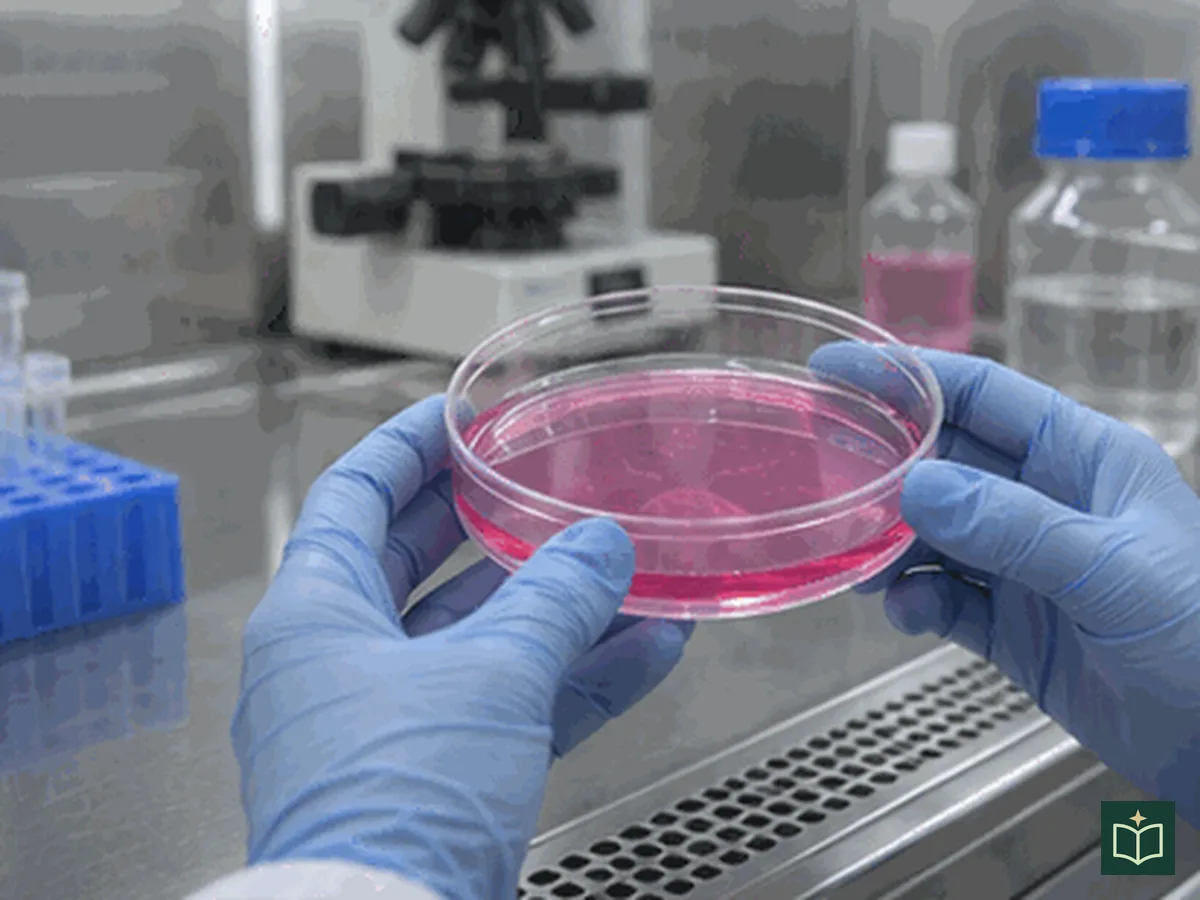
Planting a date stone is a gamble. About half of seedlings turn out to be male, and nobody can tell which until the young tree first flowers after several years. Seedlings also differ from their mother in fruit size, sweetness and ripening time. For this reason, growers propagate prized varieties from offshoots, the suckers that sprout at the base of a female palm. Each offshoot is a clone of its parent, so it will be female and bear the same fruit. Laboratories now multiply elite palms by tissue culture as well. Male trees are chosen with care too, because the pollen source can influence the size of the fruit and when it ripens.
An ancient partnership
People have tended date palms in the Gulf and Mesopotamia for thousands of years. Charred date stones from Dalma Island, off the coast of Abu Dhabi, have been dated to around 7,000 years ago, among the earliest evidence of dates in the region. Writers in ancient Mesopotamia referred to the fertilising of palms, and some carved scenes from Assyrian palaces have been interpreted as showing pollination, though that reading is debated. In 2019 the knowledge, skills and traditions surrounding the date palm were inscribed on UNESCO's list of the intangible cultural heritage of humanity in a joint nomination by Arab states, including the UAE, Saudi Arabia and Oman.
Why the method endures
Hand pollination survives because it works and because the alternatives are costly. Machines save labour on large farms, but many smaller gardens still rely on climbers who know each tree. Researchers continue to study how different pollen sources affect fruit size, quality and timing, and how heat during flowering can reduce fruit set, a growing concern as summers lengthen. Rising temperatures, water scarcity and the red palm weevil all put pressure on growers. Yet the basic arrangement has barely changed in millennia: a male tree, a female tree and a person who brings them together. In a region where the date palm once provided food, shade, timber and rope, that partnership shaped daily life.
Sources & further reading
Figures are rounded and widely published; check the linked organisations for the latest editions. These organisations do not endorse this website.