The circulation loop
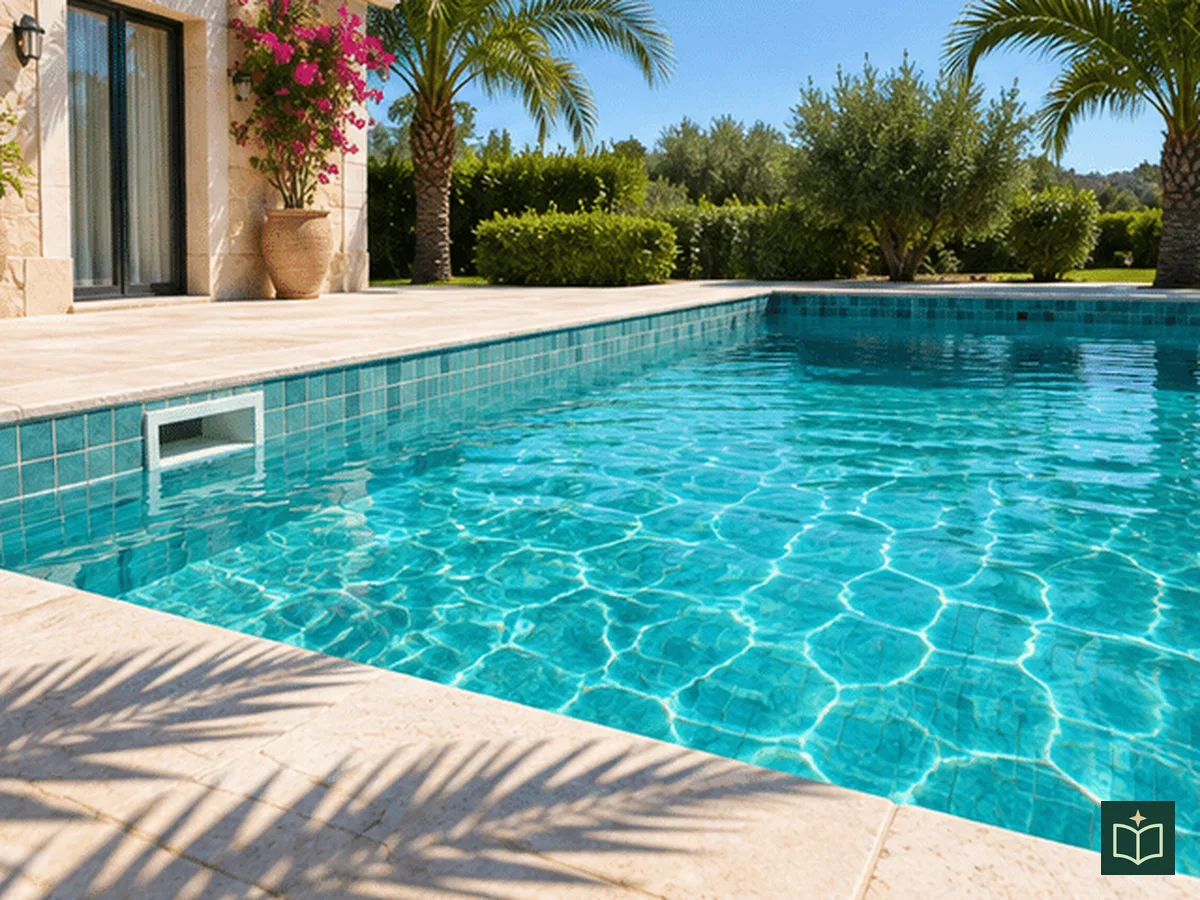
A swimming pool is a body of water that is constantly being cleaned. Skimmers at the surface and drains near the bottom draw water to a pump, which pushes it through a filter and a disinfection system before returning it through inlets around the sides. The time it takes for the whole volume to pass through this loop is called the turnover. Home pools often aim to turn over their water every six to eight hours, while busy public pools need much faster turnovers. Good circulation matters as much as the equipment itself. Dead spots where water barely moves are where algae and grime first take hold.
Filters catch the dirt
Filters remove particles that make water cloudy. Sand filters, the most common type, pass water through a deep bed of graded sand that traps dirt; they are cleaned by backwashing, which reverses the flow and flushes debris to waste. Cartridge filters use pleated fabric that is removed and hosed down. Diatomaceous earth filters coat a mesh with fine fossil powder that catches very small particles. Filtration alone does not kill germs, and some parasites, such as Cryptosporidium, are tough enough to resist normal chlorine levels, which is why public pools also rely on good filtration, hygiene rules and sometimes ultraviolet treatment.
Chlorine and pH
Chlorine is the most widely used pool disinfectant, added as liquid sodium hypochlorite, tablets, granules or generated on site from salt by electrolysis. In water it forms hypochlorous acid, which kills bacteria and viruses within minutes. The fraction present as this active form depends heavily on pH. As pH rises, more chlorine turns into a much weaker form, so a pool at high pH can have plenty of chlorine yet disinfect poorly. That is why operators keep pH between about 7.2 and 7.8. Chlorine that has reacted with sweat, urine and other nitrogen compounds forms chloramines, which cause the sharp smell and red eyes often blamed on chlorine itself.
Dosing a home pool
Consider a pool 10 metres long, 4 metres wide and 1.4 metres deep on average. It holds 56 cubic metres of water. To turn that over every six hours, the pump must move about 9.3 cubic metres an hour. Suppose the free chlorine level needs raising by 2 milligrams per litre. Since one cubic metre is 1,000 litres, the pool needs 112 grams of available chlorine. Liquid pool chlorine at about 12.5% strength contains roughly 125 grams per litre, so just under 0.9 litres would do it. Test kits or automatic controllers check the result, because overdosing irritates skin and eyes, while underdosing lets germs and algae take hold.
Why the Gulf is harder
Heat and sunshine work against pool chemistry. Ultraviolet light breaks down free chlorine quickly, so an outdoor pool in strong sun can lose most of its unprotected chlorine within hours. Many outdoor pools add cyanuric acid, a stabiliser that shields chlorine from sunlight, though too much reduces its effectiveness. Warm water also speeds up the growth of algae and bacteria and increases evaporation, which concentrates dissolved minerals and requires frequent top-ups. In Gulf summers, pool water can become uncomfortably warm, so some villas and hotels install chillers. Dust and sand blown in by winds add to the load on filters, which then need more frequent backwashing.
Myths and safety
The strong chlorine smell around a pool is often taken as a sign of too much chlorine, but it usually signals chloramines, meaning the water needs more disinfection and better ventilation, not less. Another myth is that clear water is always safe. Some germs are invisible and survive in crystal-clear water if disinfection is weak. Showering before swimming, keeping children who are unwell out of the water and avoiding swallowing pool water all help. Pool chemicals should be stored separately and never mixed, because some combinations release toxic gases. Public pools follow local regulations on testing frequency, and residents should consult professionals for anything beyond routine home maintenance.
Sources & further reading
- WHO · Guidelines for safe recreational water environments ↗
- US CDC · Healthy swimming ↗
- Britannica · Swimming pool ↗
Figures are rounded and widely published; check the linked organisations for the latest editions. These organisations do not endorse this website.