Power is the first constraint
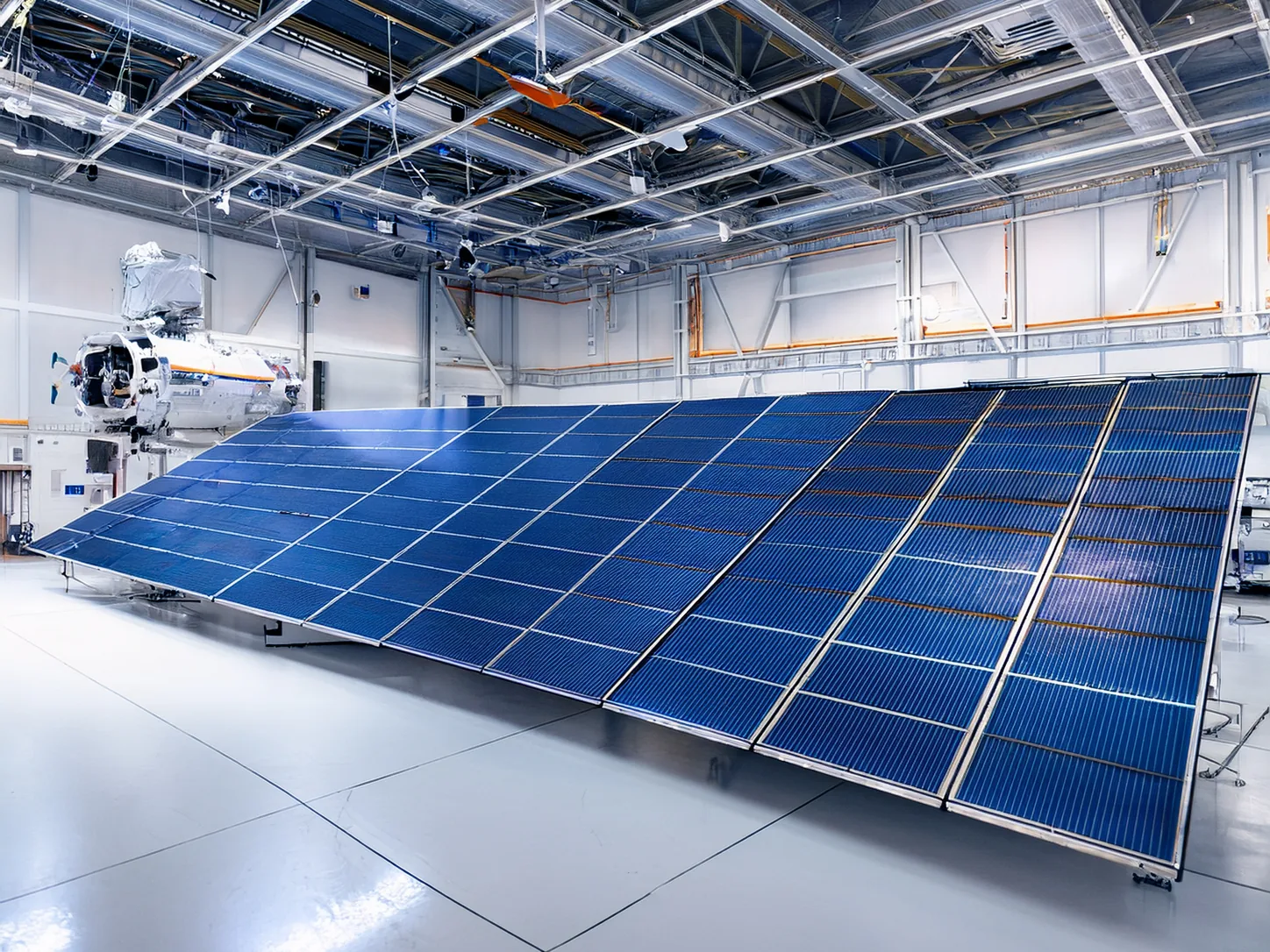
A spacecraft needs electricity for everything: computers, radios, cameras, scientific instruments and, crucially, heaters that stop its components freezing. There is no refuelling or plugging in, so designers must choose a power source that will last the whole mission, sometimes for decades. Two technologies dominate. Most satellites and many probes use solar panels, which convert sunlight directly into electricity and charge batteries for periods in shadow. Some missions instead carry radioisotope generators, which turn the heat of decaying radioactive material into electricity. The choice depends above all on how much sunlight will be available where the spacecraft is going, and for how long.
Sunlight weakens quickly
Near Earth, sunlight above the atmosphere delivers about 1,361 watts on every square metre facing it. That intensity falls with the square of distance from the Sun. Mars orbits about 1.52 times farther out than Earth, so a panel there receives only about 43 per cent as much, roughly 590 watts per square metre. Jupiter, about 5.2 times farther out, gets under 4 per cent. Panels also lose efficiency over time from radiation damage and dust. Even so, engineers have pushed solar power surprisingly far. NASA's Juno, which reached Jupiter in 2016, uses three enormous solar arrays to generate a few hundred watts, an extraordinary achievement at that distance.
Heat into electricity
Beyond Jupiter, or in places without reliable sunlight, missions turn to radioisotope thermoelectric generators, or RTGs. They contain plutonium-238, which is not a bomb material and does not explode; it simply gives off steady heat as it decays, with a half-life of about 88 years. Thermocouples, junctions of two different materials, turn the temperature difference between the hot fuel and cold space into electricity, with no moving parts. The fuel is encased in tough layers designed to survive a launch accident. RTGs powered both Voyager probes, launched in 1977, and the Mars rovers Curiosity and Perseverance, whose generators let them work through dust storms and freezing nights.
Gulf missions and solar choices
Spacecraft that stay in the inner solar system almost always choose solar power because it is lighter, cheaper and simpler. The International Space Station runs on eight large solar array wings. The UAE's Hope probe, which has orbited Mars since 2021, uses solar panels to power its instruments and charge batteries for periods when the planet blocks the Sun. Planning involves careful budgets: every instrument's needs, heating demands and radio transmissions are added up for each phase of the mission, with margins for ageing panels. If power runs short, the spacecraft enters a safe mode, switching off all but essential systems.
A slow fade
RTGs have a natural end. As plutonium decays and thermocouples age, their output falls by a few watts each year. The Voyagers now operate on a fraction of their original power, and engineers have switched off heaters and instruments one by one to keep them talking to Earth from beyond the edge of the Sun's influence. Plutonium-238 is also scarce: it does not occur naturally and must be produced in nuclear reactors, and supplies have constrained how many such missions can fly. That scarcity, along with better solar cells, is one reason recent missions have stretched solar power to places once thought to require nuclear sources.
Misconceptions and the future
A common assumption is that nuclear-powered spacecraft carry reactors. Almost all use RTGs, which have no chain reaction and simply exploit natural decay heat. Another is that solar panels are always cheaper; for a mission to Saturn or beyond they would need to be impractically huge. Future options include more efficient generators that use a small engine to convert heat, and small fission reactors to power bases on the Moon, where nights last about two weeks. For now, the rule of thumb holds: missions that stay close to the Sun harvest its light, while those heading into the dark bring their own source of warmth and power.
Sources & further reading
Figures are rounded and widely published; check the linked organisations for the latest editions. These organisations do not endorse this website.