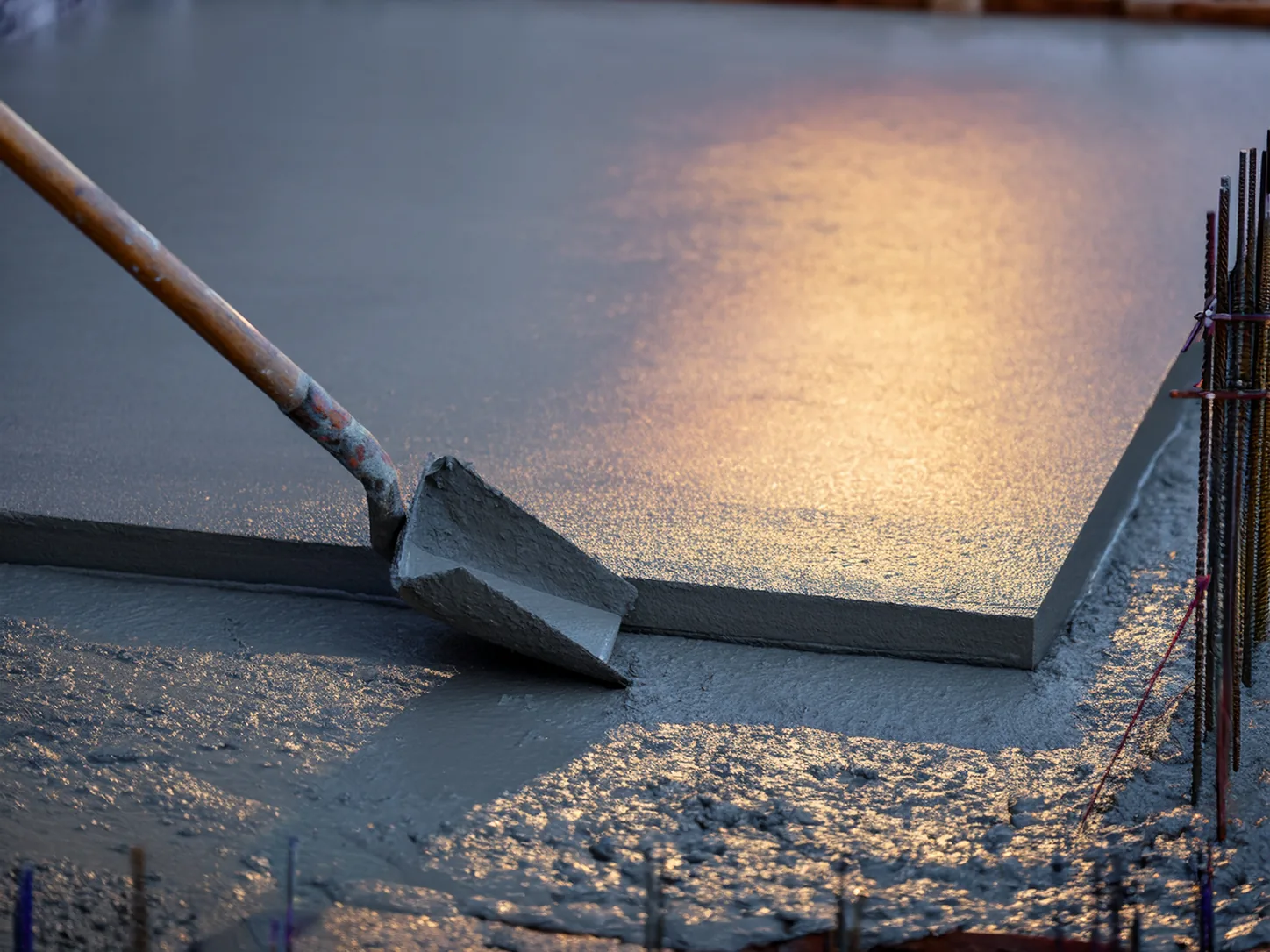
Not drying but reacting
Fresh concrete is a mix of cement, water, sand and crushed stone. It looks as if it hardens by drying, like mud in the sun, but the opposite is closer to the truth. Cement hardens through a chemical reaction with water called hydration. The water is not simply evaporating; much of it is being built into new solid compounds. Concrete can even harden underwater, which is how foundations for bridges and harbour walls are cast. If fresh concrete loses its water too early, hydration stalls and the material ends up weaker and more porous. That is why builders talk of curing concrete, keeping it moist, rather than drying it.
What happens inside
The most common cement, Portland cement, is made by heating limestone and clay in a kiln to about 1,450 degrees Celsius and grinding the result with a little gypsum. Its main ingredients are calcium silicates. When they meet water, they form calcium silicate hydrate, a gel of extremely fine fibres that grows outwards from each grain and binds everything together, along with crystals of calcium hydroxide. Within a few hours the paste sets and can no longer be worked. Hardening continues for weeks and, more slowly, for years. The reaction also releases heat, which in thick structures such as dam walls and large foundations can raise the inside temperature considerably.
The water balance
Strength depends heavily on the ratio of water to cement. Only a certain amount of water is needed for the reaction; the rest makes the mix easier to pour but leaves tiny pores when it eventually leaves. More water means more pores and weaker, less durable concrete. A structural mix might use a water-to-cement ratio of 0.45, so 350 kilograms of cement would take about 158 kilograms of water. Builders who add extra water on site to make pouring easier are quietly weakening the result. Chemical admixtures called superplasticisers solve the dilemma by making concrete flow freely without additional water, and they are essential for pumping concrete up tall towers.
Why curing matters
Engineers specify concrete by the strength it reaches 28 days after casting, a convention based on how quickly typical mixes gain strength. Under good conditions, a common mix reaches roughly two-thirds of that strength within a week. Curing during this period means keeping the surface wet and protected: covering it with damp hessian or plastic sheeting, spraying it with water or applying a curing compound that seals in moisture. Poorly cured surfaces may crack, dust or let in water and salts, which later corrode the steel reinforcement inside. Because reinforcing steel gives most concrete structures their strength in tension, protecting it from corrosion largely decides how long a building lasts.
Pouring in Gulf heat
Hot weather speeds hydration, which sounds helpful but is not. Concrete can stiffen before it is properly placed, water evaporates rapidly, and surfaces crack as they shrink. Very warm concrete also tends to end up weaker in the long run. Guidelines for hot-weather concreting therefore often cap the temperature of fresh concrete, typically somewhere around 32 to 35 degrees Celsius. In the Gulf, contractors chill mixing water, replace some of it with crushed ice, shade materials and pour at night. During construction of the Burj Khalifa, concrete was mixed with ice and placed largely at night to control its temperature. Sea air and salty groundwater add further demands for durable mixes.
Limits and greener mixes
A common misconception is that concrete is simply strong. It resists squeezing very well but cracks easily when stretched, which is why steel bars are embedded in it. It is also the world's most used building material, and producing cement is responsible for a significant share of global carbon dioxide emissions, partly because heating limestone releases carbon dioxide chemically. Producers are cutting that by replacing some cement with by-products such as fly ash and furnace slag, using new low-carbon cements and capturing emissions. Researchers are even testing concrete that absorbs carbon dioxide during curing. The basic chemistry, however, remains the same as it was for the cements of the nineteenth century.
Sources & further reading
Figures are rounded and widely published; check the linked organisations for the latest editions. These organisations do not endorse this website.