Parts from everywhere
A smartphone contains components from dozens of suppliers in many countries. The main processor is usually made by specialised chip foundries, many of them in Taiwan or South Korea. Memory chips come from a handful of large producers. Displays, camera modules, batteries, speakers, sensors, antennas and glass are made by other specialist firms. Even small parts such as connectors, springs and screws have their own suppliers. These components travel to final assembly plants, mostly in China, India and Vietnam, where they are combined into finished handsets. Phone brands design the product and manage the supply chain, but most do not own the factories that put their phones together.
Building the circuit board
The heart of the phone is the main circuit board, built by surface-mount technology. A machine first spreads solder paste through a thin metal stencil, depositing tiny dabs exactly where each component will sit. Pick-and-place machines then grab parts from reels with suction nozzles and position them precisely, some placing tens of thousands of components an hour. Many parts are smaller than a grain of rice. The board then passes through a reflow oven, where the paste melts and solidifies, bonding each part. Cameras inspect the results automatically, and X-ray machines check joints hidden beneath chips. Defective boards are reworked or scrapped before they reach final assembly.
The assembly line
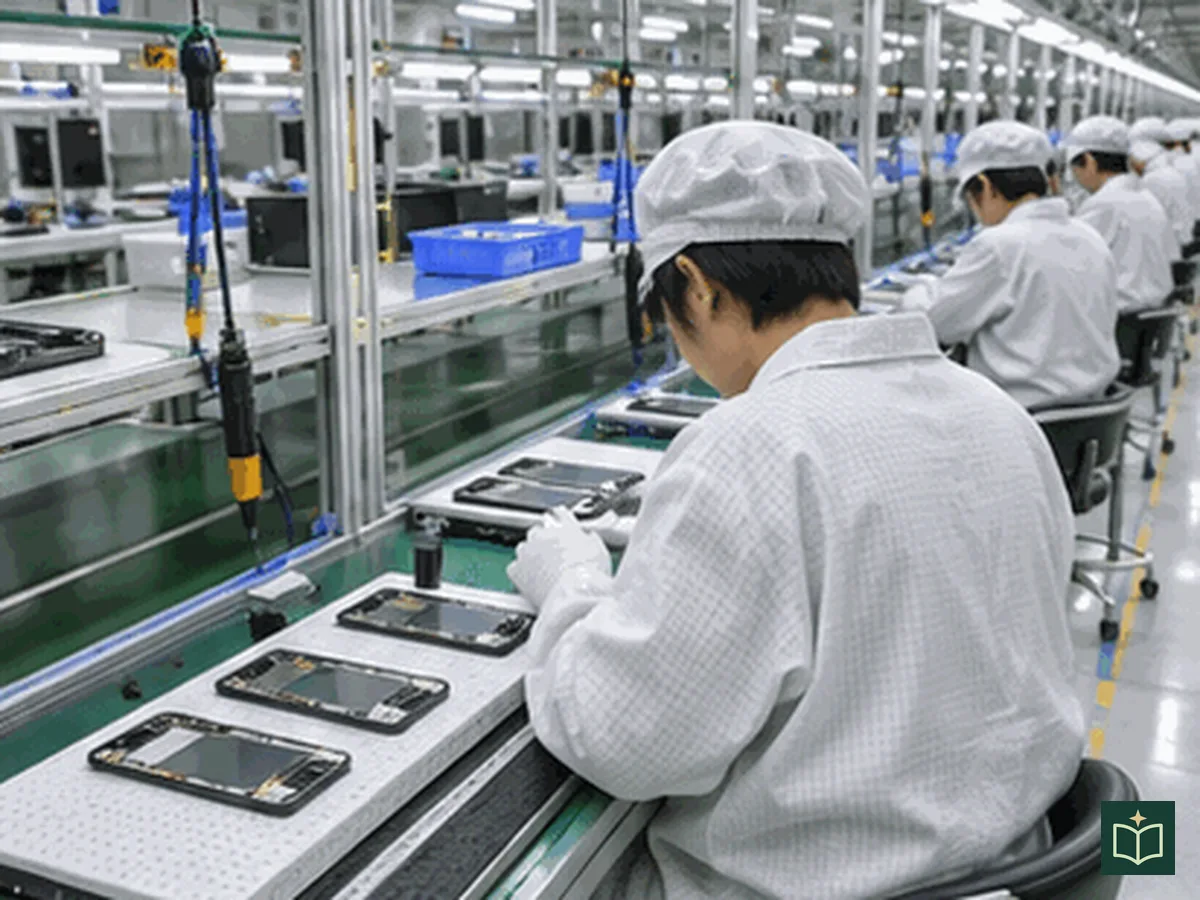
Final assembly is surprisingly manual, because fitting flexible cables, delicate connectors and adhesive gaskets inside a compact case is difficult to automate. Long lines of workers each perform one or two tasks: placing the board in the frame, connecting the display, fitting cameras, inserting the battery, applying adhesive or tightening tiny screws. Machines assist with pressing, glueing and screwing to consistent force. A line producing one phone every 20 seconds over two 10-hour shifts would turn out about 3,600 phones a day. Large factories run many lines in parallel, which is how a few plants can produce hundreds of thousands of handsets in a single day during busy periods.
Testing each handset
Every phone is tested before packing. Automated stations check that the device powers on, that the touchscreen responds across its surface and that the display shows correct colours with no dead pixels. Cameras are calibrated by photographing targets under controlled light. Radios are tested inside shielded boxes that block outside signals, confirming that mobile, Wi-Fi, Bluetooth and satellite positioning work within limits. Water-resistant models are checked with air-pressure tests for leaks. Sensors, speakers, microphones and buttons are tested too. The software is loaded, a unique device identity such as the IMEI number is recorded, and only then is the phone boxed with its accessories.
Why assembly is concentrated
Smartphone assembly gathered in China from the 2000s because of large workforces, dense supplier networks, efficient logistics and government support. Factories there can scale up quickly before a major launch and hire extra workers for peak months. In recent years brands have spread assembly to India, Vietnam and other countries, influenced by labour costs, trade tensions, tariffs and incentives offered by governments. Moving assembly is complex, because suppliers, trained workers and logistics must move too. Working conditions in assembly plants, including hours and pay, have faced scrutiny over the years, and brands publish supplier standards and audit reports in response to that pressure.
From factory to your hand
Once boxed, phones are shipped by air or sea to regional distribution centres. Hubs such as Dubai play an important role in moving phones to markets across the Middle East, Africa and South Asia. Retailers and operators receive stock in time for launch days, which are planned months ahead so that supply matches demand. After sale, the same supply chain supports repairs, spare parts and recycling. Phones contain valuable metals such as gold, copper and cobalt, but recovering them is complicated by glued construction. Understanding how phones are made helps explain their prices, their repairability and why a single factory problem can delay launches worldwide.
Sources & further reading
Figures are rounded and widely published; check the linked organisations for the latest editions. These organisations do not endorse this website.