A till run by the customer
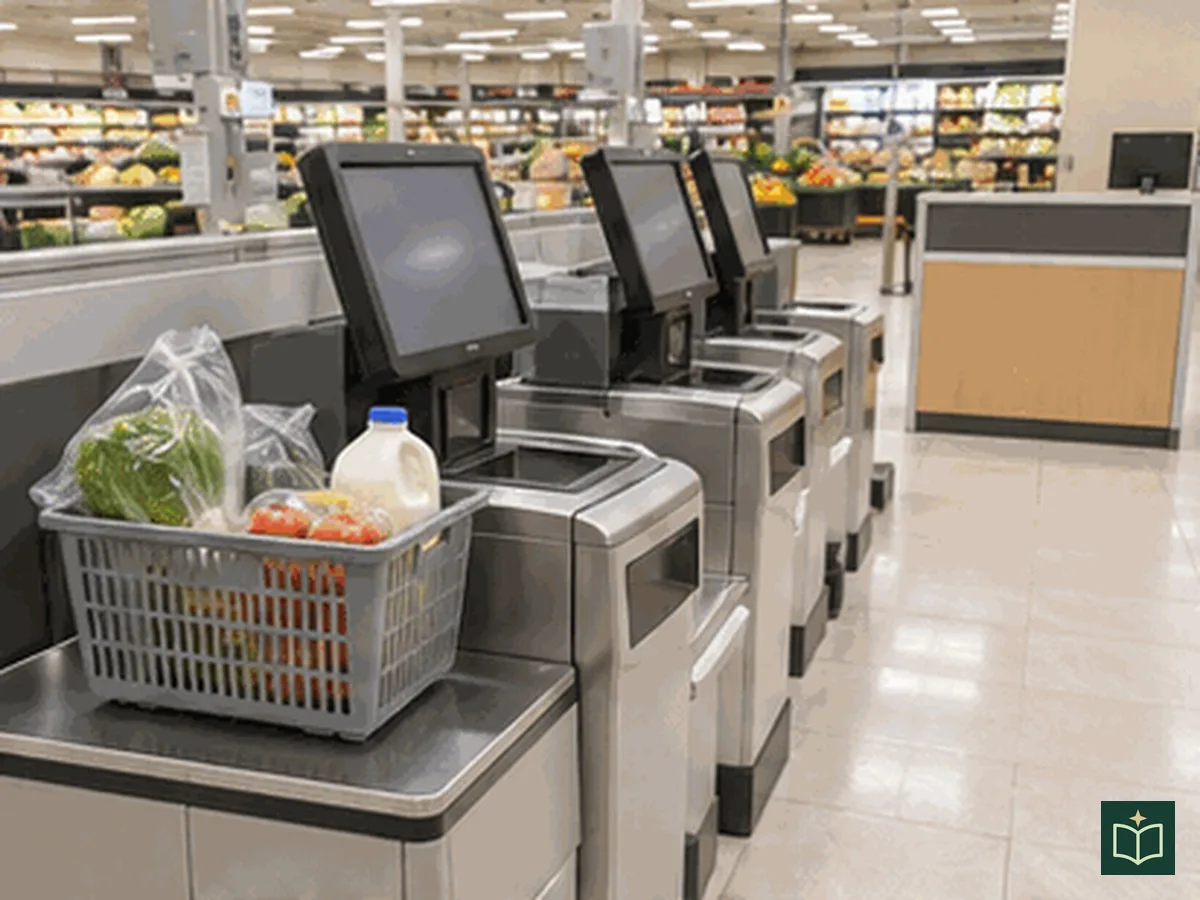
Self-checkouts let shoppers scan and pay without a cashier, so a single assistant can supervise several tills at once. That saves labour and shortens queues for small baskets, but it shifts a problem onto the machine: how to know whether every item was scanned correctly. Mistakes happen innocently, through a barcode that fails to read or a forgotten item at the bottom of a trolley. Some are deliberate, such as scanning a cheap item while bagging an expensive one. Retailers group these losses under shrinkage, and self-checkout design is largely about catching errors without making honest customers feel accused or slowing them down too much.
The bagging scale
The oldest safeguard is the scale under the bagging area. Each product in the store's database has an expected weight, with a tolerance to allow for natural variation and packaging. When a customer scans an item, the till waits for the scale to register a matching change. Suppose a tin should weigh 400 grams and the tolerance is 20 grams either way. A reading of 410 grams is accepted; a reading of 800 grams suggests two tins went in and triggers the familiar unexpected item message. Removing something from the bag without a reason also raises an alert. The scale cannot tell what an item is, only whether the weight makes sense.
Loose produce and lookups
Fruit, vegetables and bakery items have no barcode, so customers select them on screen and the till weighs them. This is a known weak point, because choosing cheaper bananas while bagging expensive avocados produces a plausible weight. Newer systems use a camera above the scanner and image-recognition software to suggest the likely item, and to flag a mismatch between what the camera sees and what the customer chose. The same technology can spot an item passed around the scanner without a beep, or a barcode covered by a hand. Alerts usually appear on the attendant's handheld or screen, allowing a quiet check rather than a public confrontation.
Audits and risk scores
Scan-as-you-shop systems, where customers use a handheld scanner or phone app, cannot weigh every item. Instead they rely on random audits: at the exit, some customers are asked to have a few items or the whole basket rescanned by staff. The selection is not purely random. Systems often weigh factors such as the customer's history of audits, the size and value of the basket and the presence of frequently missed items. Loyal customers with clean audit records may be checked less often. Retailers usually explain audits in their terms of use, presenting them as routine checks rather than suspicion, which helps make them acceptable to honest shoppers.
People still in the loop
Despite all this technology, an attendant remains essential. They approve age-restricted items such as tobacco or certain medicines, clear errors when the scale gets confused by a reusable bag, help customers who cannot find an item and respond to camera alerts. A good attendant can supervise a bank of tills efficiently, but when too many alerts fire at once, queues grow and customers become frustrated. Retailers constantly tune tolerances: too sensitive and honest shoppers face endless interruptions; too lax and losses rise. Some stores have reduced self-checkout numbers or limited them to small baskets after finding that losses or customer complaints outweighed the labour savings.
What it means for shoppers
For customers, a few habits reduce interruptions. Scanning items one at a time, waiting for each to register on the scale, placing bags in the bagging area before starting and keeping personal belongings off the scale all help. If an item will not scan, calling the assistant is better than guessing a lookup code. Alerts are usually automatic responses to a mismatch, not an accusation. Behind each self-checkout is a constant trade-off between speed, convenience, cost and trust, and the balance differs between stores and countries. The machines are getting better at recognising what is in a basket, which may eventually make scanning itself unnecessary.
Sources & further reading
Figures are rounded and widely published; check the linked organisations for the latest editions. These organisations do not endorse this website.