A shared slice of air
A mobile network divides an area into cells, each served by antennas on a mast or rooftop. A typical mast carries antennas facing three directions, creating three sectors. Each sector has a fixed amount of radio spectrum and processing capacity, which is shared among all the phones it serves. On an ordinary evening, that capacity is ample. But when tens of thousands of people gather in one place, they all compete for the same resources. The result is not usually a total failure but a slowdown: messages take longer to send, videos buffer and uploads stall, especially at the exact moment when everyone reaches for their phone together.
Doing the sums
Consider a sector that can deliver a combined 1 gigabit per second in ideal conditions. If 5,000 phones are actively sending or receiving data, each gets on average about 0.2 megabits per second. Uploading high-definition video can require around 5 megabits per second, 25 times more. Real networks are more complicated, because not every phone is active at the same instant and signal quality varies, but the principle holds. Crowds also strain the signalling channels that phones use to request a connection in the first place. When thousands try at once, some requests collide and must be retried, which is why a phone can show full bars yet still fail to send.
Building for one night
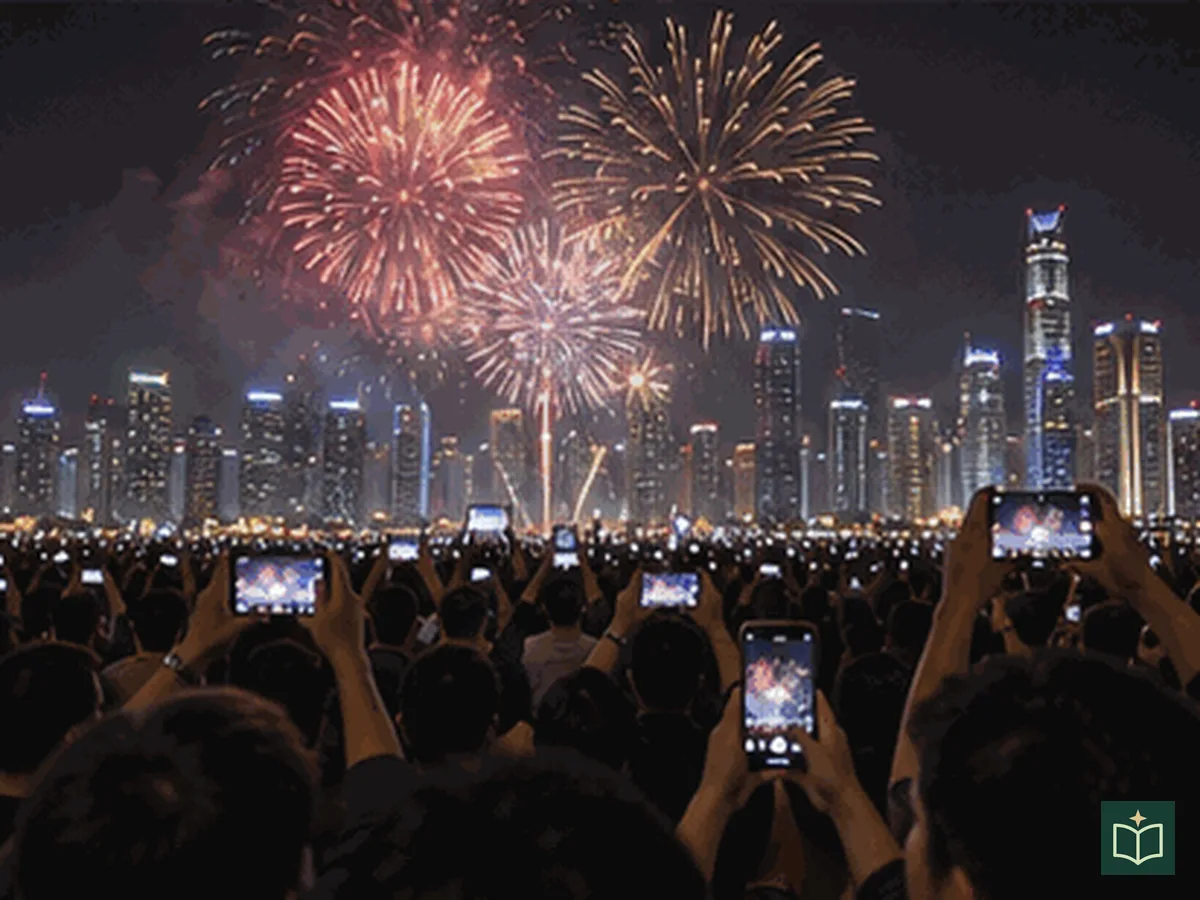
For major events, operators plan months ahead. They study traffic records from previous years, map where crowds will stand and estimate demand minute by minute. Around landmarks such as the Burj Khalifa on New Year's Eve, they deploy temporary masts on trucks, often called cells on wheels, along with small cells mounted on lampposts and buildings to divide the crowd into many smaller cells. Each extra cell reuses the same spectrum over a smaller area, multiplying capacity. Indoor venues such as malls and stadiums often have permanent distributed antenna systems. Engineers also add spectrum bands, fine-tune antenna angles and boost the fibre links connecting masts to the core network.
The moment everyone films
Event traffic has a distinctive shape. Ordinary use is dominated by downloads, such as streaming and browsing. During fireworks, the balance shifts sharply towards uploads, as people send photos and videos to friends or post them online. Uplink capacity is usually smaller than downlink, so it becomes the bottleneck. Just after midnight, a wave of messages and calls follows. Operators watch dashboards in network operations centres, adjusting settings in real time. Software can prioritise voice calls and emergency services over data, steer phones to less busy bands and limit data rates for heavy users so that more people get a basic connection rather than a few getting fast speeds.
Newer technology helps
Each generation of mobile technology has improved crowd handling. 4G and 5G networks use spectrum more efficiently and can schedule many users in the same moment. Massive MIMO antennas, with dozens of small elements, can form narrow beams towards different groups of phones, letting the same frequencies be reused within one sector. 5G also adds high-frequency bands with large capacity but short range, well suited to dense spots. Wi-Fi networks in stadiums and public spaces offload some traffic from mobile networks. Even so, there are physical limits: the airwaves in one place can carry only so much, and demand at peak events keeps rising year after year.
Tips for crowded places
For people at a big event, a few habits help. Sending a short text uses far less capacity than a video, and messages queue and deliver once traffic eases. Saving photos and videos to share later, or uploading over Wi-Fi at home, frees capacity for others. Agreeing a meeting point in advance reduces reliance on calls if a group is separated. Emergency calls are generally prioritised, and staff at large events have radios that do not depend on the public network. Keeping phones charged matters too, because a weak signal and repeated connection attempts drain batteries faster. The network is shared, and so is the responsibility for using it sensibly.
Sources & further reading
Figures are rounded and widely published; check the linked organisations for the latest editions. These organisations do not endorse this website.