Why belts matter
In a crash, the car stops suddenly but unbelted occupants keep moving at the car's original speed until they hit something. A seatbelt makes the body slow down with the car's crumple zone, over a longer distance and time, which greatly reduces the forces involved.
The three-point design
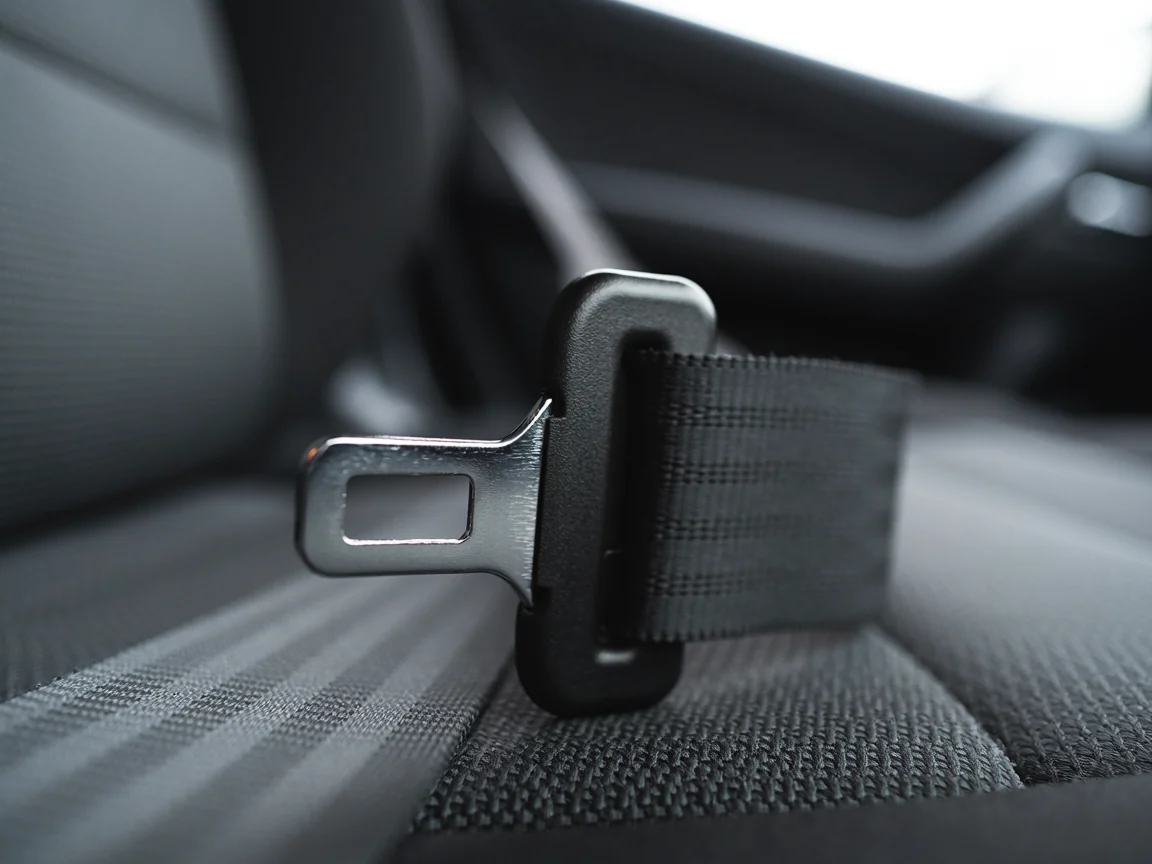
A lap belt across the hips plus a diagonal belt across the chest spreads forces over the pelvis and ribcage, the parts of the skeleton best able to take them. Nils Bohlin's 1959 design for Volvo remains the standard today.
Smart mechanisms
Inside the belt reel, a weighted pendulum or sensor locks the spool during hard braking or a crash, while still letting you lean forward normally. Pretensioners fire a small charge to pull the belt tight, and load limiters allow controlled give to reduce chest injuries.
Back seats too
Rear passengers who are unbelted can be thrown forward into front occupants in a crash. Many countries, including the UAE, require all occupants to wear seatbelts, and children need appropriate child seats.
Sources & further reading
Risk-reduction figures vary between studies and vehicle types. Photograph: original AI-generated illustration (Adobe Firefly). Reference organisations do not endorse this website.