Not just volume
Turning everything up makes loud sounds painful without fixing clarity. Most age-related hearing loss affects high frequencies first, which carry consonants like s, t and f. Hearing aids are programmed from a hearing test, called an audiogram, to boost each frequency by the right amount.
A computer behind the ear
Digital aids convert sound into numbers and process it continuously. They compress loud sounds so they stay comfortable, reduce steady background noise and use directional microphones to focus on the person in front. Feedback cancellation prevents the familiar whistling of older aids.
Styles and connections
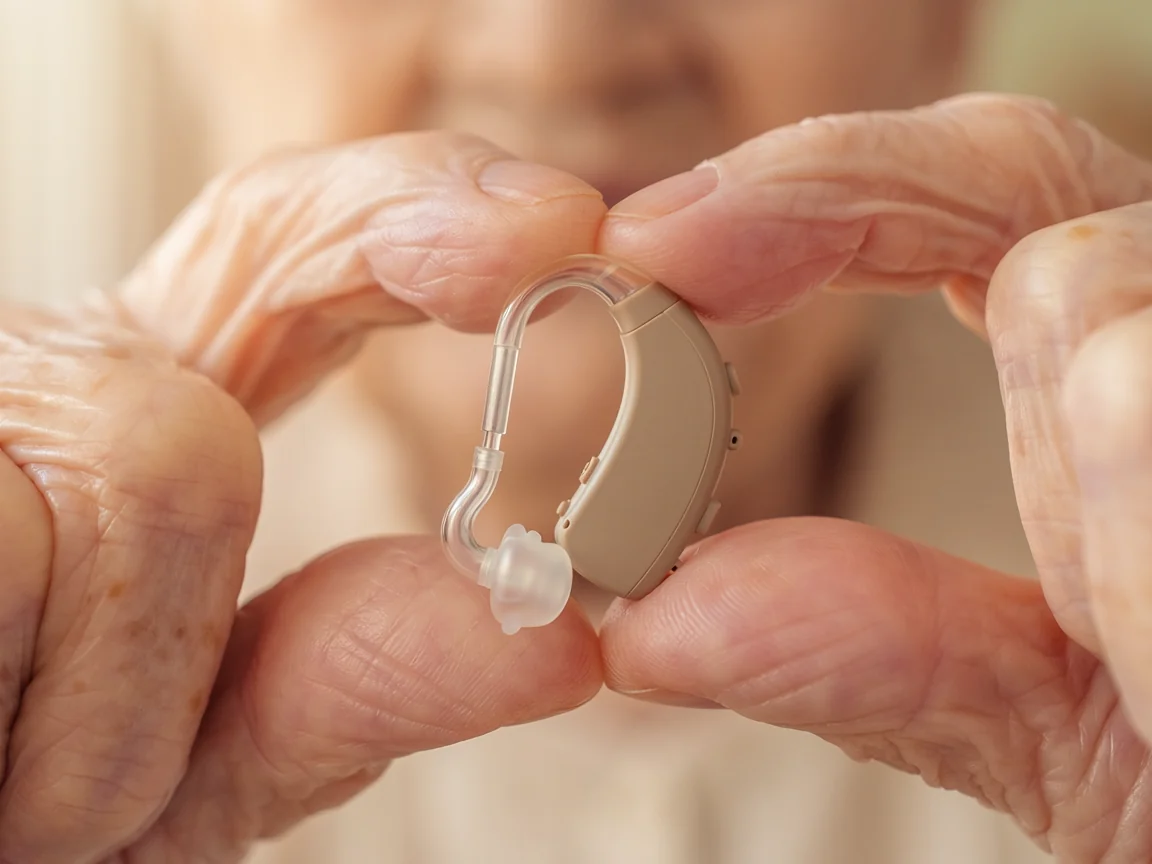
Aids range from behind-the-ear models with a thin tube to tiny devices sitting in the ear canal. Many stream phone calls and music by Bluetooth and can be adjusted with a smartphone app. Over-the-counter aids are now available in some countries for mild to moderate loss.
When aids are not enough
For severe or profound loss, where the inner ear's hair cells are badly damaged, a cochlear implant may help. It bypasses damaged parts of the ear and stimulates the hearing nerve directly. A professional hearing assessment is the first step in choosing the right option.
Sources & further reading
General information, not medical advice. Audiogram values are illustrative. Photograph: original AI-generated illustration (Adobe Firefly). Reference organisations do not endorse this website.