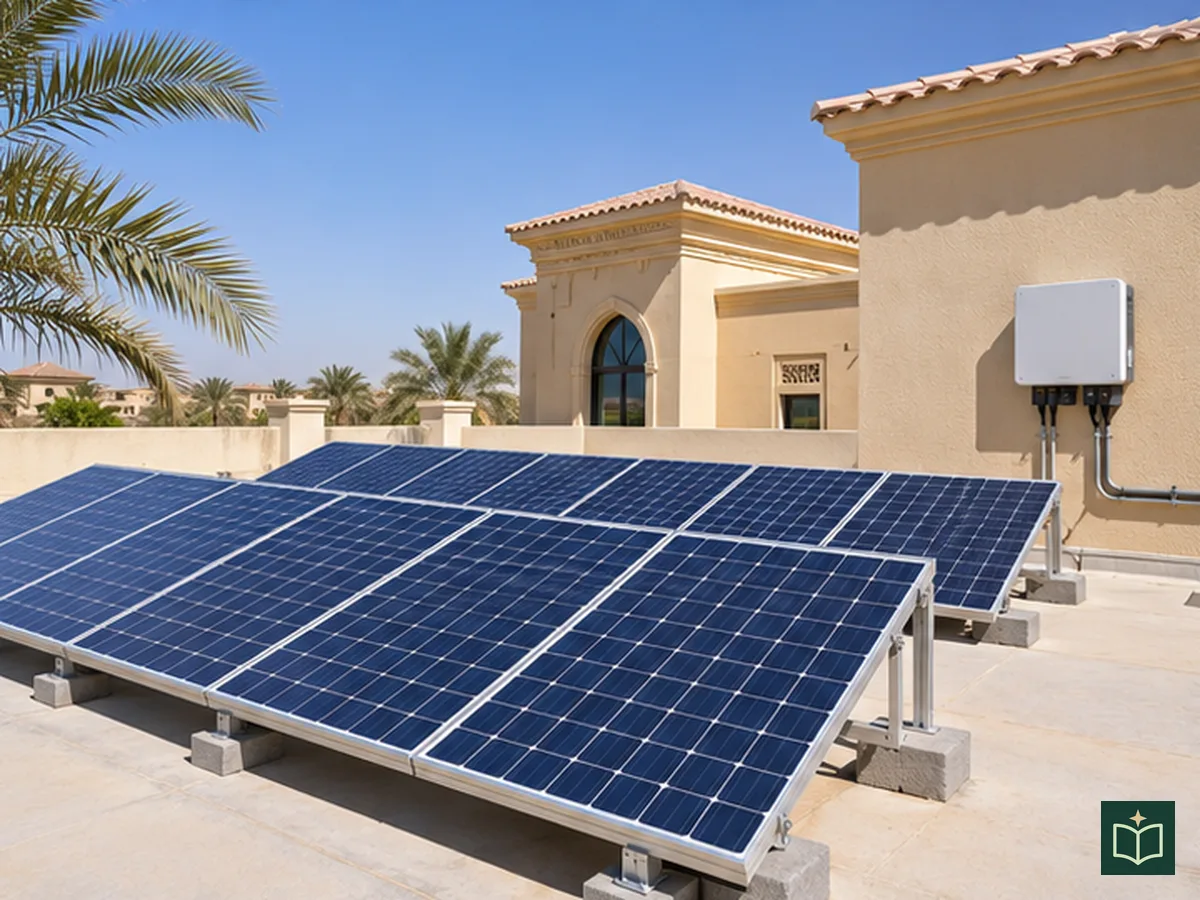
From roof to socket
A rooftop solar system turns sunlight into electricity that can power a home and, at times, the neighbourhood. Solar panels produce direct current, in which electricity flows in one direction, but homes and the grid run on alternating current, which reverses direction many times a second. Connecting the two requires careful equipment and approval from the local utility. Grid-connected systems are the most common type in cities because they do not need large batteries: when the panels produce more than the home needs, the surplus flows into the grid, and when they produce less, at night or on cloudy days, the home draws power from the grid as usual.
The inverter's job
The inverter is the heart of the system. It converts the panels' direct current into alternating current at the right voltage and frequency, typically 230 volts and 50 hertz in the UAE, and keeps it precisely synchronised with the grid. It also tracks the panels' best operating point as sunlight changes during the day, squeezing out as much power as possible. Crucially, grid-connected inverters must switch off automatically if the grid fails. This protection, known as anti-islanding, prevents a home from feeding electricity into lines that engineers believe are dead while they repair them. That is why most simple grid-connected systems stop working during a power cut unless they include batteries.
Net metering explained
A conventional meter records only the electricity a home imports. A solar home needs a bidirectional meter that records flows in both directions. Under net metering, the utility subtracts the exported units from the imported ones, and the household pays only for the difference. Dubai's Shams Dubai scheme, launched by the Dubai Electricity and Water Authority in 2014, works on this principle. Under its rules, exported electricity offsets consumption, and surplus is generally carried forward as a credit rather than paid out in cash. Other countries use different models: some pay a fixed feed-in tariff for exports, while net billing schemes value exported electricity at a lower rate than imported electricity.
A worked example
Consider a villa with a 5-kilowatt rooftop system. In a sunny climate like the UAE's, each kilowatt of panels might generate around 1,700 kilowatt-hours a year, so the system could produce roughly 8,500 kilowatt-hours. At an illustrative average tariff of 30 fils per kilowatt-hour, that would offset about AED 2,550 of electricity a year. Real figures depend on the tariff slabs, shading, dust, panel angle and how much power the household uses. Because tiered tariffs charge more for higher consumption, solar can remove the most expensive units first. This example is illustrative and educational, not financial advice, and installers or the utility can provide site-specific estimates.
Approvals and upkeep
A grid-connected system cannot simply be plugged in. Utilities usually require an approved designer and installer, certified equipment, and an inspection before the meter is changed and the system is energised. The rules protect both the household and the grid's stability, particularly as more homes add solar. Once running, systems need little maintenance, but in the Gulf, dust is a real issue. A layer of dust can noticeably reduce output, so panels need periodic cleaning, ideally with soft brushes and water early in the day. Heat also lowers panel efficiency slightly, so good ventilation behind the panels helps. Inverters typically need replacing during the life of the panels.
Why it matters
Rooftop solar turns consumers into small producers, often called prosumers, and changes how grids operate. Large numbers of rooftop systems reduce demand during sunny hours, which can ease pressure on power stations at midday, but they also create new challenges for grid operators who must balance supply as clouds pass and the sun sets. Many utilities are revising tariffs and connection rules as solar spreads. Adding home batteries lets households store midday surplus for the evening, reducing what they export. For homeowners, understanding the meter, the tariff and the rules on credits matters as much as the panels themselves when judging whether a system makes sense.
Sources & further reading
Figures are rounded and widely published; check the linked organisations for the latest editions. These organisations do not endorse this website.