More than a black skin
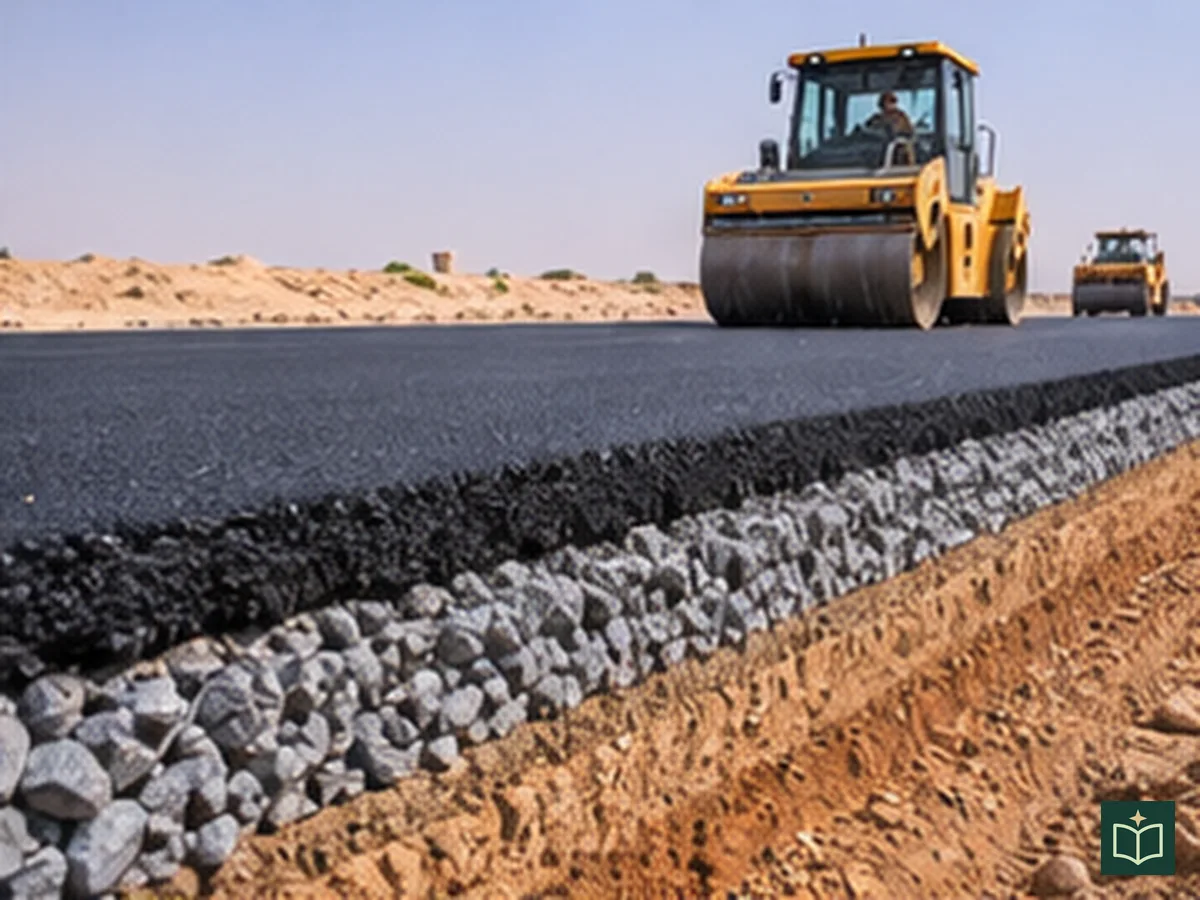
A road looks like a single slab of asphalt, but the dark surface is only the top of a carefully built stack. Beneath it sit layers of crushed rock and compacted soil, each with a job. A truck tyre presses on the road over an area roughly the size of a hand, at high pressure. If that pressure reached soft soil directly, the ground would deform and ruts would form within weeks. The layers spread the load like a pyramid, so by the time it reaches the natural ground it is spread across a much wider area. Most of a road's strength, cost and design effort is therefore hidden from view.
The layers, bottom to top
At the base is the subgrade: the existing soil, levelled and compacted, sometimes improved with lime or cement. Above it comes the sub-base, a layer of coarser crushed stone that adds strength and lets water drain away. The base course, made of better-graded crushed rock or stone bound with bitumen or cement, carries much of the structural load. Finally, the asphalt layers go on top: a thicker binder course and a thin wearing course that drivers actually touch. The wearing course is made to resist skidding, shed rain and be replaced when worn, without disturbing the expensive layers below. Each layer is rolled until it reaches a specified density.
Flexible and rigid roads
Engineers describe asphalt roads as flexible pavements, because the layers bend slightly under a wheel and spread the load through the stone beneath. The alternative is a rigid pavement, made of concrete slabs that act like stiff beams and spread the load across a wide area themselves. Concrete roads cost more to build but can last longer and suit very heavy traffic, such as container yards and some motorways. They need joints so that slabs can expand and contract with temperature. Asphalt is quicker to lay, quieter and easier to repair, which is why it covers most urban streets and highways, including the vast majority of roads in the Gulf.
Designing for heavy loads
Road design starts with traffic, especially lorries. Research from the AASHO Road Test in the United States in the late 1950s found that pavement damage rises steeply with axle weight, roughly with its fourth power. Double the load on an axle and the wear rises about sixteen times, since 2 × 2 × 2 × 2 is 16. A ten-tonne axle therefore does on the order of 10,000 times the damage of a one-tonne car axle. That is why engineers count heavy vehicles carefully, why overloaded trucks are fined at weighbridges and why ports and industrial zones need much thicker pavements than quiet residential streets carrying mostly cars.
Built for extreme heat
Asphalt is a mix of stone and bitumen, a sticky product of crude oil refining that softens when hot. In Gulf summers, road surfaces can be far hotter than the air, well above 60 degrees Celsius in direct sun. Soft bitumen lets heavy wheels push the surface into ruts, especially at junctions where lorries brake and wait. Engineers counter this with stiffer binders, often modified with polymers, and with a strong stone skeleton in which angular pieces lock together. Binders are graded for the hottest and coldest temperatures they must withstand. In colder countries, the opposite problem dominates: brittle asphalt cracking in frost, and water freezing and expanding inside the layers.
Why roads fail
Most road failures start with water or weight, not age alone. Water seeping through cracks softens the base and subgrade, so wheels push the surface down and potholes open. Poor compaction during construction leaves weak spots that settle unevenly. Traffic heavier than expected wears the road out years early. Utility trenches dug and refilled carelessly often become the first patches to sink. Good drainage, with cambered surfaces and side drains, is therefore as important as thickness. Regular maintenance, such as sealing cracks and replacing the wearing course before damage reaches deeper layers, is far cheaper than rebuilding the whole structure once the foundation has failed.
Sources & further reading
Figures are rounded and widely published; check the linked organisations for the latest editions. These organisations do not endorse this website.