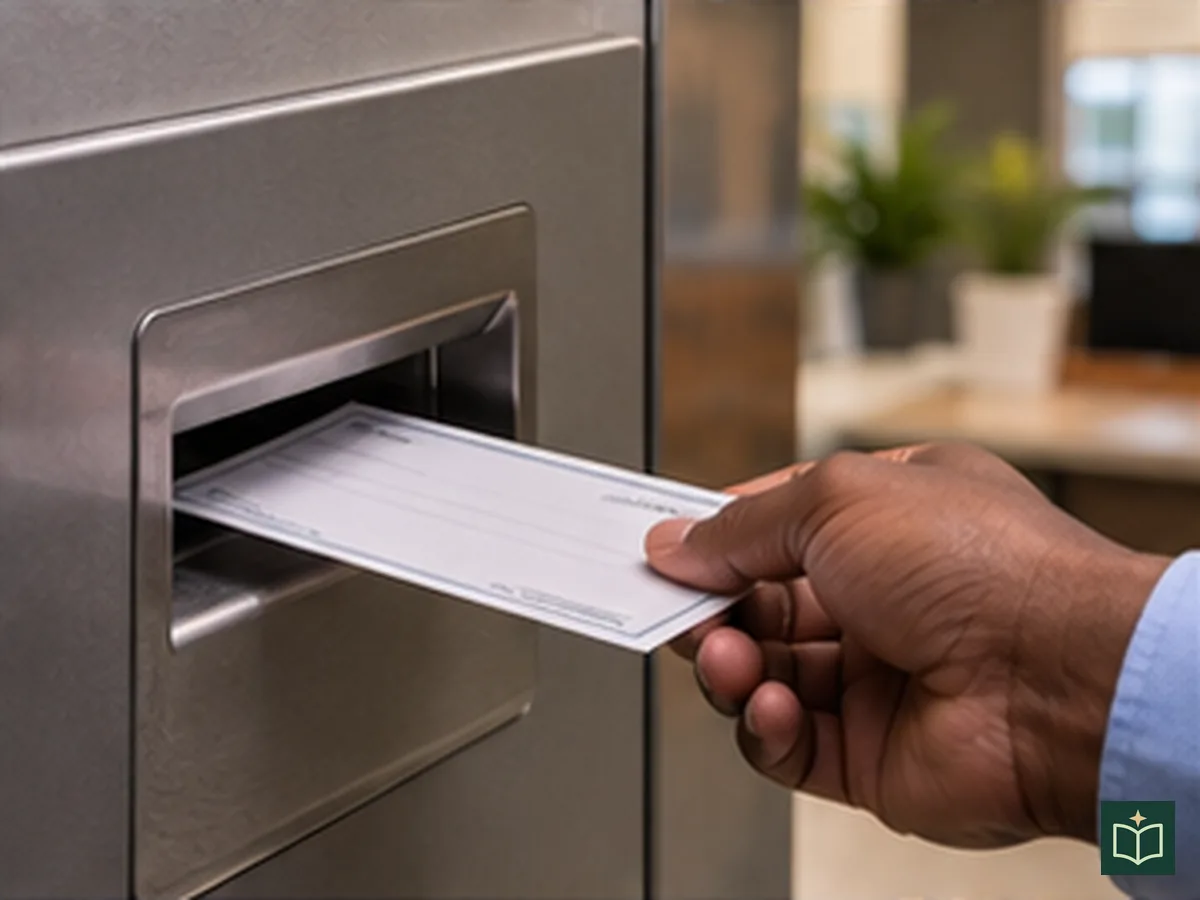
What a cheque really is
A cheque is a written instruction from an account holder, the drawer, telling their bank to pay a sum to a named person or company, the payee. It is not money in itself. Its value depends on whether the drawer's account holds enough funds on the date it is presented, and whether the bank accepts the instruction as genuine. That is why cheques take time to clear while card and instant transfers do not. Each cheque carries a printed code line along the bottom, using magnetic ink and a special font, giving the cheque number, the bank and branch code and the account number in a form machines can read reliably.
From paper to picture
For most of their history, cheques moved physically. Couriers carried bundles to clearing houses, where banks exchanged them and returned them to the paying banks, a process that could take days. Today, in the UAE and many other countries, the paper stays put. When you deposit a cheque, your bank scans both sides and reads the code line. It sends the image and data electronically through the central bank's clearing system to the drawer's bank. This is called cheque truncation. Fraud checks look at signatures, alterations and the date. Settlement between banks happens in batches through their accounts at the central bank, usually by the next working day.
Why cheques bounce
The paying bank can return a cheque unpaid for several reasons. The most common is insufficient funds. Others include a signature that does not match, an amount in words that differs from the figures, a damaged or altered cheque, a date in the future or one too old to present, or a stop instruction from the drawer. Returned cheques carry a reason code, and the payee's account is debited if any provisional credit was given. Repeated returns can damage the drawer's credit record. In the UAE, the law was reformed from 2022 so that many bounced cheques are treated mainly as civil matters, with partial payment and quicker enforcement available to payees.
The rent cheque system
Cheques remain unusually important in the UAE because of rent. Landlords commonly ask tenants for a set of post-dated cheques covering the whole year, each dated for when an instalment falls due. A flat let for AED 60,000 a year might be paid with four cheques of AED 15,000, or with twelve cheques of AED 5,000 if the landlord agrees. Landlords often accept a lower total for fewer cheques, because receiving money upfront reduces risk. The cheques give landlords a legally recognised claim if one bounces. Businesses use post-dated cheques in the same way for supplier credit and as security for contracts or loans.
Limits and common myths
Many people believe that once a cheque shows in their balance, it has fully cleared. In fact, banks may make funds available before final settlement, and a cheque can still be returned later if it turns out to be fraudulent. Another myth is that a post-dated cheque cannot be presented early; rules vary, but banks are generally expected to respect the date written. Cheques are also slower and more expensive to process than electronic payments, and they can be lost, stolen or forged. This is general information, not legal advice; anyone dealing with a bounced cheque should check current rules with their bank or a qualified adviser.
Why cheques survive
Cheques persist where they solve a problem other tools do not. A post-dated cheque is a simple way to promise future payments with legal backing, without needing a direct-debit system that every landlord or supplier can use. They provide a paper trail, need no technology from the payee and work between businesses of any size. Still, the trend is clear. Instant transfers, direct-debit mandates and digital rent platforms are growing in the Gulf, and some government services no longer accept cheques. The cheque book may fade slowly, but the system behind it shows how banks learned to move trust as an image, long before payments moved entirely online.
Sources & further reading
Figures are rounded and widely published; check the linked organisations for the latest editions. These organisations do not endorse this website.