How heat escapes
Heat passes through windows by conduction through the glass, convection in the air, and radiation. Single glass conducts heat readily, so a single-glazed window is often the coldest surface in a room.
The sealed gap
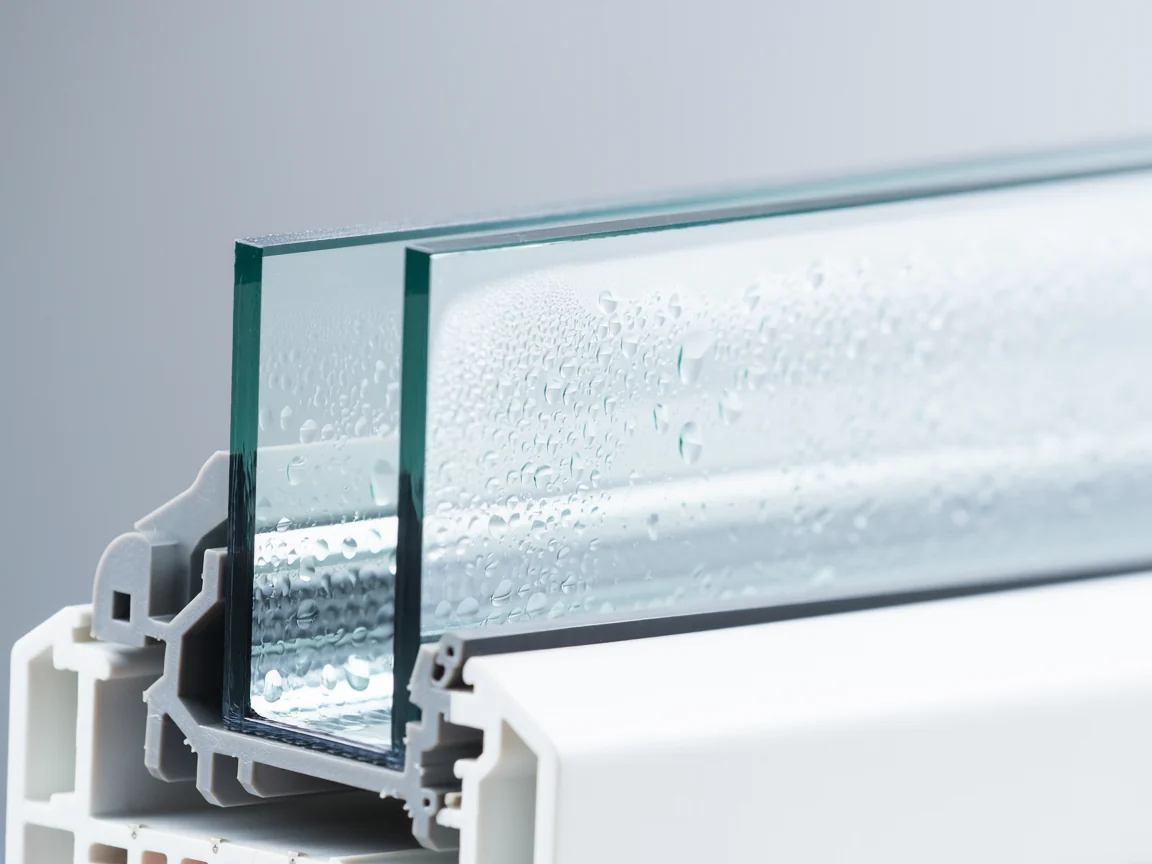
In a double-glazed unit, two panes are held apart by a spacer bar around the edge and sealed. The gas trapped inside conducts heat far less than glass. If the gap is too wide, though, the gas begins to circulate and carries heat across.
Coatings and gases
Low-emissivity coatings are microscopically thin metal oxide layers that let light through but reflect infrared heat. Filling the gap with argon or krypton, which conduct heat less than air, improves performance further. In hot climates, solar control coatings also reduce heat gain.
Signs of failure
When the edge seal fails, moist air seeps in and condensation forms between the panes. This misting cannot be wiped away and means the unit needs replacing to restore its insulation.
Sources & further reading
U-values are approximate and vary by frame and product. Photograph: original AI-generated illustration (Adobe Firefly). Reference organisations do not endorse this website.