What a porphyry is
The word porphyry describes an igneous rock with a distinctive texture: large, well-formed crystals scattered through a much finer-grained background. Such rocks form when magma begins to crystallise slowly at depth and then rises and cools faster nearer the surface. Porphyry copper deposits are associated with intrusions of this kind, usually of granite-like composition, emplaced a few kilometres beneath volcanoes. They are the most important source of mined copper on Earth, providing roughly 60% of world production according to the US Geological Survey. They also supply much of the world’s molybdenum and significant amounts of gold and silver, which are often recovered alongside copper as valuable by-products.
Fluids from the deep
The deposits begin at subduction zones, where one tectonic plate sinks beneath another and water released from the sinking plate helps melt the mantle above. The resulting magmas are rich in water, sulphur and chlorine. As a body of magma rises and cools in the crust, it releases hot, salty fluids, much as a fizzy drink releases gas when opened. These fluids carry dissolved copper and other metals. Pressure from the escaping fluids shatters the overlying rock, creating dense networks of fractures. As the fluids flow upwards and cool, copper sulphide minerals such as chalcopyrite and bornite crystallise in tiny veins and grains throughout the broken rock.
Enormous but low grade
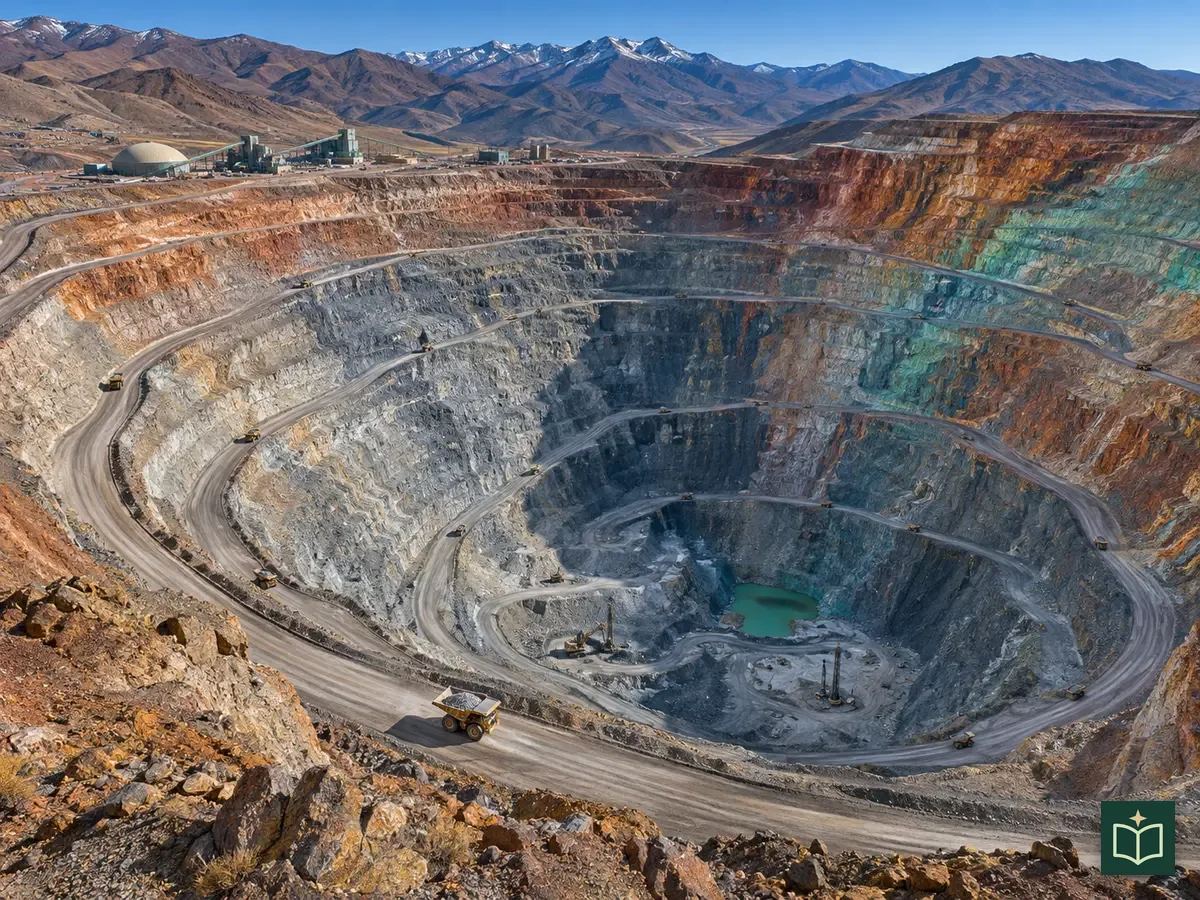
The result is a vast orebody, often measured in hundreds of millions or even billions of tonnes, but with a low concentration of copper. Typical grades are well below 1% copper, frequently around half a per cent or less, meaning a tonne of rock may contain only a few kilograms of the metal. Mining such deposits is economical only on an immense scale, using open pits and heavy equipment to move huge volumes of rock. The Bingham Canyon mine in Utah, worked since the early 1900s, is among the largest human-made excavations on Earth. Chile’s great mines, such as Escondida and Chuquicamata, exploit similar deposits in the Andes.
Rings of altered rock
The hot fluids do not only deposit copper; they also transform the surrounding rock. Geologists recognise concentric zones of alteration, in which original minerals are replaced by new ones such as potassium feldspar, mica, clay or pyrite. These zones form a kind of target pattern that can stretch for kilometres around the copper-bearing core. Exploration teams map them at the surface, analyse soil and rock chemistry, and use geophysical surveys to detect buried deposits. Even with modern tools, discovering a new major deposit can take many years and a great deal of drilling, and the time from discovery to production is often well over a decade.
Weathering and enrichment
Some porphyry deposits have been naturally upgraded near the surface. Where rainwater seeps downwards through exposed sulphides, it can dissolve copper and carry it towards the water table, where it is redeposited as richer minerals. This process, called supergene enrichment, created a concentrated blanket of high-grade ore in some deposits, especially in the dry climate of northern Chile, where erosion was slow enough to preserve it. Early twentieth-century mining often targeted these richer zones. Above them, weathering may leave oxidised copper minerals, often green or blue, which can be processed by leaching with acid rather than by the smelting route used for sulphide ores.
Why location and age matter
Porphyry deposits cluster along current and ancient subduction zones: the Andes, western North America, the south-western Pacific, Central Asia and parts of south-eastern Europe. Most known examples are geologically young, typically tens of millions of years old, because they form only a few kilometres down and are eventually eroded away. Older ones survive only where they were buried or protected. Understanding this geology shapes where companies explore and why copper supply is concentrated in certain countries. It also explains a constant challenge for the industry: many of the large, shallow deposits have already been found, so new discoveries increasingly lie deeper, under cover or in remote regions.
Sources & further reading
Figures are rounded and widely published; check the linked organisations for the latest editions. These organisations do not endorse this website.