What paper is made of
Paper is a thin mat of cellulose fibres, mostly from wood, held together by natural bonds that form as wet fibres dry in contact with one another. That structure is what makes recycling possible. Add water and agitation, and the bonds loosen, releasing the fibres so they can be formed into a new sheet. Recycled fibre is now the main raw material for paper and board in many countries, especially for cardboard boxes and packaging. In Europe, paper industry figures suggest roughly seven in ten tonnes of paper consumed is recycled. The process is far simpler than recycling many plastics, but it has its own challenges.
Collection and sorting
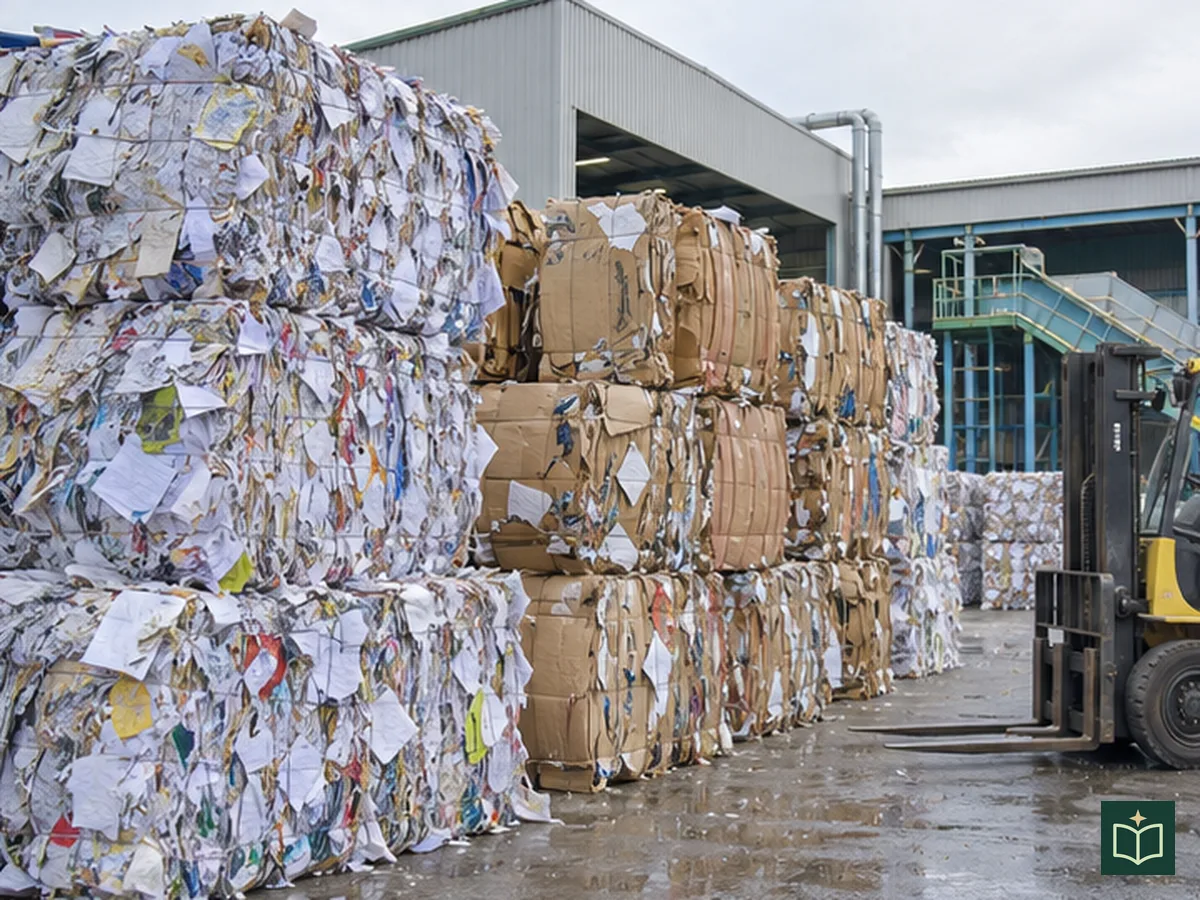
Waste paper arrives at recycling facilities from households, offices, shops and factories. It is sorted into grades because different types of paper make different products. Old corrugated cardboard, with its long, strong fibres, usually goes back into new boxes. Newspapers and magazines can become newsprint or tissue. Office paper, with high-quality white fibres, is valuable for printing paper and tissue. Contamination reduces value. Food residue, grease and liquids, plastic film, metal clips and wet paper all cause problems, and some items look like paper but are hard to recycle, such as coffee cups with plastic linings or some glossy and laminated packaging. Sorting is done by machines and by hand.
Into the pulper
At the paper mill, bales of waste paper are tipped into a pulper, a huge tank of water with a rotor at the bottom that works like a giant kitchen blender. Within minutes the paper breaks back into a soup of fibres. The mixture then passes through a series of screens with holes or slots that let fibres through but catch larger contaminants such as staples, plastic, tape and string. Centrifugal cleaners spin the pulp so that heavy particles like sand and grit are flung outwards and removed. Sticky contaminants from glues and labels, known in the industry as stickies, are among the hardest to remove and can cause defects in the new paper.
Removing the ink
For white or light-coloured papers, ink must be removed. The most common method is flotation de-inking. Chemicals called surfactants are added to the pulp to help ink particles detach from the fibres. Air is then bubbled through the mixture, and the ink particles cling to the bubbles and rise to the surface as a grey froth, which is skimmed away. Washing stages can remove the smallest particles. If a brighter white is needed, the pulp may be bleached, typically with hydrogen peroxide or other chlorine-free chemicals. Brown packaging grades often skip de-inking altogether, which is why recycled cardboard is usually grey or brown inside.
Making new paper
The cleaned pulp, now mostly water, is pumped to a paper machine. A headbox sprays it evenly across a fast-moving wire mesh, where water drains away and fibres begin to bond into a continuous wet sheet. Rollers press out more water, and the sheet passes over a long line of steam-heated drying cylinders. Modern machines can produce paper hundreds of metres long every minute. The fibres, however, are not unchanged. Each recycling cycle shortens and weakens them, so they bond less well. After about five to seven cycles, they become too short to form strong paper and are washed out as sludge, which is why fresh fibre must continually enter the system.
Why it matters
Recycling paper reduces demand for new wood fibre, saves landfill space and generally uses less energy than making paper from virgin pulp, although the exact savings depend on the mill and the grade. Online shopping has increased demand for cardboard, much of it made from recycled fibre. The quality of recycling depends heavily on what people put in their bins: clean, dry paper and flattened boxes are valuable, while greasy pizza boxes, used tissues and plastic-lined cups can contaminate whole batches. Understanding the process explains why local recycling rules exist and why paper, unlike glass or aluminium, cannot be recycled forever, but still deserves a second, third and fourth life.
Sources & further reading
Figures are rounded and widely published; check the linked organisations for the latest editions. These organisations do not endorse this website.