A switch with no electronics
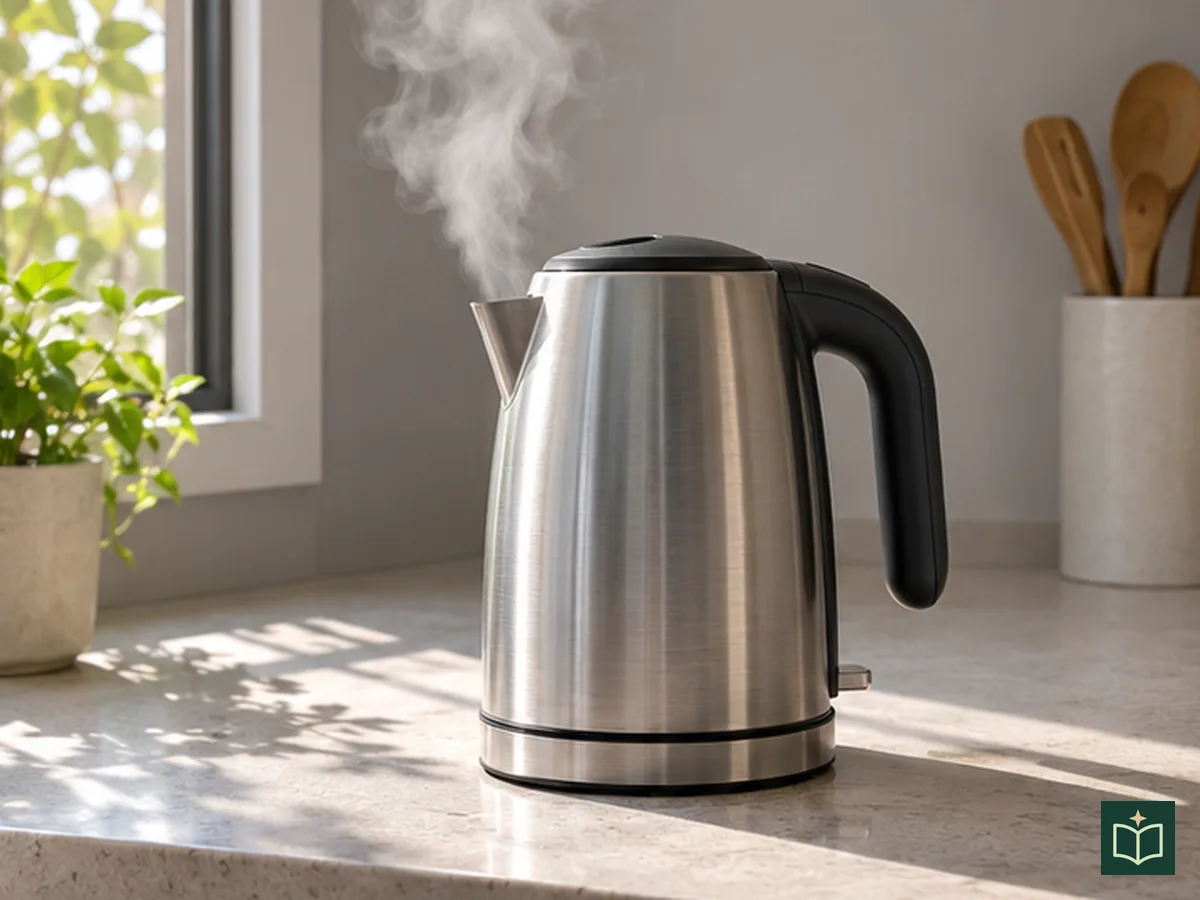
An ordinary electric kettle boils water and switches itself off without any computer chip. The work is done by a small, cheap mechanical part: a bimetallic thermostat. Many kettles also have a second one for protection if they are switched on empty. The device is so reliable that billions have been made, and the basic design has changed little in decades. Kettles are also among the most powerful household appliances. In countries with 230-volt electricity, such as the UAE and the United Kingdom, they typically draw two to three kilowatts, which is why they boil water faster than kettles in countries with 120-volt supplies, where power is usually lower.
Two metals bonded together
A bimetallic strip is made of two different metals bonded firmly together, often a steel alloy and a copper or nickel alloy. When heated, every metal expands, but by different amounts. Because the two layers are fixed together, the one that expands more forces the strip to bend towards the one that expands less. In a simple strip, this bending is gradual, which is useful for dial thermometers but not ideal for a switch. Kettles use a refinement: a small domed disc. Its curved shape resists bending until the stress reaches a tipping point, when it suddenly snaps into the opposite curve, much like the lid of a jar popping.
How steam trips the switch
The disc is placed away from the water, usually near the base of the handle. A small tube or channel leads from the top of the kettle's water chamber to the disc. While the water is heating, little steam reaches it. When the water boils vigorously, steam rushes through the channel and warms the disc to its set temperature. The disc snaps, pushing a small rod that opens the electrical contacts and flips the switch on the handle. Once the disc cools, it snaps back, so the kettle can be used again. Lids must be closed properly, because if steam escapes elsewhere, the kettle may boil for longer before switching off.
A worked example
Heating water takes a predictable amount of energy: about 4.2 kilojoules per litre for each degree Celsius. Boiling 1.7 litres of water from 20°C to 100°C therefore needs roughly 570 kilojoules. A 3-kilowatt kettle supplies 3 kilojoules every second, so in theory it would take about 190 seconds, just over three minutes. In practice, it takes a little longer because some heat warms the kettle itself and escapes into the air. The calculation also shows why boiling only the water needed saves time and energy: halving the amount roughly halves the time. Descaling helps too, because limescale on the element slows heat transfer.
The same trick elsewhere
Bimetallic switches appear throughout everyday technology. Irons use them to hold the soleplate at the chosen temperature, clicking on and off as it cools and warms. Older room heaters, ovens and car indicator flashers used them, and many electric motors contain one to cut power if they overheat. Circuit breakers in homes often include a bimetallic strip that bends and trips the breaker when an overload has carried too much current for too long. Kettles themselves usually contain a second disc beneath the heating element. If the kettle is switched on empty, the element overheats rapidly and this disc cuts the power to prevent damage or fire.
Limits and why it matters
Because the switch responds to steam temperature rather than measuring water directly, it does not care exactly what temperature the water boils at. On a high mountain, water boils below 100°C, yet the steam still reaches and trips the disc. Variable-temperature kettles, which heat water to 70 or 80°C for tea or infant formula, use electronic sensors instead. Bimetallic switches also wear over many years, and a kettle that no longer switches off is a safety risk that should be replaced. The humble snap disc remains a good example of elegant engineering: a single piece of metal that senses, decides and acts, without software or a power supply of its own.
Sources & further reading
Figures are rounded and widely published; check the linked organisations for the latest editions. These organisations do not endorse this website.