Why food sticks
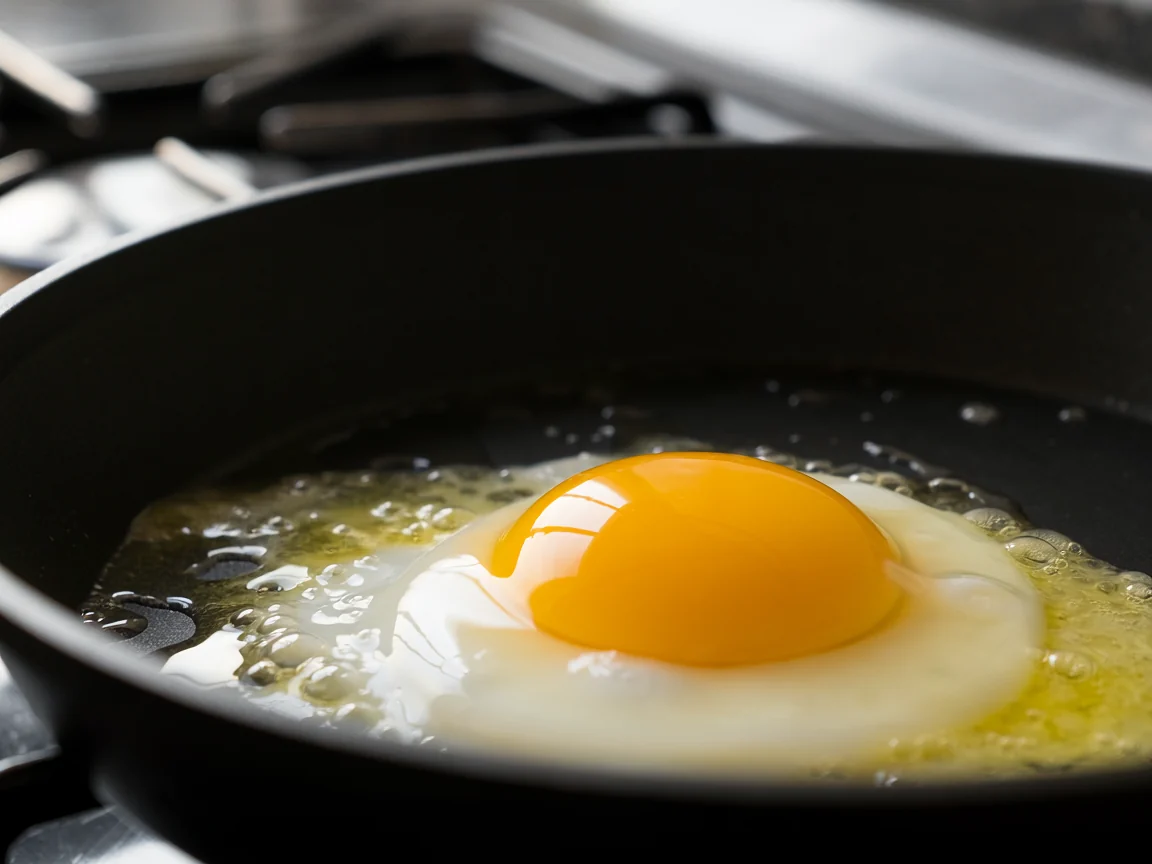
Proteins in eggs, fish and meat can bond chemically with metal surfaces as they heat, and tiny pits in the metal trap food. On a plain steel pan, this is why food sticks unless the pan is hot and well oiled.
PTFE
Polytetrafluoroethylene is a polymer of carbon atoms fully surrounded by fluorine. The strong carbon-fluorine bonds are very unreactive, and the surface has extremely low friction, so almost nothing adheres to it. It is sprayed or rolled onto pans in layers and baked.
Ceramic coatings
Ceramic non-stick pans use a silica-based sol-gel coating. They contain no fluoropolymers and tolerate higher heat, but they tend to lose their non-stick quality faster with use.
Health and care
PTFE is stable at normal cooking temperatures but can release fumes if an empty pan overheats above about 260 °C. Concern over PFOA, a chemical once used in manufacturing PTFE, led to it being phased out. Using medium heat and wooden or silicone utensils extends a pan's life.
Sources & further reading
Temperature thresholds are approximate. Photograph: original AI-generated illustration (Adobe Firefly). Reference organisations do not endorse this website.