Buoyancy
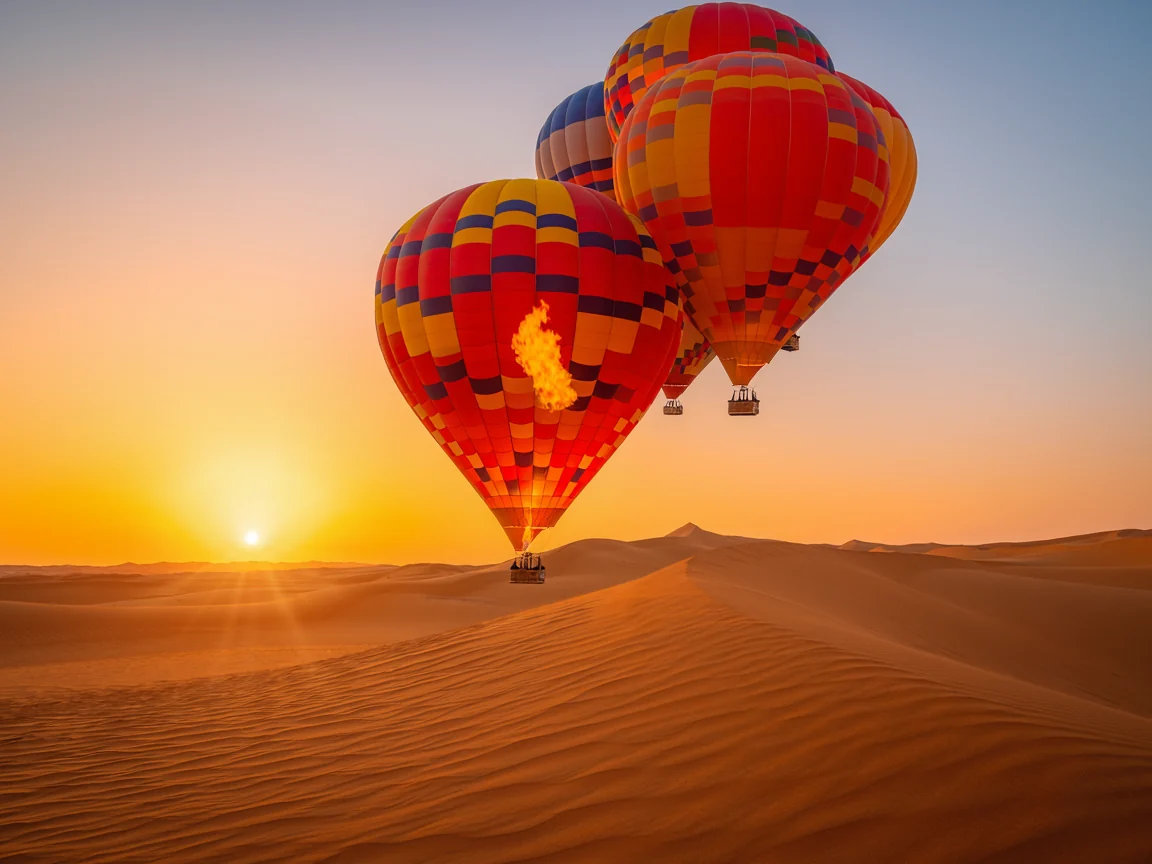
Heated air expands, so a given volume of it weighs less than the same volume of cooler air. Like a cork in water, the balloon is pushed upward with a force equal to the weight of the outside air it displaces, minus the weight of the hot air inside.
Burners and vents
Liquid propane carried in cylinders feeds powerful burners above the basket. Short blasts reheat the air to climb or hold height. To descend, the pilot lets the air cool or opens a vent at the top of the envelope, often called a parachute valve.
Steering by altitude
A balloon moves with the wind and cannot steer sideways on its own. Winds often blow in different directions at different heights, so pilots read forecasts and test-fly to find a layer heading where they want to go.
Why dawn flights
After sunrise, the ground heats and creates rising thermals and gusts that make flying bumpy and landings harder. Early morning air is calm and cool, giving better lift and safer conditions, which is why desert and countryside flights launch before dawn.
Sources & further reading
Lift figures are approximate and ignore humidity and altitude effects. Photograph: original AI-generated illustration (Adobe Firefly). Reference organisations do not endorse this website.