The refrigerant loop
A sealed circuit of pipes contains a refrigerant chosen to boil at very low temperatures. A compressor, condenser coils, an expansion valve and evaporator coils make up the loop, and the refrigerant changes between liquid and gas as it travels round.
Taking heat out
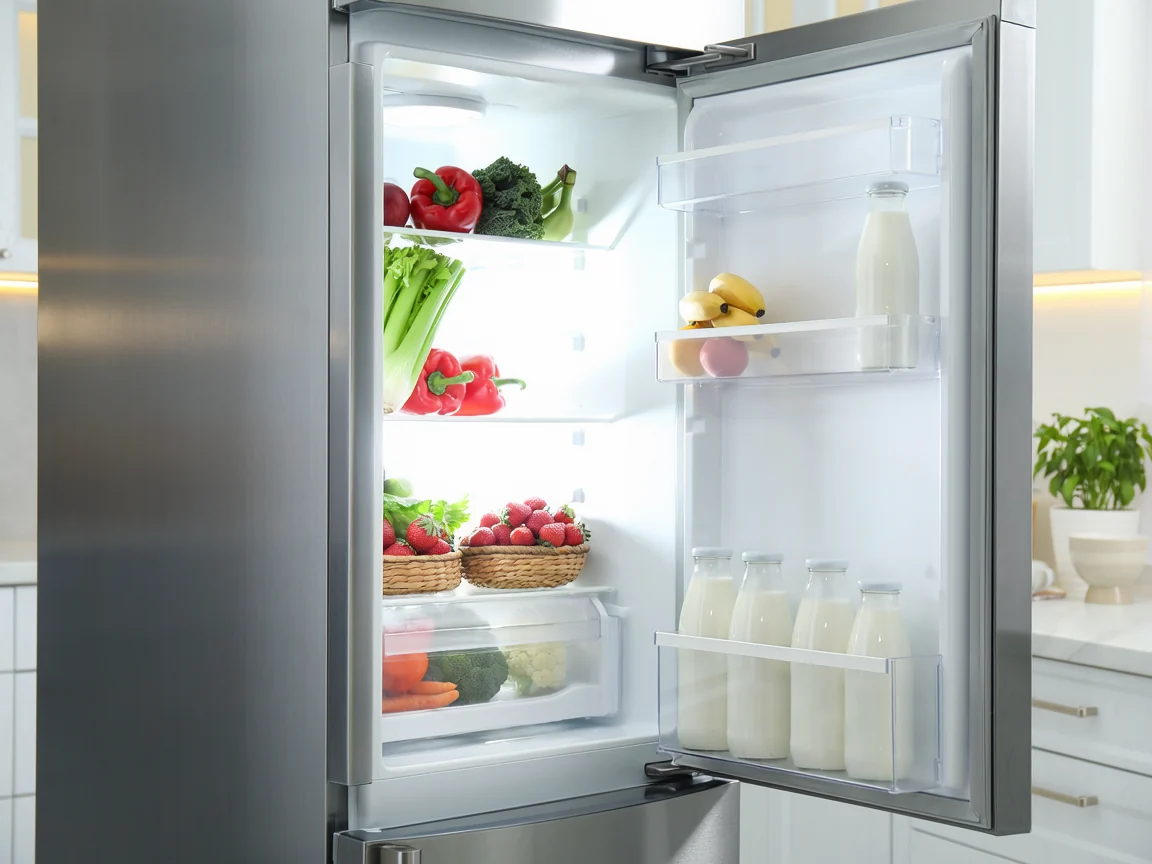
Inside the cabinet the refrigerant passes through a narrow valve into low-pressure evaporator coils. It boils, and boiling absorbs heat, so the coils and the air around them grow cold. A small fan often spreads this cold air through the compartments.
Dumping it outside
The compressor then pressurises the vapour, which raises its temperature above room temperature. In the condenser coils at the back or underneath, it gives that heat to the kitchen air and condenses back into liquid, ready to repeat the cycle.
Why cold matters
Most food-spoiling bacteria multiply quickly between about 5 °C and 60 °C. Keeping a fridge at 5 °C or below slows them sharply, while a freezer at −18 °C effectively stops growth, although it does not kill most microbes.
Sources & further reading
Recommended temperatures vary slightly between food-safety agencies. Photograph: original AI-generated illustration (Adobe Firefly). Reference organisations do not endorse this website.