Height and brightness
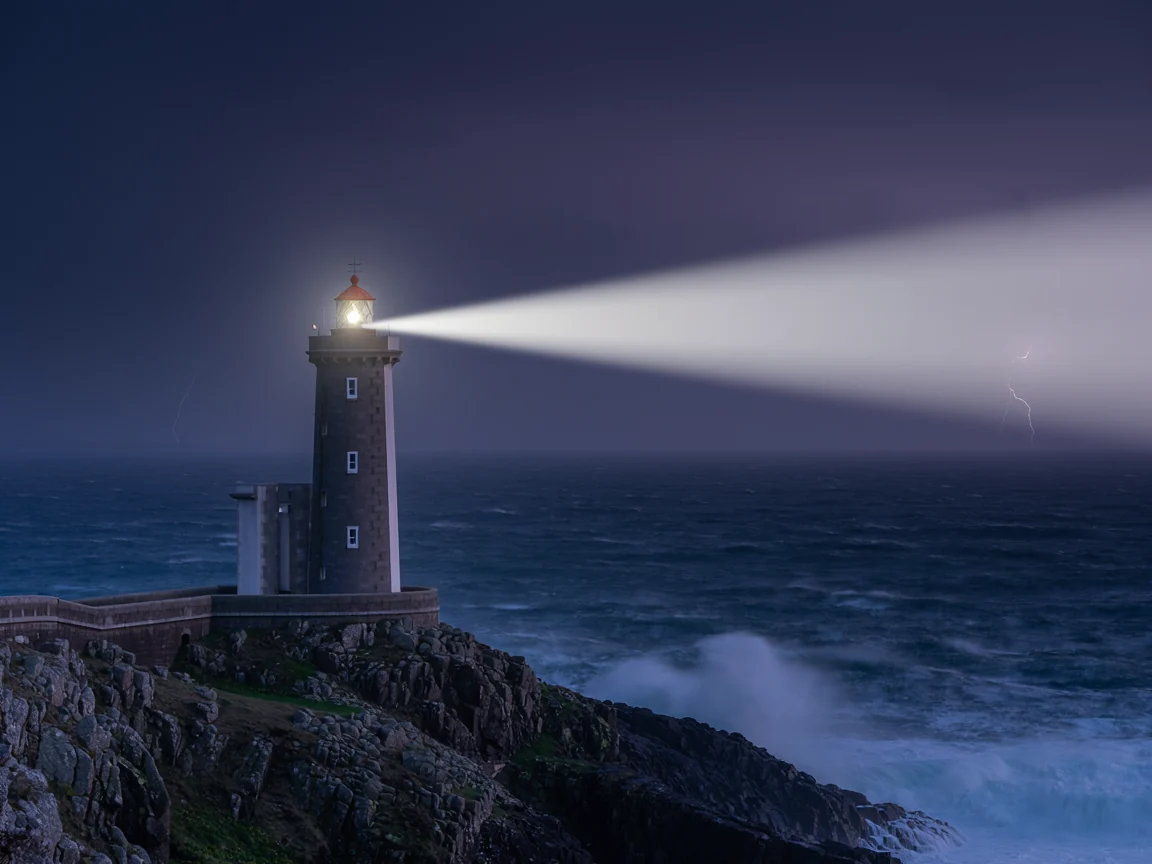
Earth's curvature limits how far a light can be seen, so lighthouses are tall or built on cliffs. Their range also depends on intensity, which is why designers worked hard to concentrate every bit of light into a beam.
The Fresnel lens
In 1822 French physicist Augustin-Jean Fresnel designed a lens made of concentric glass rings and prisms. It focused light far more efficiently than mirrors, with less weight than a solid lens. Many historic lighthouses still contain Fresnel lenses, some rotating on beds of mercury.
Reading the code
Charts list each light's characteristic: for example, 'Fl(2) 10s' means two flashes every ten seconds. Colours and sectors show safe and dangerous directions, with red or green sectors warning ships away from hazards.
Automation
Most lighthouses are now automated, with LED lights, solar power and remote monitoring, and keepers have largely disappeared. Alongside lighthouses, buoys, radar beacons and AIS signals help ships navigate.
Sources & further reading
Ranges are approximate. Photograph: original AI-generated illustration (Adobe Firefly). Reference organisations do not endorse this website.