Why test healthy-looking babies
Some serious conditions show no signs at birth. A baby with phenylketonuria, for example, cannot properly break down an amino acid found in protein, and without a special diet it builds up and damages the developing brain. A baby with congenital hypothyroidism lacks thyroid hormone needed for growth and development. In both cases, early treatment allows normal development, while late diagnosis can cause lasting harm. Newborn screening exists to find these conditions before symptoms appear. It is offered to every baby in many countries, and the conditions on the list are chosen because they are serious, can be detected reliably and have an effective treatment when caught early.
The heel prick
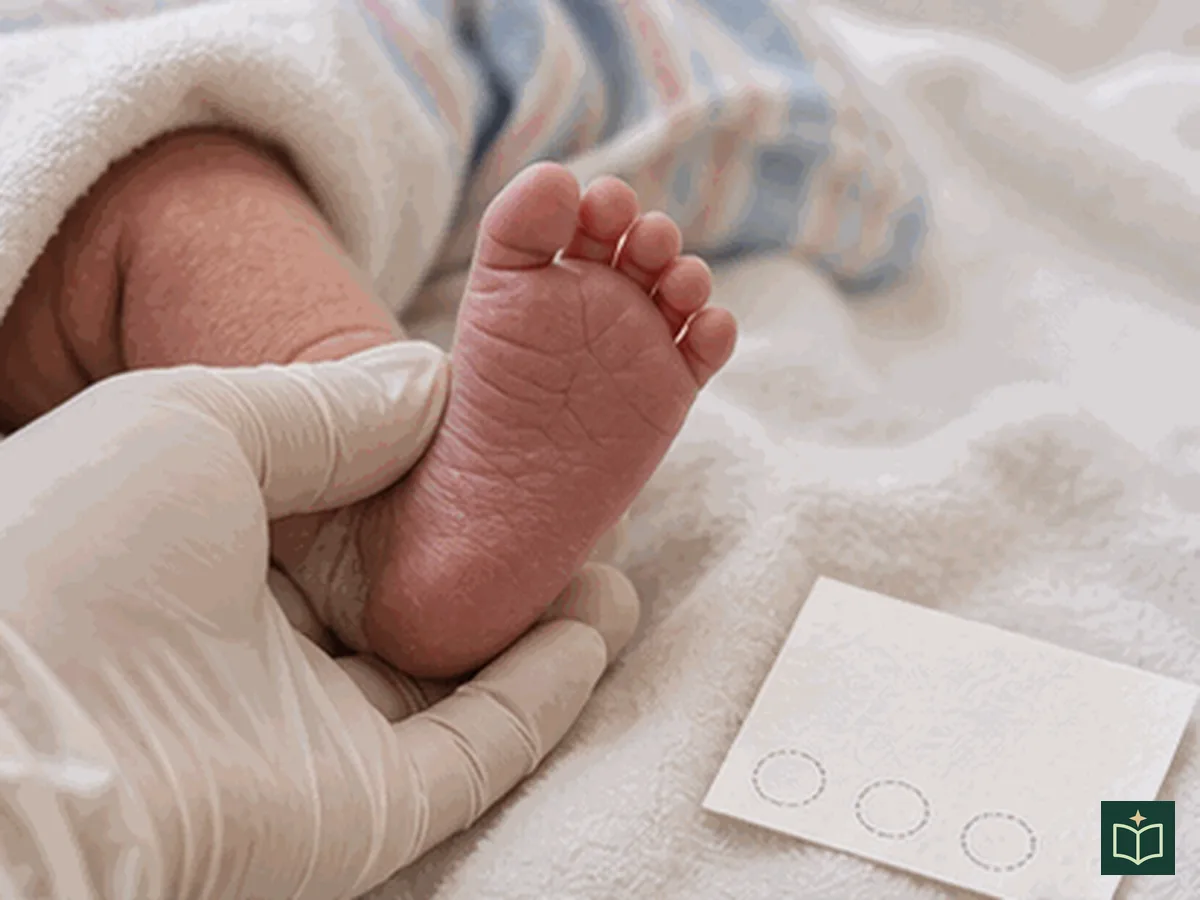
Usually within the first few days of life, a nurse or midwife warms the baby's heel, makes a tiny prick and lets drops of blood fall onto printed circles on a filter-paper card. The timing matters: some markers only become clear after the baby has started feeding, so samples taken too early may need repeating. The card dries and is sent to a central laboratory with the baby's details. This method was pioneered by the American microbiologist Robert Guthrie, whose test for phenylketonuria in the early 1960s showed that whole populations of babies could be screened cheaply. Dried blood spot cards are still often called Guthrie cards.
Inside the laboratory
In the laboratory, small discs are punched from the dried spots and analysed. A key technology is tandem mass spectrometry, introduced widely from the 1990s, which can measure dozens of amino acids and fatty-acid compounds from a single disc in minutes. This allowed screening for many inherited metabolic disorders at once. Other tests look for hormones, abnormal haemoglobin in sickle cell disease, a marker of cystic fibrosis or signs of severe combined immunodeficiency. The number of conditions screened varies by country: the United States recommends more than 30 core conditions, while many European programmes screen for fewer. Hearing tests and heart checks are usually performed separately at the bedside.
Screening is not diagnosis
A screening test is designed to catch nearly every affected baby, which means it also flags some who are healthy. Imagine a condition that affects 1 in 10,000 babies in a country with 100,000 births a year. About 10 babies would truly have it. If the test wrongly flagged just 0.1 per cent of unaffected babies, around 100 healthy infants would also receive an abnormal result. That is why a positive screen leads to confirmatory testing rather than a diagnosis, and why programmes work hard to reduce false alarms. Parents receiving a call should take it seriously and act quickly, but also know that most follow-up tests turn out normal.
Screening in the Gulf
Inherited recessive conditions are more common in communities where marriage between relatives is traditional, which is the case in parts of the Gulf and the wider Middle East. This makes newborn screening especially valuable in the region. The UAE has run a national newborn screening programme since the 1990s, and its list of conditions has expanded over time, covering metabolic, endocrine and blood disorders. Neighbouring countries operate similar programmes. Premarital screening, which checks prospective couples for carrier status of conditions such as thalassaemia and sickle cell disease, complements it. Together these programmes aim to reduce the burden of inherited disease through information and early treatment.
What families can expect
For most families, newborn screening passes almost unnoticed: the heel prick is taken, the baby cries briefly and no news follows, because the result is normal. When a result is abnormal, specialist teams contact the family quickly, often within days, to arrange further tests and, if needed, start treatment. Treatments range from special formulas and diets to hormone tablets or, for some immune disorders, bone marrow transplants. Questions about which conditions are included, how samples are stored and what results mean are best discussed with the baby's doctor or midwife. The programme is one of public health's quieter successes, preventing harm in thousands of children every year.
Sources & further reading
Figures are rounded and widely published; check the linked organisations for the latest editions. These organisations do not endorse this website.