Start with the question
Before choosing a filter, it helps to know what problem it should solve. Municipal tap water in most cities is treated to meet national standards based on World Health Organization guidelines, so filters are often about taste, smell or peace of mind rather than safety. In the Gulf, much drinking water is desalinated seawater, treated and remineralised before distribution. Problems more often arise in a building's own storage tanks and pipes, which can add sediment, rust or bacteria if poorly maintained. Different filters target different issues: particles, chlorine taste, dissolved salts, metals or microbes. No home device does all of these perfectly, and some combine several stages in one unit.
Activated carbon
Activated carbon is charcoal treated to create an enormous internal surface full of tiny pores. As water passes through, many organic molecules and chlorine stick to that surface, a process called adsorption. This removes the chlorine taste and smell, along with some pesticides, solvents and other organic chemicals. Carbon blocks with very fine pores can also trap some particles and certain metals such as lead, if certified for it. Carbon does not remove most dissolved salts, fluoride or nitrates, and it does not reliably kill bacteria. Once its surface is full, it stops working, and a damp cartridge left too long can grow bacteria, so replacement on schedule is essential.
Reverse osmosis
Reverse-osmosis systems push water at pressure through a membrane with pores so small that most dissolved salts, metals and many other contaminants cannot pass. The membrane typically removes 95 to 99 per cent of dissolved solids. If tap water contains 100 milligrams per litre of dissolved salts, the treated water might hold around 5. The trade-off is waste: the membrane is kept clean by flushing a concentrate stream to the drain. A home unit that recovers 25 per cent of its feed water needs 40 litres to produce 10 litres of drinking water, sending 30 to the drain. Many units also add a mineral cartridge, because the treated water is very low in calcium and magnesium.
Ultraviolet light
UV systems pass water through a chamber where a lamp emits ultraviolet light at a wavelength that damages the genetic material of bacteria, viruses and parasites, so they cannot reproduce. UV adds no chemicals and does not change the taste. But it does not remove anything: chemicals, metals and salts pass straight through. It also works only on clear water, because particles can shade microbes from the light, so UV units usually follow a sediment filter. The lamp weakens over time even if it still glows, and the quartz sleeve around it must be kept clean. UV is common in homes that draw water from wells or tanks where microbial contamination is a concern.
Jugs, taps and whole-house units
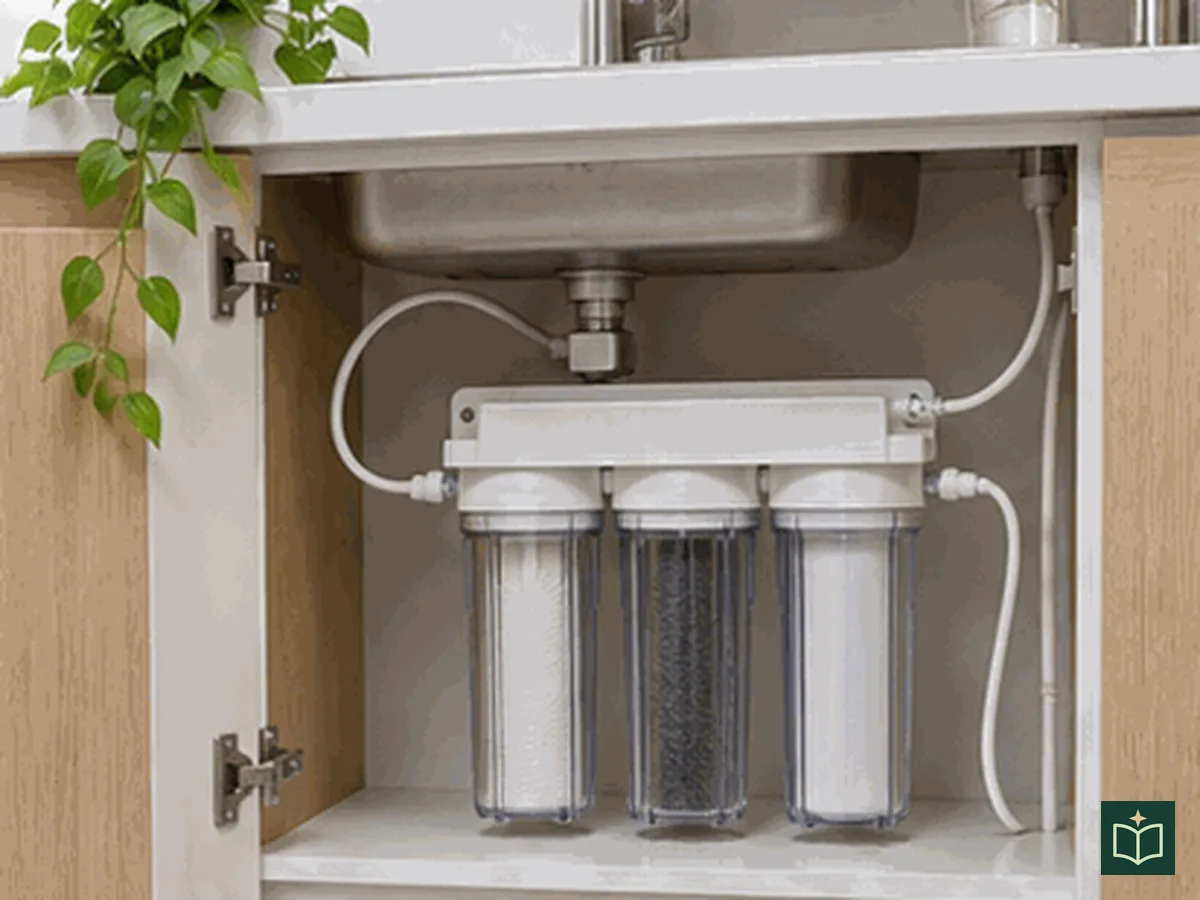
Filters come in several forms. Pitcher jugs and tap-mounted filters usually rely on carbon and sometimes ion-exchange resin to reduce chlorine and hardness. Under-sink units can combine sediment, carbon, reverse osmosis and remineralisation stages. Whole-house filters treat all water entering a home, mainly removing sediment and chlorine to protect appliances and plumbing. Independent certification, such as standards developed by NSF International, tests whether a product removes the specific substances its maker claims. Claims that a filter removes all impurities, or makes water alkaline and therefore healthier, deserve scepticism. A reputable product lists exactly what it is certified to reduce and how many litres a cartridge treats.
Maintenance and limits
A filter is only as good as its upkeep. Overdue cartridges can release trapped contaminants or harbour bacteria, and blocked membranes reduce flow and quality. Following the manufacturer's replacement schedule, typically measured in months or litres, matters more than choosing a premium brand. Filtered water stored in open jugs for days can also grow microbes. In apartment buildings, cleaning and disinfecting rooftop or basement tanks regularly may improve water quality more than any tap filter. If there are concerns about specific contaminants, a laboratory test of the tap water is the best starting point, and local water authorities can usually advise on what their supply contains.
Sources & further reading
- World Health Organization · Drinking-water ↗
- US Environmental Protection Agency · Home water treatment ↗
Figures are rounded and widely published; check the linked organisations for the latest editions. These organisations do not endorse this website.