The flood arrives
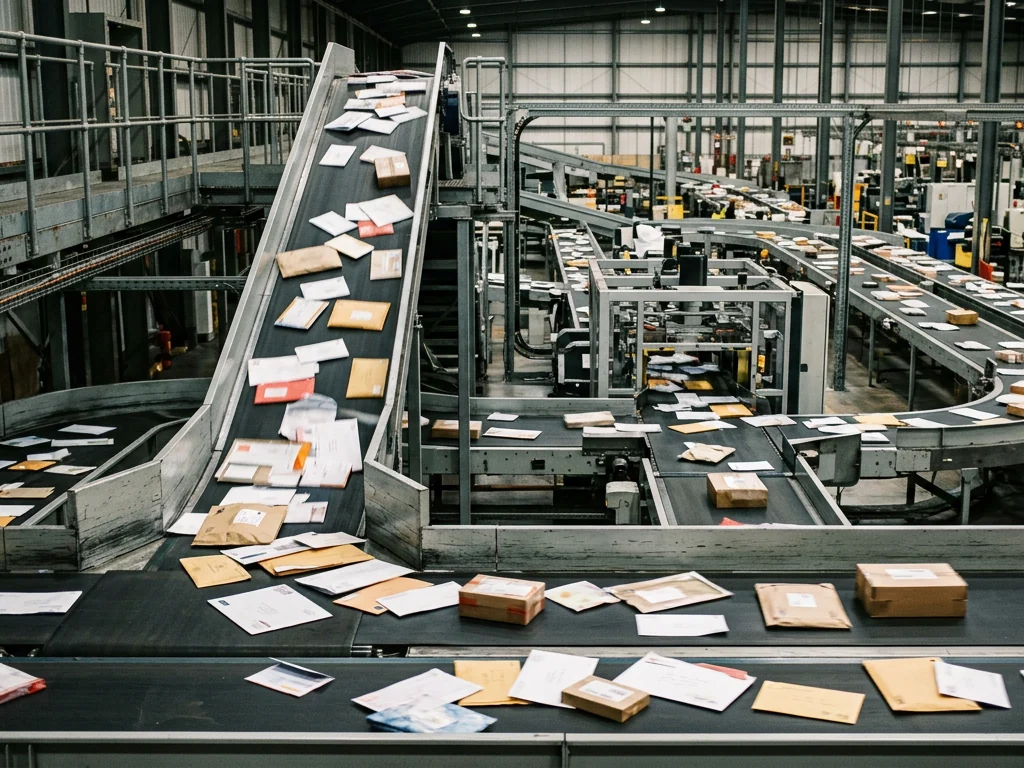
Mail collected from post boxes and counters arrives at a processing centre in mixed bags and trays. Machines first separate letters, flats such as magazines, and parcels, because each needs different equipment. Letters are then ‘faced’ so every address and stamp points the same way.
Reading the address
High-speed cameras photograph each envelope. Optical character recognition software reads printed and much handwritten text, matching it against address databases. When the computer cannot decide, the image is sent to a human operator who keys in the details. The machine then sprays a small barcode on the item.
The role of the postcode
Postcodes, introduced widely in the twentieth century, divide a country into progressively smaller areas. The first part routes an item to the right regional hub; the rest narrows it down to a street or even a single building. That lets machines sort to the right destination without understanding the full address.
In walking order
At the delivery office, sorting machines arrange letters in the exact sequence a carrier will visit addresses along the route. Parcels follow a similar path on larger conveyors and scanners, with tracking barcodes updated at each step. The result is a system that can move a letter across a country, often by the next day.
Sources & further reading
Machine speeds vary by model and postal operator; figures are typical. Photograph: original AI-generated illustration (Adobe Firefly). Reference organisations do not endorse this website.