Part of a network
Underneath most streets runs a grid of water mains supplying homes and businesses. Pumps, reservoirs and elevated tanks keep those pipes under pressure. Fire hydrants are fixed outlets placed along the mains so firefighters can draw water quickly without carrying it to the scene.
Wet and dry barrels
In mild climates, many hydrants are ‘wet barrel’: they are always full of water, and each outlet has its own valve. In places with freezing winters, ‘dry barrel’ hydrants keep the main valve deep underground below the frost line. When closed, water drains out of the upright barrel so it cannot freeze and crack.
From hydrant to hose
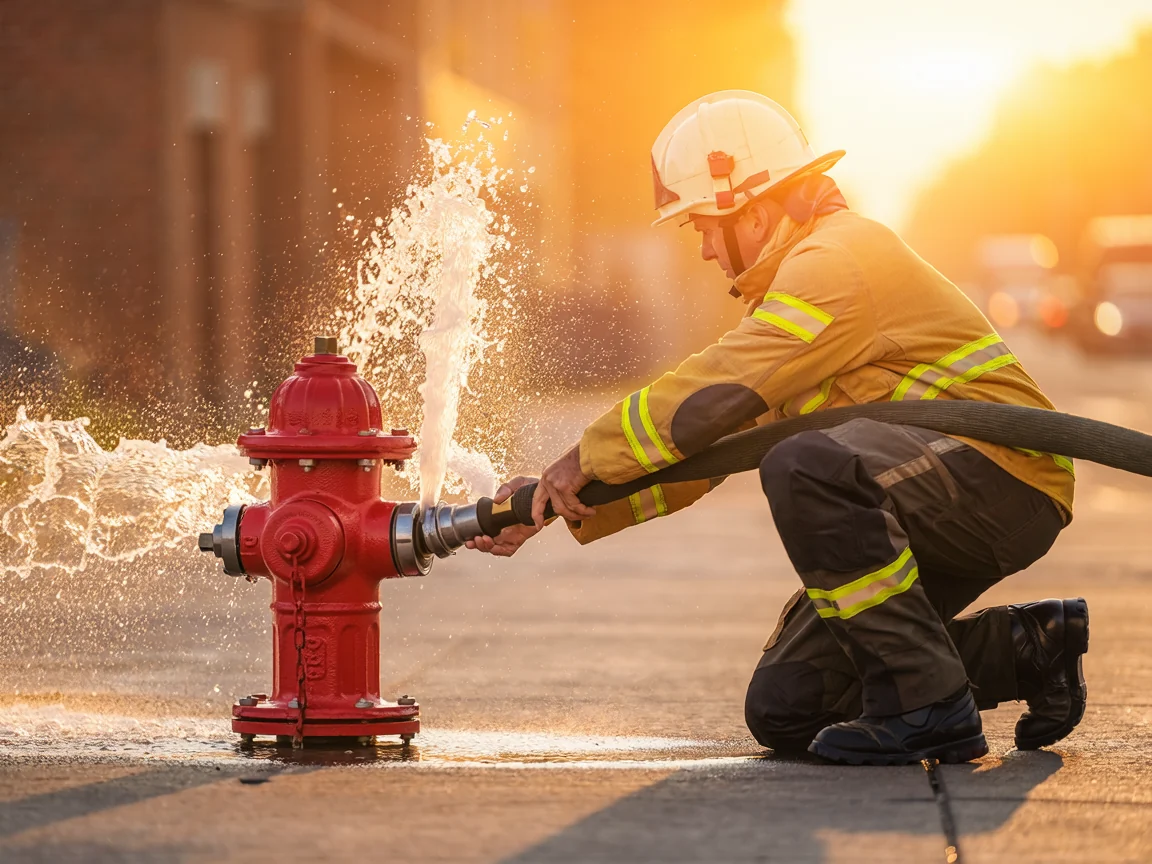
Firefighters open the valve with a special pentagonal wrench, designed to discourage tampering. A supply hose carries water to the fire engine, whose pump raises the pressure for attack hoses and ladders. Hydrant caps are often colour-coded to show available flow, helping crews choose the best one.
Kept ready
Water utilities and fire services inspect and flush hydrants regularly, testing flow and checking for leaks. Parking rules keep space clear around them. In many places, hydrants are spaced so that any building is within a short hose run—one reason towns plan water networks with firefighting, not just drinking water, in mind.
Sources & further reading
Flow rates and colour codes vary by country and water system. Photograph: original AI-generated illustration (Adobe Firefly). Reference organisations do not endorse this website.