Meet the water bear
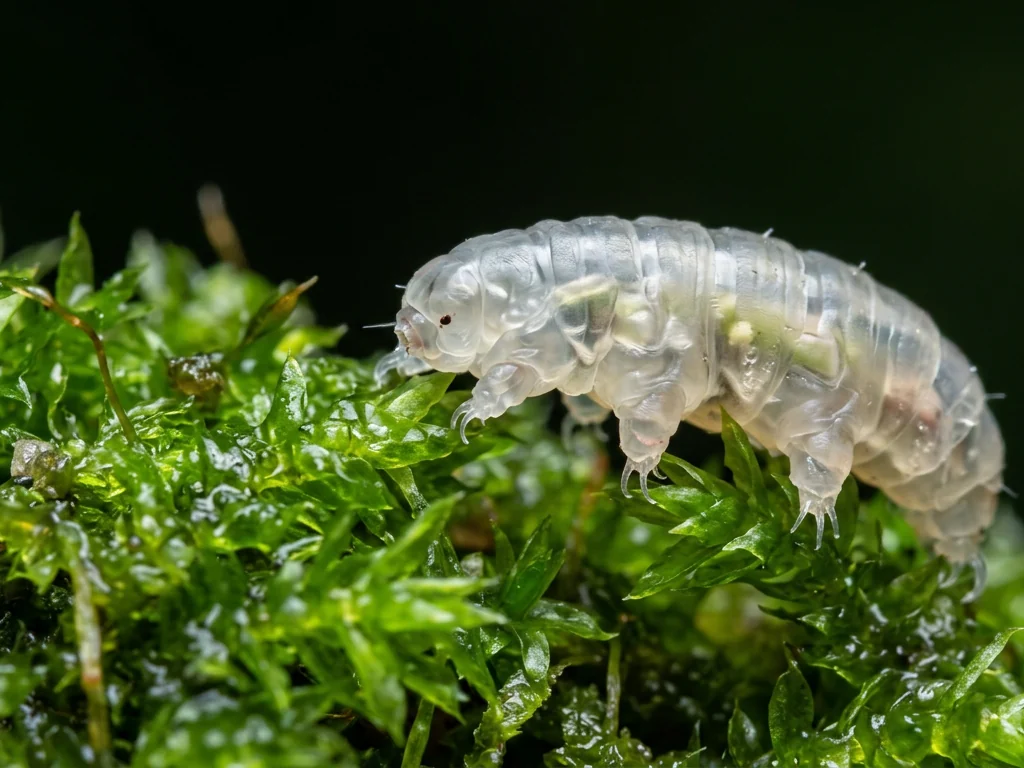
Tardigrades are eight-legged micro-animals with clawed feet and a slow, lumbering walk that earned them the nickname water bears. More than a thousand species are known. They live in films of water on moss and lichen, in soil, in lakes and in the deep sea, feeding on plant cells, algae or other tiny animals.
The tun state
When their surroundings dry out, many tardigrades enter cryptobiosis. They retract their legs, shrivel into a barrel-shaped tun and reduce their metabolism to almost nothing. In this state some have survived temperatures close to absolute zero, high levels of radiation and, in a 2007 experiment, exposure to open space in low Earth orbit.
Molecular armour
Researchers have found tardigrade-specific proteins that form glass-like gels inside cells as they dry, holding delicate structures in place. Another protein, called Dsup, appears to help protect DNA from radiation damage. These discoveries interest scientists working on ways to store vaccines and other biological materials without refrigeration.
Tough, not immortal
Active, hydrated tardigrades are far more fragile than the headlines suggest, and their tolerance varies between species. Their trick is endurance through dormancy rather than indestructibility. That still makes them one of the best natural models for how life might cope with extreme environments on Earth and beyond.
Sources & further reading
Survival figures come from laboratory and spaceflight experiments and vary by species. Photograph: original AI-generated illustration (Adobe Firefly). Reference organisations do not endorse this website.