Two ways to float
Electromagnetic suspension, used in Shanghai, wraps arms beneath the guideway and uses electromagnets to pull the train up toward it, controlled constantly to keep a gap of about a centimetre. Electrodynamic suspension, used in Japan, uses powerful superconducting magnets that create repelling forces once the train is moving fast.
A motor laid flat
Maglev trains are pushed by a linear motor: think of an ordinary electric motor unrolled along the guideway. Coils in the track create a travelling magnetic field that pulls the train's magnets forward and can also slow it down.
Why so fast
Without wheels, there is no rolling friction or wear on rails, and the ride is smooth and quiet. At high speed, air resistance becomes the main limit, as it is for aircraft.
Why so rare
Guideways cost much more than conventional high-speed track and cannot connect to existing rail networks. Shanghai's line to Pudong airport opened in 2004, and Japan is building the Chuo Shinkansen maglev between Tokyo and Nagoya.
Sources & further reading
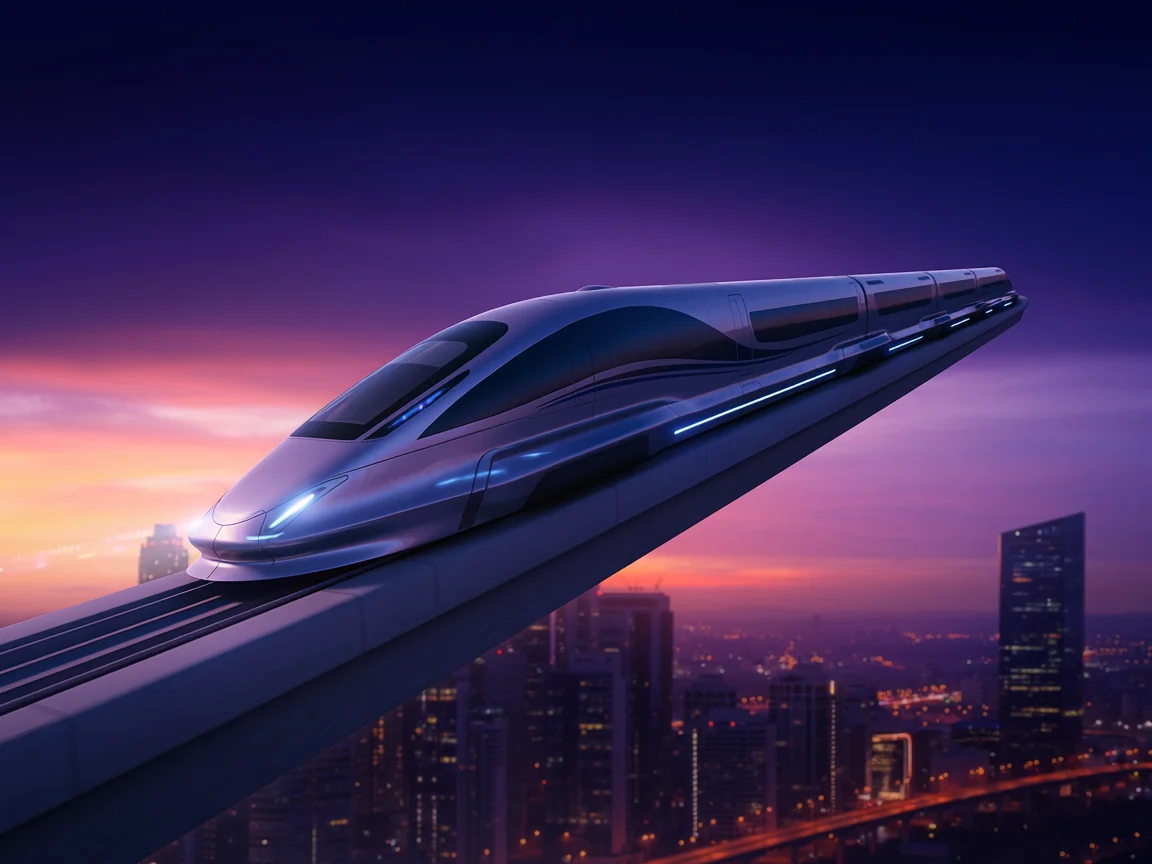
Construction timelines are subject to change. Photograph: original AI-generated illustration (Adobe Firefly). Reference organisations do not endorse this website.