Why milk spoils
Fresh milk from a healthy animal contains some bacteria, and more can enter during milking and handling. At room temperature they multiply quickly, souring the milk within a day or so. A few dangerous germs, such as those that cause tuberculosis, brucellosis and listeriosis, have historically been spread through raw milk. Heat treatment solves both problems. The two main approaches, pasteurisation and ultra-high-temperature treatment, differ in how hot the milk gets and how it is packed afterwards. Those two choices decide how long the milk lasts and whether it needs a fridge. Neither method involves adding preservatives, which are not permitted in ordinary milk in most countries.
Pasteurisation
Named after Louis Pasteur, whose work in the 1860s showed that heat could stop spoilage, pasteurisation became widespread for milk in the early twentieth century and sharply reduced milk-borne disease. Most dairies today use a method called high-temperature short-time treatment: milk flows through a heat exchanger and is held at about 72°C for at least 15 seconds, then cooled quickly. This destroys disease-causing bacteria and most spoilage organisms, achieving at least a 99.999% reduction in the target germs. Some heat-resistant bacteria and spores survive, however, so pasteurised milk is bottled cleanly, kept chilled and usually lasts one to two weeks unopened in a refrigerator.
Ultra-high temperature
UHT milk goes much further. It is heated to between about 135°C and 150°C for a few seconds, either by passing it through heated plates or tubes or by injecting steam directly into it. That kills essentially all microorganisms, including heat-resistant spores, making the milk commercially sterile. It is then cooled and packed without ever meeting unsterile air, a step called aseptic packaging. Cartons are sterilised, often with hydrogen peroxide, filled in a sterile chamber and sealed. The packaging is as important as the heating, because any microbe that entered afterwards could grow. Unopened, UHT milk typically keeps for six to nine months without refrigeration.
The carton that keeps it safe
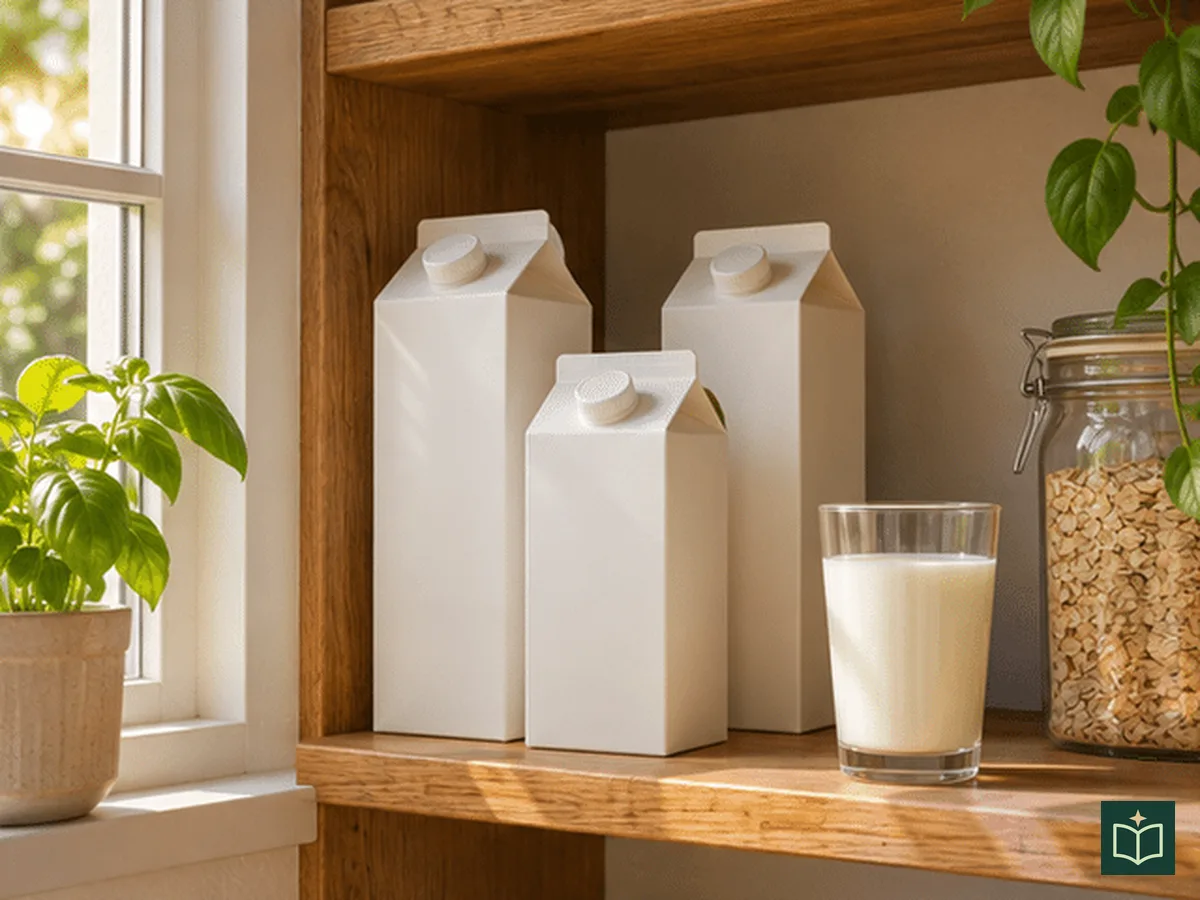
The familiar long-life carton is a layered material. Paperboard gives it stiffness, thin films of plastic make it watertight and seal the seams, and a very thin layer of aluminium foil blocks light and oxygen, which would otherwise degrade flavour and some vitamins. The aseptic carton was commercialised in Sweden in the early 1960s and transformed milk distribution in hot countries without reliable cold chains. In the Gulf, where summer temperatures make chilled distribution expensive, long-life milk is widely sold alongside fresh milk. Once opened, however, a carton of UHT milk is no longer sterile and should be refrigerated and used within a few days, like fresh milk.
Taste and nutrition
The higher heat of UHT treatment gives the milk a slightly cooked or caramel flavour, caused by reactions between proteins and the natural sugar, lactose. Some people notice it strongly; others do not. Modern direct steam methods reduce the effect. Nutritionally, both types keep their protein, calcium and most vitamins. UHT treatment causes small losses of some heat-sensitive vitamins, such as certain B vitamins and vitamin C, but milk is not a major source of vitamin C anyway. The differences are generally considered minor for an ordinary diet. Pasteurised milk may also be labelled extended shelf life when it is filtered or heated slightly more and packed very cleanly.
Myths and practical points
A common belief is that long-life milk must contain preservatives to last so long. It does not; its shelf life comes from sterility and sealing. Another myth is that raw milk is healthier because it is untreated. Health authorities, including the WHO and national food agencies, warn that raw milk can carry serious pathogens, and most do not recommend it, especially for children, pregnant women and older people. Finally, a swollen UHT carton or sour smell means something went wrong, such as a damaged seal, and it should not be drunk. As with all food safety questions, local regulator guidance is the best reference for specific products.
Sources & further reading
Figures are rounded and widely published; check the linked organisations for the latest editions. These organisations do not endorse this website.